
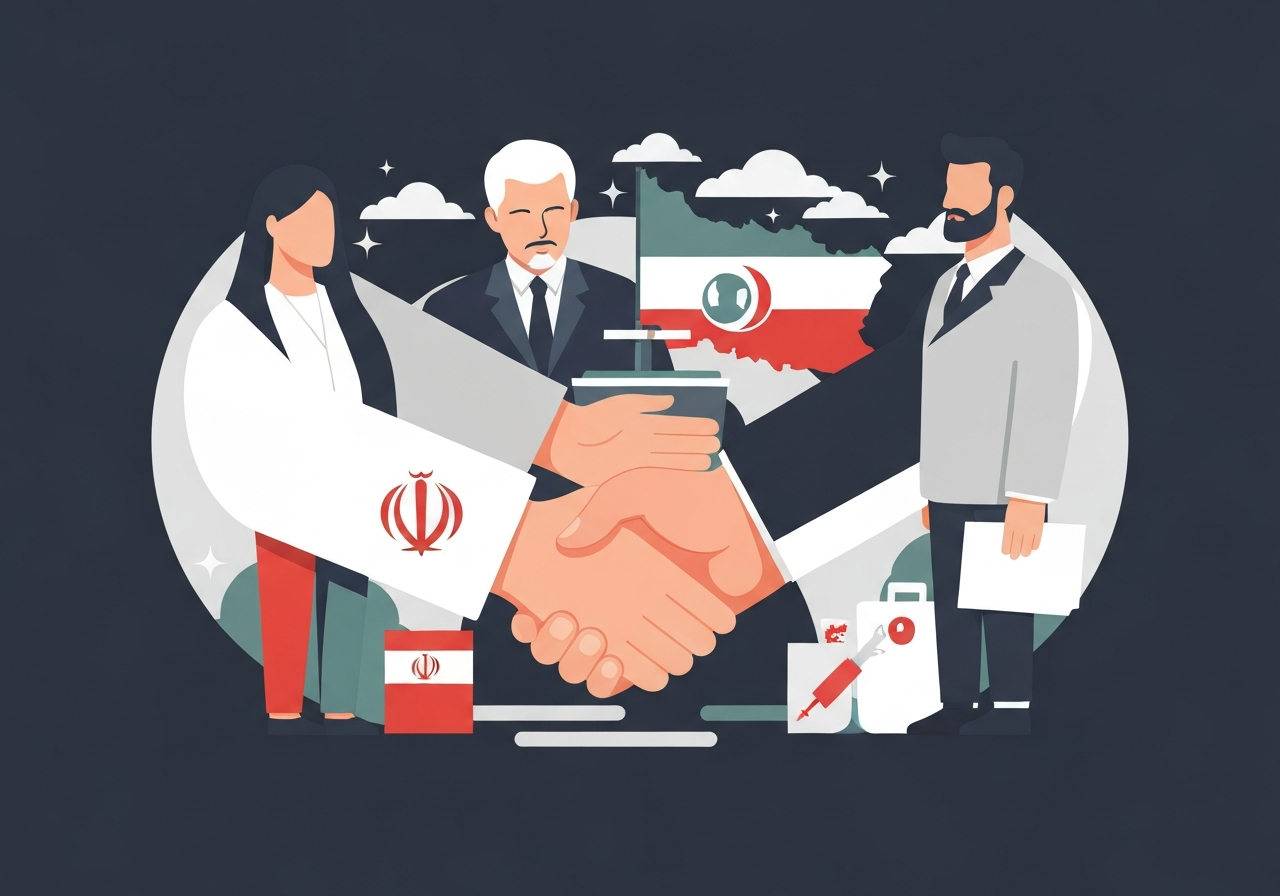
President Trump told reporters on June 11, 2026, that the United States and Iran have reached a “settlement” and that a memorandum of understanding could be signed as soon as this weekend, possibly in Europe; Iran and other parties have not confirmed a final deal. The announcement followed renewed U.S. strikes on Iranian targets, Iranian retaliatory missile and drone launches across the Gulf, and diplomatic shuttle efforts led by Qatar and Pakistan. U.S. Central Command said it conducted “self-defense” strikes on Iranian facilities and denied that the Strait of Hormuz was closed, while Iran’s officials and semi-official outlets pushed back on the U.S. characterization of any finalized text. The situation mixes active military operations, urgent diplomacy and competing public claims about what — if anything — has actually been agreed.
Key Takeaways
- President Trump said a U.S.-Iran memorandum of understanding has been reached and could be signed this weekend; he said Vice President J.D. Vance would attend the signing (June 11, 2026).
- Iranian officials and semi-official outlets denied that an approved text exists; Foreign Ministry spokesman Esmaeil Baqaei said Iran “has not reached a final conclusion” (June 11, 2026).
- U.S. Central Command reported strikes on Iranian targets and said commercial traffic continues in the Strait of Hormuz, while Iran’s military announced the strait closed to all traffic.
- CENTCOM said two Iranian attack drones were shot down and that U.S. forces struck multiple vessels and Iranian facilities; Iran claimed a water-storage facility was hit, affecting about 20,000 people.
- Three Indian mariners were reported killed after a U.S. strike on the tanker Settebello, prompting a diplomatic protest from India.
- Two sources told CBS News a letter of intent or memorandum would trigger 60 days of talks to negotiate a longer-term U.S.-Iran agreement, with compliance tied to staged economic relief.
- The World Bank cut global growth forecasts to 2.5% for 2026 and flagged widening economic consequences from the Middle East war; it made up to $60 billion immediately available to vulnerable countries.
Background
Since a fragile ceasefire in early April, the U.S. and Iran have exchanged strikes, including targeted attacks on infrastructure and commercial vessels in the Gulf. The conflict has widened to include strikes and interceptions by Gulf states, production disruptions, and a U.S.-enforced blockade of Iranian ports intended to limit oil shipments. Diplomatic channels — notably mediation by Qatar and Pakistan — have been active alongside military operations, reflecting simultaneous pressure to de-escalate and to secure leverage at the negotiating table.
The memorandum of understanding described by U.S. sources is framed as a letter of intent that would open 60 days of negotiations over a longer, enforceable agreement. Reported principal terms include a 15–20 year lockout on uranium enrichment and dismantling of some nuclear sites in exchange for phased financial relief and measures to ensure freedom of navigation in the Strait of Hormuz. Regional actors including Israel, Saudi Arabia, the UAE and others are being treated as stakeholders in the process, and their security concerns — especially limits on missile production and proxy activity — are said to be part of the talks.
Main Event
On June 11, President Trump told reporters in the Oval Office that the United States and Iran had reached a “settlement” and that documents were “in pretty final shape,” predicting a signing soon and saying the Strait of Hormuz would be reopened once the settlement is formalized. Earlier the same day he posted that he had canceled planned strikes because “discussions with the Islamic Republic of Iran have been brought to the highest level,” and he later told Fox & Friends that more strikes could occur if diplomacy faltered.
U.S. Central Command said it conducted “self-defense” strikes beginning at 5:15 p.m. ET on June 10 against Iranian sites it described as ammunition depots, command-and-control nodes and warehouses. CENTCOM also reported actions against vessels in the Gulf of Oman it said were transporting Iranian oil, including strikes on the M/T Jalveer and the Palau-flagged Settebello; CENTCOM said two Hellfire missiles disabled the Jalveer’s engine room.
Iran responded with missile and drone launches targeting U.S. positions and Gulf states. Jordanian forces reported intercepting 20 missiles toward the Azraq base; Kuwait and Bahrain reported intercepting incoming aerial threats and limited damage from falling debris. Iranian state and semi-official outlets made competing statements: some denied any approved memorandum and criticized U.S. strikes, while others pointed to continued negotiations mediated by Gulf and Pakistani intermediaries.
Diplomatic messaging ran in parallel. Israel’s prime minister held a call with President Trump, expressing appreciation for commitments reportedly aimed at removing enriched material and dismantling enrichment infrastructure. Qatar confirmed its negotiating team had flown back from Tehran after late-night meetings; Pakistani officials said they remained engaged. At the same time, local reports said Israeli strikes had wounded hospital staff in Tyre, Lebanon, and the U.N. secretary-general reiterated calls for a comprehensive ceasefire and the disarming of Hezbollah.
Analysis & Implications
If a memorandum of understanding is signed and honored, it would mark a major de-escalation milestone with significant geopolitical consequences: reduced immediate risk to global energy shipments, a pathway to phased sanctions relief and a formal track to longer-term arms and enrichment constraints. However, the practical effect will depend entirely on verification, sequencing of concession and relief, and whether the 60-day negotiation window produces enforceable commitments backed by independent monitoring.
Credibility and timing are central risks. The White House’s public declarations on June 11 outpaced Iranian confirmations, and multiple semi-official Iranian outlets discounted U.S. public claims. That gap raises the prospect of asymmetric expectations: domestic audiences in the U.S. and Iran may receive divergent narratives about what was agreed, increasing the chance that either side claims breach if details differ from public statements.
Military activity complicates the picture. Ongoing strikes, reported attacks on commercial shipping and missile launches increase the chance of miscalculation. The deaths of commercial mariners and continuing interdictions could harden positions among Gulf states and make it politically harder to provide concessions without durable verification and security guarantees. Economically, the World Bank’s downgrade underscores how the conflict reverberates well beyond the region, affecting growth and inflation trajectories globally.
Comparison & Data
| Metric | Latest figure | Previous / note |
|---|---|---|
| World Bank global growth (2026) | 2.5% | 2.9% (earlier forecast) |
| World Bank headline inflation (2026 forecast) | 4.0% | — |
| Lebanese fatalities since March 2 (per Lebanese health ministry) | 3,711 | — |
| Lebanese wounded (per Lebanese health ministry) | 11,483 | — |
| Reported displaced in Lebanon | >1,000,000 | — |
The table summarizes key economic and human-impact figures cited by the World Bank and Lebanese authorities in the coverage cited here. The World Bank’s immediate $60 billion facility and potential extension to $100 billion are emergency measures intended to help developing countries absorb price shocks from the conflict. Casualty and displacement figures reflect Lebanon’s toll in the Israel–Hezbollah front and are provided by Lebanon’s health ministry as reported in aggregated coverage.
Reactions & Quotes
U.S. and regional officials offered immediate, contrasting responses that highlight the divide between U.S. public claims and Iranian caution.
Before and after declaring a settlement, President Trump framed the move as both a diplomatic success and a product of military pressure; he also tied market reaction to the announcement.
“We just made a great settlement of the war with Iran … We have a signing soon.”
President Donald Trump, June 11, 2026 (remarks to reporters)
Israel’s office described a call with President Trump in which its prime minister emphasized removal of enriched material, limits on missile production and ending support for proxies as conditions Israel expects honored if a deal proceeds.
“The Prime Minister expressed his appreciation for President Trump’s commitment that the final agreement … will include the removal of enriched material, the dismantling of enrichment infrastructure, limits on missile production, and the cessation of Iran’s support for its terrorist proxies in the region.”
Office of Israeli Prime Minister Benjamin Netanyahu (statement)
Iran’s foreign ministry spokesman gave a contrasting, more cautious public line, saying Tehran had not concluded a final agreement and that no text had been approved.
“So far, Iran has not reached a final conclusion on the agreement.”
Esmaeil Baqaei, Iranian Foreign Ministry spokesman
Unconfirmed
- President Trump’s assertion that Iran’s supreme leader has approved a tentative deal remains unverified by Iranian authorities or independent sources.
- Attribution that U.S. strikes definitively hit a specific water-storage facility and that 20,000 civilians lost access to fresh water is reported by Iranian officials and requires independent verification.
- The precise text, sequencing and legal bindingness of the reported memorandum of understanding have not been released publicly and therefore cannot be independently confirmed.
- Reports that the Strait of Hormuz is closed to all traffic were contested; CENTCOM said commercial traffic continues, so full closure is unconfirmed.
Bottom Line
The June 11 announcements combine potential diplomatic progress with active military exchanges and competing official narratives. A signed memorandum of understanding could open a pathway to a longer-term, verifiable agreement that addresses nuclear, missile and proxy issues — but only if its terms, verification mechanisms and sequencing of relief and compliance are clearly defined and accepted by all stakeholders.
In the near term, watch for (1) any released text or summary of the memorandum, (2) which parties formally sign or endorse the MoU, and (3) whether military operations pause in practice while negotiators complete an enforceable agreement. Without transparent text and independent verification, public claims will remain subject to dispute and the risk of renewed escalation will persist.
Sources
- CBS News (live reporting) — news outlet reporting based on official statements and sources.
- World Bank (Global Economic Prospects) — multilateral lender report and forecasts.
- United Nations (Secretary-General statements) — official U.N. statements on ceasefire and disarmament.
- U.S. Central Command (CENTCOM statements) — official military statements on strikes and maritime operations.
- Agence France-Presse (AFP) — international news agency reporting on diplomatic and on-the-ground developments.