
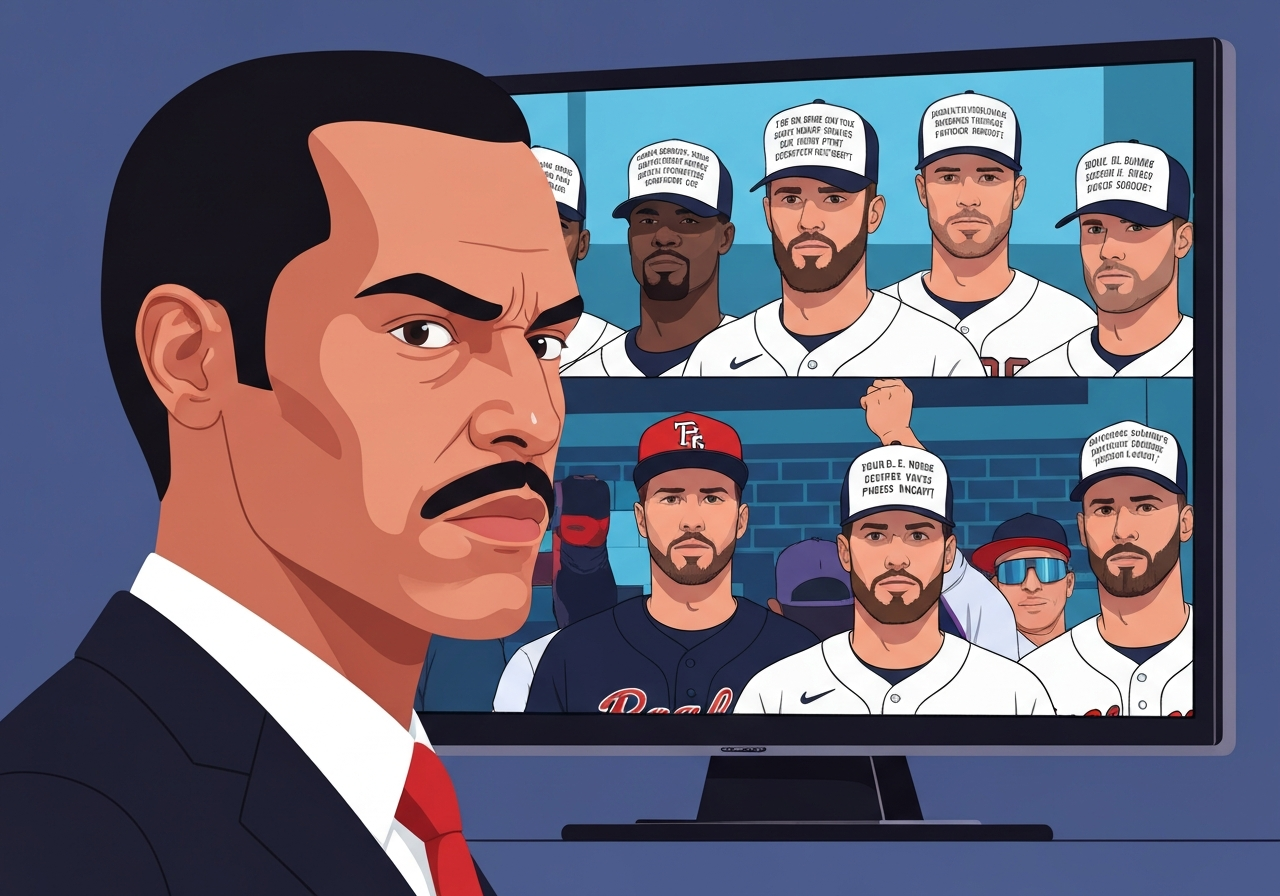
Lead: U.S. Sen. Josh Hawley (R-Mo.) sent a letter to MLB Commissioner Rob Manfred on Tuesday seeking explanations after Major League Baseball warned several San Francisco Giants pitchers for writing Bible verses on their caps during the team’s Pride Night the previous Friday. The warnings came after the team’s annual Pride Night, when three pitchers appeared wearing rainbow caps with scriptural references and another opted for the standard cap. MLB communications said the markings breach uniform rules and that players were warned about potential future violations. The episode has drawn public criticism, a team apology, and a senator’s demand for clarification.
Key Takeaways
- Sen. Josh Hawley sent a formal letter to Commissioner Rob Manfred on Tuesday requesting answers about MLB’s enforcement and whether it reflects a pattern of discrimination against players professing Christian faith.
- Three Giants pitchers—Landen Roupp, JT Brubaker and Ryan Walker—wore Pride Night caps with Bible verses written on them on Friday; reliever Sam Hentges wore the team’s traditional cap that night.
- MLB communications officer Pat Courtney said the writing violated league rules and that players were warned about future violations, characterizing the action as consistent with normal practice.
- The Giants lost the game 5-1 to the Chicago Cubs that night and, entering play Tuesday, are 29-43 and fourth in the National League West.
- The Giants issued a team statement apologizing for the pain and anger caused and reiterated the organization’s commitment to inclusion and Pride Night as a meaningful celebration.
- It is not publicly confirmed whether any formal discipline will follow beyond the warnings or whether Hentges received any warning for wearing the non-rainbow cap.
Background
The incident occurred during the San Francisco Giants’ scheduled Pride Night, an annual team activation intended to celebrate and support the LGBTQ+ community. Pride-themed uniforms and caps have become common across professional sports as franchises stage outreach and inclusion events tied to Pride Month. Teams typically require uniform conformity during games; league rules prohibit deviations that make a player’s uniform different from teammates.
Major League Baseball enforces uniform policies through its operations and communications offices; on this occasion the league said the handwriting on caps violated those rules. The Giants, who host the event and coordinate much of the team activation, released a public apology after the game acknowledging that individual choices by players caused pain and anger in the community the event was meant to honor.
Sen. Hawley, who has previously raised concerns about perceived religious discrimination in public institutions, framed his letter to the commissioner as seeking whether MLB’s action reflects a wider pattern against players of Christian faith. His demand for answers places the league at the center of a political as well as cultural conversation about expression, team solidarity, and religious speech within professional sports.
Main Event
On Pride Night, three Giants pitchers entered the game wearing the team’s rainbow-cap activation with handwritten Bible verses on the brim. Landen Roupp, JT Brubaker and Ryan Walker were the players publicly identified in reports. Another pitcher, Sam Hentges, chose to wear the organization’s traditional cap rather than the rainbow version used by most players that evening.
MLB communications officer Pat Courtney told multiple outlets on Monday that the writing on the caps violated league rules and that the players were warned against future violations, describing the step as consistent with normal practice. The league’s response focused on uniformity rather than content, according to that explanation.
The on-field result that night was a 5-1 loss to the Chicago Cubs. The incident has since drawn attention beyond the box score: the Giants asked for leniency toward the Pride community while apologizing for the hurt caused, and a U.S. senator requested a formal reply from the commissioner about league policy and its application.
Analysis & Implications
The league’s stated rationale—uniform conformity—places this dispute at the intersection of two established principles in professional sports: the enforcement of team uniform rules and the protection of individual expression. MLB’s enforcement apparatus historically prioritizes consistent appearance during games; that procedural baseline explains the league’s emphasis on rule violation rather than message content.
Nevertheless, disciplinary moves that touch on religious expression often attract greater public scrutiny and political attention. Sen. Hawley’s letter frames the matter as potential discrimination against Christian players, which escalates the incident from a policy enforcement question to a claim of unequal treatment. That framing may compel MLB to provide detailed, public documentation of how uniform rules have been applied in comparable past cases.
For the Giants organization, the episode creates reputational risk with multiple constituencies: LGBTQ+ fans and community partners who felt hurt, teammates who expect uniform compliance, and broader audiences watching how sports institutions balance inclusion initiatives with individual beliefs. The team’s apology attempts to mitigate reputational damage by reaffirming commitment to inclusion while acknowledging the players’ individual choices.
Looking ahead, the league faces decisions about clarity and consistency. To reduce political fallout and preserve trust with fans, MLB may need to publish clearer guidance on when personal messages on activation gear cross the line and whether disciplinary steps differ when messages are religious versus political or personal. How MLB responds could influence future interactions between teams’ activation nights and players who want to express personal beliefs.
Comparison & Data
| Item | Detail |
|---|---|
| Game result (Pride Night) | Giants 1, Cubs 5 |
| Giants record (entering Tuesday) | 29-43, 4th in NL West |
The statistical context shows this episode unfolded during a regular-season contest in which the Giants are struggling in the standings. While the on-field implications are limited to the single game result, the broader off-field consequences—public relations, political inquiries, and potential precedent—could have longer-lasting effects on league and team policy.
Reactions & Quotes
League communications framed the action as rule enforcement rather than content-based censorship, while elected officials and advocates framed the response in political and civil-rights terms. The Giants issued an apology to the community affected by the players’ actions, emphasizing organizational values.
“The writing on the cap violates our rules, and consistent with normal practice, we have warned the players about future violations.”
Pat Courtney, MLB communications (statement to media)
This statement from MLB was presented to multiple outlets as the league’s explanation for its action, emphasizing uniform policy rather than content adjudication.
“We understand that the choices by individual players have caused pain and anger to many in the LGBTQ+ community and we are sorry for that.”
San Francisco Giants (team statement)
The Giants’ public message sought to balance support for Pride Night while acknowledging harm caused by players’ written messages, reaffirming the team’s inclusion commitments.
“We demand answers about what appears to be a pattern of discrimination within MLB against baseball players who profess their Christian faith.”
Sen. Josh Hawley (letter to Commissioner Rob Manfred)
Sen. Hawley’s language frames the incident as potentially symptomatic of broader bias, and his letter asks the commissioner to explain the league’s rationale and precedent.
Unconfirmed
- Whether Sam Hentges received a formal warning for wearing the traditional cap instead of the rainbow activation cap has not been publicly confirmed.
- Any future disciplinary measures beyond the warnings announced by MLB have not been announced and remain uncertain.
- Sen. Hawley’s characterization of a broader “pattern of discrimination” within MLB has not been substantiated with a league-wide record of similar, documented enforcement actions as of this writing.
Bottom Line
The episode centers on MLB’s enforcement of uniform rules during a team’s Pride Night and has escalated into a political and public-relations issue because the messages in question were religious in nature. MLB has framed the matter as a standards enforcement issue; opponents and some politicians characterize it as a potential restriction on religious expression. How the commissioner responds to Sen. Hawley’s letter—and whether the league provides clear, documented precedent—will shape perceptions of consistency and fairness.
For the Giants, the immediate challenge is repairing trust with LGBTQ+ fans and community partners while upholding team policies. For MLB, the broader test will be producing transparent, consistently applied guidance that reconciles uniform rules with players’ expressive acts, so similar controversies can be resolved with less political escalation in the future.
Sources
- Yahoo Sports — news report summarizing the incident and quotes from MLB and the Giants.
- Major League Baseball — official league communications and uniform policy (official).
- San Francisco Giants — team statement on Pride Night and organizational response (official).