
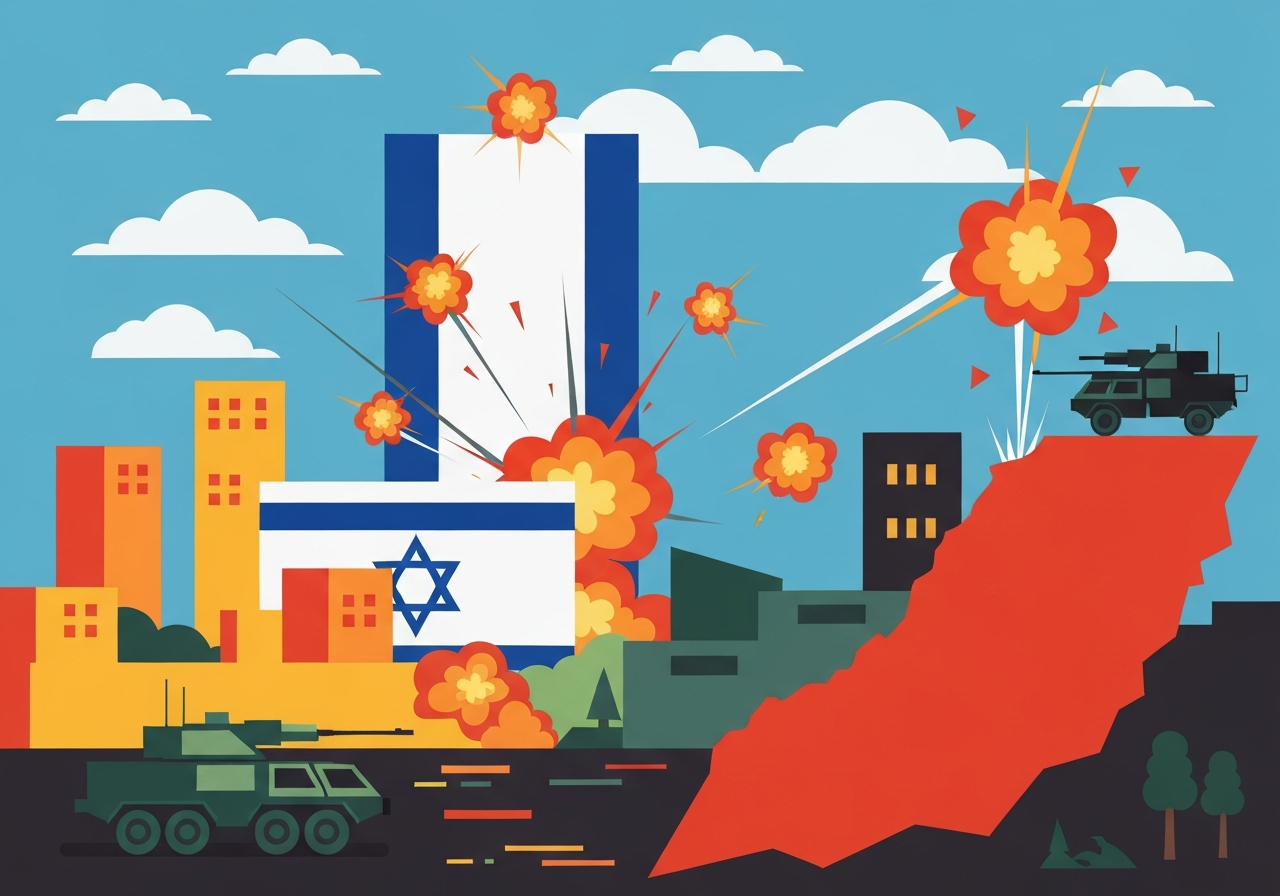
Lead: Israeli forces carried out strikes across southern Lebanon overnight on June 19, 2026, as Hezbollah reported intense clashes that deepened regional tensions and interrupted planned U.S.–Iran negotiations in Switzerland. The violence coincided with reports that at least 18 people in Lebanon were killed in airstrikes and that four Israeli soldiers, including a lieutenant colonel, were killed in cross-border fighting. U.S. officials postponed talks that had been due to include Vice President JD Vance amid mediators’ efforts to calm the front lines. The renewed fighting risks undermining an interim U.S.–Iran agreement intended to halt hostilities and reopen key maritime routes.
Key Takeaways
- Israeli strikes: Israel reported multiple strikes across southern Lebanon and the eastern Bekaa Valley on June 19, 2026, including an attack reported in the village of Douris.
- Casualties: Lebanon’s state National News Agency reported at least 18 Lebanese killed in airstrikes; Israel said four Israeli soldiers were killed and five more wounded by an explosive drone.
- Diplomatic impact: Talks planned in Switzerland between the U.S. and Iran were postponed; U.S. Vice President JD Vance delayed travel amid escalations.
- Interim deal at risk: Continued fighting threatens an interim agreement that calls for an immediate halt to operations “on all fronts, including in Lebanon,” and aims to reopen the Strait of Hormuz.
- Maritime and energy effects: After the interim deal, U.S. officials said more than 12.5 million barrels transited the Strait of Hormuz on the night after signing, restoring some shipping flow disrupted earlier in the war.
- Political stakes: Israeli Prime Minister Benjamin Netanyahu has said Israeli forces will remain in a southern “security zone,” complicating demands from Iran that Israel withdraw from occupied Lebanese territory.
- Regional mediation: Mediators were reported to be pressing parties to calm hostilities before rescheduling discussions in Switzerland on sanctions relief, verification and sequencing for a final settlement.
Background
The interim agreement between the United States and Iran, signed in June 2026, sought an immediate halt to major combat operations and opened a pathway for negotiating a permanent end to the broader Iran war. The deal also aimed to restore safe passage through the Strait of Hormuz, a vital artery for global oil shipments, after months of interruptions that pushed energy markets higher. Washington framed the deal as essential to averting further economic turmoil; U.S. officials reported a rapid resumption of tanker traffic once blockades were lifted.
Israel and Hezbollah are not signatories to the U.S.–Iran interim arrangement. Tehran has pushed for Israeli withdrawal from a large portion of southern Lebanon it says is occupied, a demand Israeli Prime Minister Benjamin Netanyahu rejects, insisting Israeli forces must stay in a “security zone” while threats persist. That divergence has long complicated regional diplomacy: past flare-ups along the Israel-Lebanon frontier have periodically threatened wider escalation.
Main Event
Overnight on June 19, Israeli forces said they struck multiple targets in southern Lebanon; Lebanese outlets reported heavy fighting and damage in towns near the border. The Israeli military also reported operations in the Bekaa Valley, where Lebanese media cited strikes in the village of Douris. The dynamics on the ground included artillery exchanges, air raids reported by Lebanese state media, and clashes involving ground units on both sides of the Blue Line.
Lebanon’s state-run National News Agency reported at least 18 fatalities from Israeli airstrikes; the Israeli military confirmed four soldiers killed in southern Lebanon, including a lieutenant colonel, and said five personnel were wounded by an explosive drone. Those figures were provided by the involved authorities and reflect the reported toll as of the latest statements on June 19.
The surge in violence prompted mediators to delay planned talks in Switzerland between the U.S. and Iran, meetings initially set to focus on sanctions relief, maritime security, nuclear-related verification and sequencing. Officials involved in arranging the sessions said calming the Lebanon front was a priority before resuming face-to-face diplomacy; one regional official said Iran withdrew from the scheduled meeting because of the intensified fighting and comments from Israel’s leadership.
Analysis & Implications
The immediate implication is diplomatic: renewed fighting makes it harder to maintain momentum toward a comprehensive peace framework between Washington and Tehran. The Switzerland sessions were intended to transition from the interim pact to detailed arrangements on verification and sequencing; postponement delays sanctions relief discussions and the potential unfreezing of funds and reconstruction assistance that were central to the interim deal.
Militarily, persistent clashes along the Israel–Lebanon border increase the risk of localized incidents spiraling into broader confrontation. Israel’s stated intent to hold a security zone in southern Lebanon conflicts with Iranian and Hezbollah demands for withdrawal, producing a structural obstacle to implementing the ceasefire language that calls for halting operations “on all fronts, including in Lebanon.” That gap may require third-party guarantees or multinational monitors to bridge.
Economically, the interim deal’s restoration of shipping through the Strait of Hormuz provided near-term relief to global markets; U.S. officials reported more than 12.5 million barrels moved through the strait on the night after the agreement. However, renewed regional instability could reintroduce shipping risk premiums and volatility to energy markets if hostilities persist or expand.
Comparison & Data
| Item | Reported figure |
|---|---|
| Lebanese fatalities (reported) | At least 18 |
| Israeli military fatalities | 4 soldiers (including 1 lieutenant colonel) |
| Israeli wounded (drone) | 5 |
| Barrels transited Strait of Hormuz (night after deal) | 12.5 million+ |
The table aggregates official and media-reported figures related to the June 19 escalation and immediate post-deal maritime flow. These numbers come from statements by the Israeli military, Lebanon’s National News Agency and U.S. briefings; they represent the latest publicly available tallies and may change as authorities update counts or release further details.
Reactions & Quotes
U.S. and Israeli politicians and regional officials issued swift responses as the violence and diplomatic delays unfolded. Below are representative, brief statements with context.
“I signed the agreement to avoid economic catastrophe; without it, markets and prices would have been far worse.”
U.S. President Donald Trump (context: defending the interim U.S.–Iran deal and its economic rationale)
Trump framed the interim agreement as needed to stabilize energy markets and the U.S. economy, linking the diplomatic move to immediate commercial effects such as resumed tanker traffic through the Strait of Hormuz.
“Israel strikes when struck… Ceasefire happens when Hezbollah stops shooting & killing.”
U.S. Ambassador to Israel Mike Huckabee (posted on X, defending Israel’s response)
Ambassador Huckabee’s comment backed Israel’s right to respond to cross-border attacks, emphasizing a conditional view of ceasefire implementation that ties halting hostilities to Hezbollah’s behavior on the ground.
“Israeli forces will remain in a security zone of southern Lebanon as long as Israel’s security needs require it.”
Israeli Prime Minister Benjamin Netanyahu (statement on Israel’s posture)
Netanyahu’s remark reiterates Israel’s insistence on maintaining forces near the border, signaling a key policy difference with Iran and Hezbollah that complicates implementing any ceasefire terms tied to territorial withdrawal.
Unconfirmed
- Whether Iran formally withdrew from the Switzerland talks specifically because of Netanyahu’s comments remains based on anonymous regional official accounts and has not been publicly confirmed by Iranian authorities.
- Claims about the precise number and identity of all civilian casualties in the affected Lebanese towns are still being reported by state and local media and may be revised as independent tallies or hospital reports emerge.
Bottom Line
The June 19 escalation along the Israel–Lebanon front has immediate humanitarian and diplomatic consequences: reported deaths and injuries raise the urgency of containment, while the postponement of U.S.–Iran talks delays critical negotiations on sanctions, verification and a permanent end to the wider conflict. Implementation of the interim deal hinges not only on U.S. and Iranian compliance but on how non-signatory actors—principally Israel and Hezbollah—behave on the ground.
For the near term, mediators will likely prioritize local ceasefire arrangements and confidence measures to allow the Switzerland sessions to resume and to preserve gains like reopened maritime traffic. If hostilities continue, however, the interim agreement’s political momentum could falter, increasing the risk of renewed market disruption and a broader regional escalation.
Sources
- Associated Press (news report summarizing battlefield developments and diplomatic fallout)
- Israel Defense Forces (official military statements)
- Lebanon National News Agency (NNA) (state media reporting on civilian casualties)
- The White House (official U.S. statements on negotiations and policy)