
Lead
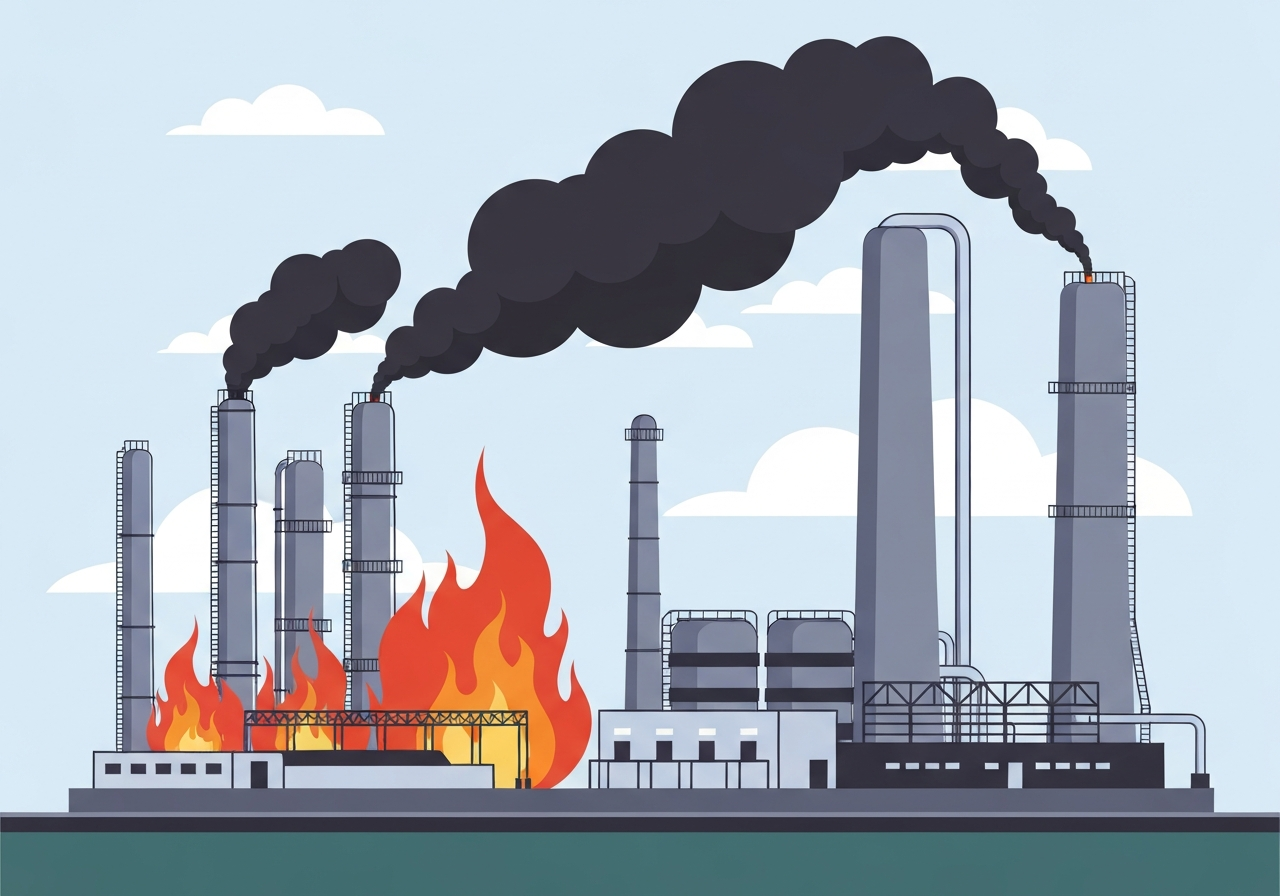
On 28 June 2026, Ukrainian forces struck two Russian oil refineries overnight, igniting fires at facilities in the Krasnodar region (Slavyansk‑na‑Kubani) and the Yaroslavl region. Russian authorities reported one civilian death and a separate injury near the Krasnodar site, while Moscow said it launched ballistic missiles at Kyiv overnight that wounded at least two people. President Volodymyr Zelensky said Kyiv will keep mounting long‑range strikes to degrade Russia’s capacity to sustain the war and announced a 40‑day offensive intended to increase pressure on Moscow. Regional transport restrictions were imposed after the Yaroslavl attack, underscoring rising concerns about strikes reaching deeper into Russian territory.
Key takeaways
- On 28 June 2026 Ukrainian drones struck oil facilities in Krasnodar (Slavyansk‑na‑Kubani) and Yaroslavl regions, triggering large fires at both sites.
- Krasnodar governor Veniamin Kondratiev reported one person killed and one injured in a nearby village following the Krasnodar strike.
- Russian forces launched ballistic missiles at Kyiv in the early hours of 28 June, with at least two people reported injured.
- Kyiv says the strikes are part of a campaign to weaken Russia’s war economy; Zelensky approved a 40‑day offensive after consulting Ukraine’s security service.
- Authorities limited movement on some road routes toward Moscow after the Yaroslavl-region attack; Yaroslavl lies about 270 km east of Moscow.
- Analysts warn the strikes are contributing to acute fuel shortages in parts of Russia, affecting civilian and military logistics.
Background
Since the invasion entered its fifth year, Kyiv has increasingly relied on long‑range aerial and drone operations to hit military and energy infrastructure inside Russia. The strategy aims to reduce revenue streams and logistical capacity that Moscow uses to sustain the campaign in Ukraine. Attacks on energy sites have precedent: previous strikes and sabotage incidents have periodically disrupted fuel distribution across Russia, including in occupied territories and distant regions.
Targeting refineries and storage depots is intended both to degrade materiel and to create domestic pressure inside Russia by raising fuel prices and shortages. Russian regional authorities and the federal military apparatus face a dilemma: harden and disperse vulnerable sites at high cost, or risk continued disruption. The international community is watching as Kyiv’s long‑range capability grows, while NATO leaders prepare to meet in Ankara on 7 July amid contentious allied debates over further support.
Main event
According to regional statements, Ukrainian drones struck the Slavyansk‑na‑Kubani refinery in Krasnodar overnight, producing a major blaze that spread smoke across the locality. Krasnodar governor Veniamin Kondratiev said one resident of a nearby village was killed and another injured; local emergency crews were deployed to fight the blaze. In the Yaroslavl region a separate refinery was hit early on Sunday, prompting authorities to restrict certain road movements toward Moscow as a precautionary measure.
State and regional reports differ on detail and timing; Russian agencies also reported that Moscow retaliated by launching ballistic missiles at Kyiv in the early hours, with at least two people reported injured there. Kyiv framed the refinery strikes as part of a broader campaign to target revenue and fuel lines that support Russia’s military effort. Media accounts described dramatic scenes at some sites, including large explosions and towering plumes of black smoke; at least one report said a storage‑tank lid was violently displaced by an explosion.
President Zelensky posted that Ukraine will continue operations that “weaken Russia’s ability to wage this war,” calling the strikes a form of long‑range pressure he described as “sanctions” on Russia’s war machine. He thanked Ukrainian forces for the results and tied the measures to a newly authorised 40‑day offensive that he said was approved after consulting the head of Ukraine’s security service. Russian officials have characterised some of Kyiv’s actions as terrorism and warn of countermeasures.
Analysis & implications
Striking refineries has immediate tactical and longer‑term strategic effects. Tactically, hitting fuel storage and refining capacity can interrupt front‑line resupply and raise operational costs for armoured and fuel‑dependent formations. Strategically, sustained pressure on energy infrastructure is designed to erode the economic and political resilience that sustains prolonged warfare. For Russia, even limited but recurrent outages can ripple across logistics, civilian transport and regional markets.
Domestically in Russia, visible disruptions to fuel availability and price spikes could increase dissatisfaction in regions distant from the front, complicating Moscow’s governance and allocation of resources. For Kyiv, the policy carries risks: escalatory Russian retaliation with missile strikes on Ukrainian cities, as seen in the reported attacks on Kyiv, raises the humanitarian and political stakes. The tactic also tests allied tolerance and legal debate over cross‑border strikes on dual‑use infrastructure.
Internationally, the strikes complicate peacemaking prospects. Zelensky’s public exhortation to “weaken” Russia coincides with calls for diplomacy; some Western capitals may see the measures as leverage to push Moscow toward talks, while others fear the potential for further escalation. The approaching NATO summit in Ankara and divisions within the alliance, including reluctance from some leaders to expand direct support, will shape both diplomatic responses and Kyiv’s operational latitude.
Comparison & data
| Date | Region / Site | Reported casualties | Notes |
|---|---|---|---|
| 28 June 2026 | Slavyansk‑na‑Kubani, Krasnodar | 1 killed, 1 injured (nearby village) | Major fire at refinery; local governor statement |
| 28 June 2026 | Yaroslavl region | Not specified | Refinery fire; road movement limits toward Moscow (Yaroslavl ≈ 270 km east of Moscow) |
| 28 June 2026 | Kyiv (Russian missile response) | At least 2 injured | Ballistic missiles reported launched on Kyiv |
The table summarises official and media reports as of 28 June 2026. Independent verification of some details remains incomplete; casualty figures and precise damage assessments are being updated by regional emergency services and journalists. Analysts note these incidents fit a pattern of increasing strikes on energy infrastructure that have correlated with localized fuel shortages in the past year.
Reactions & quotes
Ukrainian presidential messaging framed the strikes as deliberate pressure on Russia’s capacity to wage war and part of a coordinated operational campaign. Ukrainian officials also emphasised the 40‑day offensive authorization as a means to intensify that pressure.
“We continue our operations that weaken Russia’s ability to wage this war. Each of our long‑range sanctions means fewer resources serving Russia’s war machine.”
Volodymyr Zelensky / Ukrainian presidency
Regional Russian authorities described the human cost and local emergency work, while Moscow’s security apparatus characterised the attacks as hostile acts requiring response.
“A fire broke out at the refinery in Slavyansk‑na‑Kubani; one person is dead and another injured in the nearby village.”
Veniamin Kondratiev / Governor of Krasnodar (regional statement)
International observers and analysts expressed concern about escalation and civilian impact. Emergency services in affected regions reported ongoing firefighting and damage assessments, and transport authorities temporarily limited movements as a precaution.
Unconfirmed
- Attribution and full responsibility for each blast remain under verification; independent open‑source confirmation of weapon types and launch points is pending.
- Reports that specific Russian military convoys or storage sites beyond the refineries were destroyed have not been independently corroborated.
- Status of the missing Scottish fighter Stefan Sivers remains unconfirmed publicly; UK officials say they are in contact with his family.
Bottom line
The overnight strikes on refineries in Krasnodar and Yaroslavl mark a continuation and apparent escalation of Kyiv’s long‑range campaign against Russian energy infrastructure. They achieve immediate tactical disruption and risk broader strategic escalation, as evidenced by reported missile strikes on Kyiv in response. Civilian impacts—fuel shortages, transport limits and local casualties—are already visible, and those effects may intensify if critical refining capacity remains vulnerable.
In the near term, watch for updated casualty and damage assessments from regional emergency services, any further restrictions on transport toward Moscow, and statements from NATO capitals ahead of the 7 July summit in Ankara. The balance Kyiv seeks—leveraging strikes to compel political pressure on Moscow without triggering uncontrollable escalation—will shape the next phase of the conflict.
Sources
- The Independent (international news outlet; primary reportage used in this summary)
- TASS (Russian state news agency; reported Russian defence ministry claims)
- Office of the President of Ukraine (official Ukrainian government statements)