
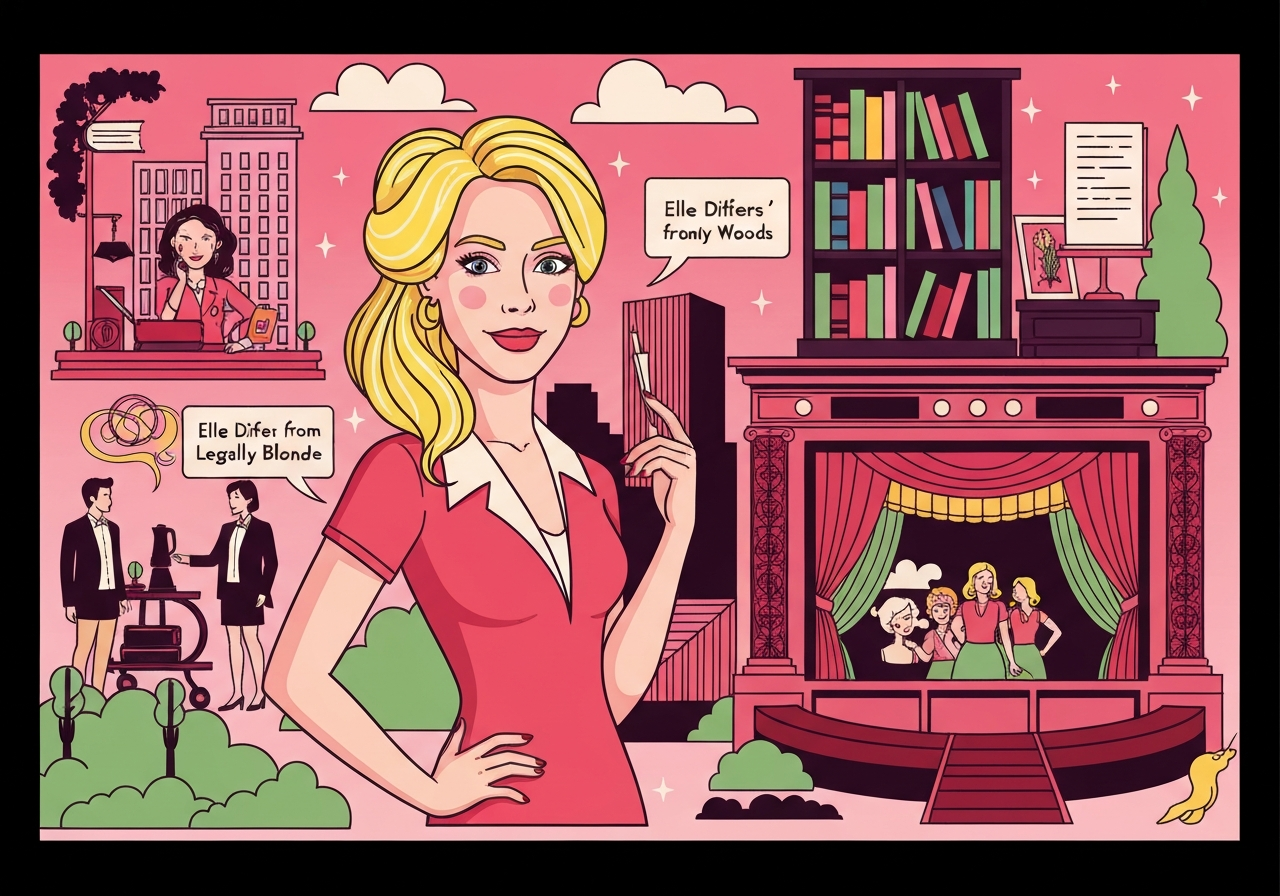
Prime Video’s series Elle, which premiered July 1, rewrites the early life of Elle Woods by moving the narrative back to her high-school years and relocating parts of her family story from sunny Los Angeles to overcast Seattle. Lexi Minetree, a 25-year-old performer, takes on the title role while Reese Witherspoon serves as an executive producer; the series was renewed for a second season ahead of or soon after its launch. The showrunners say they preserved the essential optimism, kindness and resilience that defined the 2001 Legally Blonde heroine while creating new conflicts and settings that can sustain multiple seasons.
Key Takeaways
- Premiere and renewal: Elle debuted on Prime Video on July 1 and has already been renewed for Season Two, signaling platform confidence in the franchise expansion.
- Casting: Lexi Minetree (age 25) portrays teenage Elle Woods; Reese Witherspoon is credited as an executive producer and helped guide the casting and tone.
- Setting shift: The series begins with the Woods family in Los Angeles but relocates them to Seattle after the father’s professional setback; this contrasts with the film’s Bel Air/L.A. upbringing and immediate move to Harvard.
- Family and origin details: Tom Everett Scott and June Diane Raphael play Dr. Wyatt Woods and Eva Woods, giving the parents fuller identities and motives absent from the film’s minimal parental roles.
- Bruiser continuity: The series includes a chihuahua presented as Bruiser; three dogs (Pixie, Cruiser and a primary Bruiser) plus a stuffed stand-in are used in production.
- Canon boundaries: Showrunners positioned the 2001 film as a tonal and plot North Star while allowing changes to fit a serialized teen drama format.
- Key absences: Warner Huntington III, Elle’s college boyfriend in the original film, does not appear in Season One of the series.
Background
Legally Blonde, released in 2001 and starring Reese Witherspoon, established Elle Woods as a pop-culture icon: a fashion-forward, relentlessly optimistic character who defied expectations at Harvard Law School. The original film leaned on a compact origin—Elle as a UCLA-like fashion merchandising major with a 4.0 GPA—then leapfrogged to her adult, law-school triumphs. For a quarter-century that origin functioned mainly as a setup for Elle’s later courtroom victories rather than as sustained dramatic material.
Streaming platforms and franchise owners have increasingly mined established IP for origin stories and serialized expansions, where a familiar brand reduces discovery risk while episodic storytelling opens space for character work. In that context, Prime Video’s Elle follows a broader industry pattern: reframe a beloved feature as a coming-of-age series to capture both nostalgic fans and younger viewers. The creative team faced two linked challenges—staying true to the film’s spirit while inventing new, season-spanning conflicts.
Main Event
Elle opens with the Woods family living in Los Angeles before a professional mishap by Dr. Wyatt Woods prompts a move to Seattle, a setting depicted as colder and more ideologically resistant to Elle’s pink-and-optimism worldview. That relocation establishes the central dramatic friction: a fashion-minded, upbeat protagonist navigating a high school culture steeped in grunge, flannel and anti-establishment sentiment. Showrunners Laura Kittrell and Caroline Dries told press outlets they used the movie as a guiding reference while creating fresh storylines suited to a serialized timeline.
Lexi Minetree’s audition reportedly included a homemade remake of Elle Woods’ Harvard application video, signaling how the production leaned into theatrical commitment while demanding a younger, school-aged performance. The series gives the parents names and professions—Tom Everett Scott as Dr. Wyatt Woods and June Diane Raphael as Eva—turning otherwise minor figures into drivers of plot and motive. The on-screen family dynamic explains the decision to move and provides texture to Elle’s resilience.
Bruiser the chihuahua appears as well, represented on set by multiple dogs and a stuffed stand-in; the production honors the canine continuity that fans associate with the film series. Not every familiar face returns: Warner Huntington III, the college-era boyfriend, is absent from Season One, though original cast members participated in promotional events tied to the series launch. Plot threads in Season One focus on a local mystery and Elle’s pursuit of a summer internship at a fashion title, positioning the arc toward the industry trajectory seen in the films.
Analysis & Implications
Relocating part of Elle’s story to Seattle does more than change backdrop; it reframes the protagonist’s worldview by placing her in an ideologically and climatically opposite environment to Bel Air. That contrast amplifies narrative stakes—Elle’s signature optimism becomes both a personal coping strategy and a source of social friction in a rainier, more cynical community. From a storytelling perspective, placing Elle in high school expands the emotional register and allows writers to show gradual formation of values the films presented as already extant.
Serializing the origin also has franchise economics implications. Origin-series extensions can lengthen IP life, create subscription retention opportunities and cross-promote legacy titles. The swift renewal for Season Two indicates Prime Video values the property’s ability to draw viewers and sustain serialized arcs. Still, the series must balance fan expectations for Easter eggs and faithful tone against the need to surprise and deepen character motivations.
Canon management is a central creative question. By treating the 2001 film as a tonal North Star rather than a rigid blueprint, the showrunners aim to preserve the character’s essence while adjusting specifics for contemporary audiences and longer-form storytelling. That approach reduces the risk of alienating long-term fans while giving writers latitude to explore previously unseen formative experiences—for example, the father’s malpractice-driven move and the school-based mystery she helps solve.
Comparison & Data
| Element | Legally Blonde (2001 film) | Elle (Prime Video series) |
|---|---|---|
| Primary setting | Bel Air/Los Angeles; Harvard Law | Begins in Los Angeles, relocates to Seattle; high school focus |
| Lead performer | Reese Witherspoon (adult Elle) | Lexi Minetree (25; teenage Elle) |
| Release | 2001 (feature film) | Premiered July 1, 2026 (series) |
| Bruiser (chihuahua) | Present (Moonie portrayed Bruiser; Moonie died 2016 at 18) | Present (three dogs and a stuffed stand-in portray Bruiser) |
| Warner Huntington III | Key supporting college-era character | Not in Season One |
The table highlights deliberate shifts: temporal focus moves from college-to-career to adolescence-to-discovery, and location moves to broaden thematic contrast. Those alterations are intended to support serialized character growth across multiple seasons rather than a single transformational arc.
Reactions & Quotes
“The goal was always to keep the optimism of the original character, the joy and the kindness,”
Laura Kittrell, co-showrunner
Kittrell framed the series as an attempt to retain the film’s core moral orientation even while changing setting and circumstances to suit long-form TV.
“The movie is our North star, so we were always deferential to what happened in the movie, tonally and plot-wise,”
Caroline Dries, co-showrunner
Dries emphasized that the writers consulted the original film for tonal benchmarks but allowed the serialized format to diverge where necessary.
“No matter how unkind someone’s been to her, she always takes the high road,”
Lexi Minetree (on Witherspoon’s direction)
Minetree described a performance strategy focused on preserving Elle’s kindness while depicting her learning to stand up for herself in a new social environment.
Unconfirmed
- Whether Warner Huntington III will appear in Season Two remains unconfirmed; producers stated he is absent from Season One but did not rule out future inclusion.
- The series presents Bruiser as the same canine companion lineage as the films, but on-set use of multiple dogs and a stuffed stand-in means the animal continuity is a production convention rather than a single animal’s provenance.
- Specific timeline links that place events in the series as direct, scene-by-scene precursors to every detail of the 2001 film have not been exhaustively mapped by the production and remain subject to later clarification.
Bottom Line
Prime Video’s Elle reclaims and expands a fan-favorite character by transporting her earlier in life and into a new social environment that tests the qualities audiences already admire: optimism, resilience and decency. The change in setting—from affluent Los Angeles environs to rainier, skeptical Seattle—functions as a narrative engine, creating obstacles that the episodic format can explore over multiple seasons.
For fans of Legally Blonde, the series offers recognizable tonal beats and deliberate Easter eggs while inviting viewers to accept a different origin narrative shaped for streaming television. The swift renewal for Season Two suggests the platform anticipates continued viewer engagement; the series’ long-term impact will depend on how well it balances fidelity to the original with meaningful, character-driven innovation.