
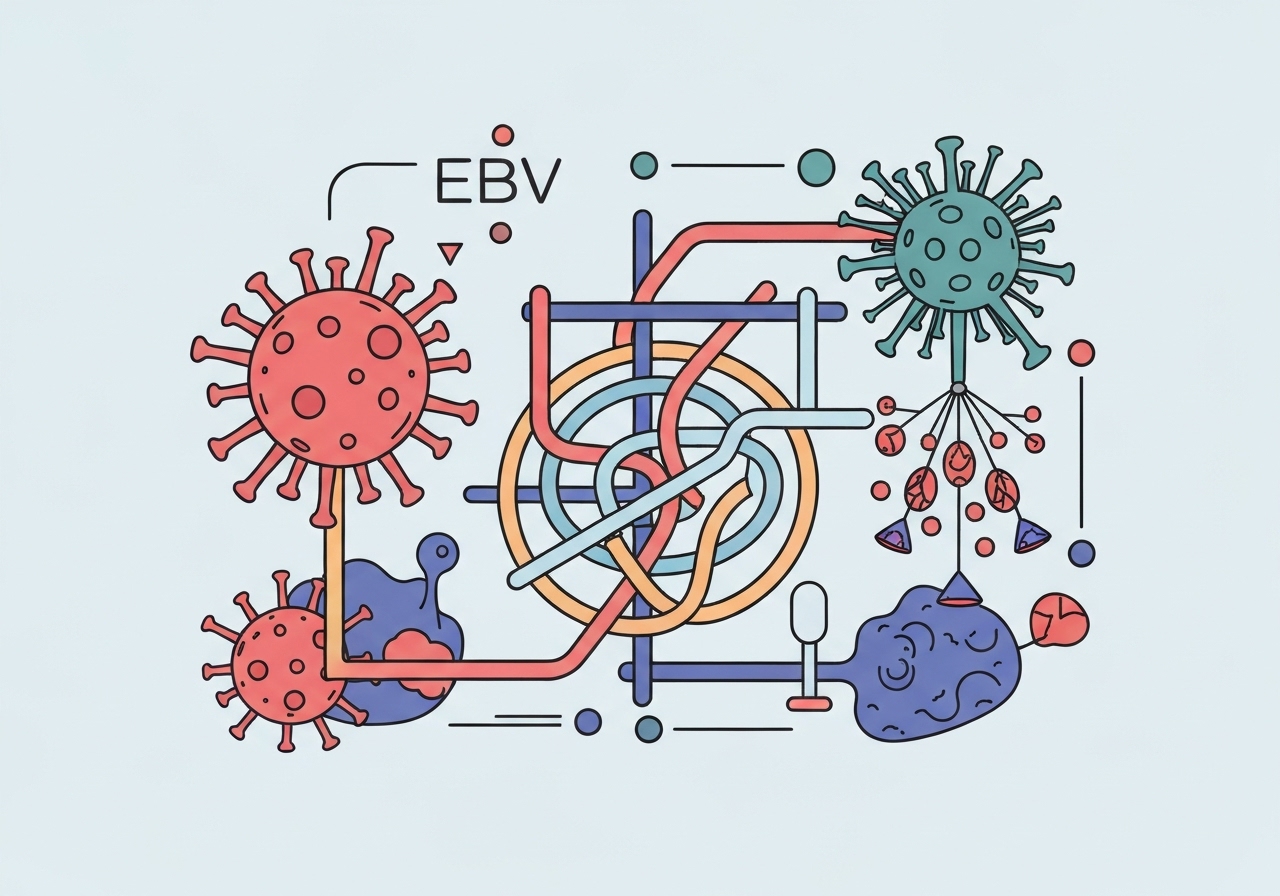
Lead: A study published Wednesday in Science Translational Medicine reports evidence that Epstein-Barr virus (EBV), which infects about 95% of people during their lives, may trigger systemic lupus erythematosus by reprogramming B cells to attack the body. Researchers say the work reveals a mechanistic connection that could explain how the virus leads to the antinuclear antibodies characteristic of lupus. The finding offers new directions for targeted therapies and strengthens calls for an EBV vaccine. Scientists caution, however, that more work is needed to define how broadly the mechanism applies across all lupus patients.
Key Takeaways
- The study, published in Science Translational Medicine, identifies a pathway by which Epstein-Barr virus can drive B cells to produce antinuclear antibodies that target the body’s own tissue.
- EBV infects roughly 95% of people at some point; most carry the virus latently and never develop autoimmune disease.
- Researchers report lupus patients have about a 25-fold higher proportion of EBV-containing B cells compared with healthy controls, a central quantitative result of the study.
- Hundreds of thousands of people in the United States live with lupus, which can cause fatigue, joint pain, rashes and, in severe cases, kidney failure or immune suppression.
- Authors and outside experts say the findings support efforts to develop an EBV vaccine and point to potential therapies that selectively target EBV-infected B cells.
Background
Lupus is an autoimmune disease with diverse symptoms and no single established cause or definitive cure. Clinicians and researchers have long suspected environmental triggers interact with genetic and hormonal predispositions to produce the disease, but the precise initiating events have remained unclear. Epstein-Barr virus is one of the most ubiquitous human viruses worldwide; it frequently produces no symptoms in children and is the most common cause of infectious mononucleosis in adolescents and adults. After primary infection, EBV establishes lifelong latency within a small population of B lymphocytes, persisting quietly in most carriers.
Prior research has linked EBV to other autoimmune conditions, most notably multiple sclerosis, where epidemiologic and mechanistic studies have strengthened the association but not shown EBV is the sole cause. The current study builds on that literature by focusing on how EBV might alter B-cell behavior in a way that generates antinuclear antibodies — a hallmark of lupus diagnosis. Funding for parts of the work included grants from private funders; the Lupus Research Alliance contributed support and has urged cautious interpretation pending replication. Clinicians note that, despite the virus’s ubiquity, only a minority of infected individuals develop autoimmune disease, implying additional host factors shape risk.
Main Event
The research team led by Dr. William Robinson at Stanford examined B cells from people with lupus and compared them with cells from healthy donors. They found that EBV-infected B cells were markedly more abundant in lupus patients — roughly 25 times the share seen in controls — and that those infected cells produced antinuclear antibodies that bind to cell nuclei. Using molecular assays, the investigators characterized how EBV alters B-cell gene expression and antibody production, supporting a causal sequence from viral infection to autoreactive antibody generation.
Dr. Robinson described the results as filling a key mechanistic gap: the work identifies a plausible cellular route linking EBV persistence to the autoimmune processes observed in lupus. The paper also notes that the EBV-driven pathway could interact with previously described immune irregularities in lupus, such as T-cell imbalances reported in a Nature study last year. Co-authors and funders stress that the experimental designs included multiple controls to reduce confounding, but that cause-and-effect in human disease is inherently complex.
Outside experts offered measured responses. Dr. Anca Askanase of Columbia University, not involved in the study, said a clearer mechanistic picture strengthens the case for preventive strategies such as vaccination. Hoang Nguyen of the Lupus Research Alliance, which funded part of the research, said the findings are promising but that additional work is required to determine whether the mechanism accounts for all or most lupus cases. The investigators also raised the possibility that only certain EBV strains, or particular host genetic backgrounds, produce the pathogenic sequence described.
Analysis & Implications
If EBV can indeed reprogram a subset of B cells to make antinuclear antibodies, that pathway would have several clinical and research implications. First, it provides a specific target for new therapies aimed at eliminating or suppressing EBV-infected B cells rather than broadly suppressing the immune system. Such targeted approaches could reduce side effects compared with current treatments like corticosteroids and generalized immunosuppressants. Robinson, who has co-founded companies developing autoimmune therapeutics, highlighted the translational potential of selectively targeting the infected B-cell reservoir.
Second, the findings add urgency to vaccine development. Several EBV vaccines are already in clinical trials; preventing initial infection would, in principle, remove the upstream trigger described by the authors. Researchers caution, though, that vaccination would need to be widely adopted and administered at ages before typical EBV exposure to have maximal preventive effect. Public-health considerations — including vaccine safety, timing and coverage — would become central to any EBV-prevention strategy aimed at reducing autoimmune disease burden.
Third, the study raises broader questions about host factors that determine which EBV carriers develop autoimmunity. The majority of people infected with EBV never develop lupus, MS or related conditions, so genetic susceptibility, sex hormones and environmental co-factors likely modulate risk. The authors link their B-cell findings to other immune abnormalities seen in lupus, suggesting EBV-triggered autoantibodies could initiate cascades that recruit pathogenic T cells and amplify tissue damage. Determining the necessary and sufficient steps for disease progression will be a focus for follow-up work.
Comparison & Data
| Metric | General population | Lupus patients |
|---|---|---|
| Lifetime EBV exposure | ~95% | ~95% (similar) |
| Share of EBV-containing B cells | Baseline (reference) | ~25× higher than controls |
| U.S. lupus burden | — | Hundreds of thousands of people |
The table summarizes the most salient quantitative findings preserved from the study and public estimates: EBV infects roughly 95% of people, yet lupus patients show a substantially elevated proportion of EBV-infected B cells (about 25-fold). This contrast underscores the study’s central claim that the virus’s behavior within B cells — not simple exposure alone — may be pivotal to disease development. Epidemiologic numbers for lupus prevalence in the U.S. are variable by source but commonly cited in the hundreds of thousands.
Reactions & Quotes
“If we now better understand how this fastidious virus is responsible for autoimmune diseases, I think it’s time to figure out how to prevent it.”
Dr. Anca Askanase, Columbia University (clinical director, Lupus Center)
“From our perspective, it’s the key, missing mechanistic link.”
Dr. William Robinson, Stanford University (study co-author)
“Although the evidence is intriguing and promising, more evidence is needed to demonstrate that the link to EBV applies to all lupus.”
Hoang Nguyen, Lupus Research Alliance (assistant VP of research)
Unconfirmed
- Whether the EBV-driven mechanism described by the study accounts for every case of lupus remains unproven and requires broader replication across diverse patient groups.
- It is unclear which, if any, specific EBV strains are uniquely capable of triggering the autoimmune pathway identified; strain-specific effects have not been definitively demonstrated.
- Whether targeted removal of EBV-infected B cells will safely and reliably reverse established lupus in patients has not been tested in clinical trials.
Bottom Line
The new study provides strong mechanistic evidence linking Epstein-Barr virus persistence in B cells to the antinuclear antibodies that characterize lupus, advancing an explanation long suspected by researchers. The results strengthen scientific rationale for preventive strategies such as an EBV vaccine and for therapeutics that selectively address EBV-infected B cells rather than broadly suppressing immunity.
Nonetheless, major uncertainties remain: most people infected with EBV never develop lupus, and the findings must be replicated and extended to diverse populations and clinical settings before changing standard care. For patients, clinicians and policymakers, the study marks a pivotal step — shifting EBV from a long-suspected cofactor to a concrete mechanistic candidate — but it is not yet a clinical cure.
Sources
- NBC News (news report summarizing the study)
- Science Translational Medicine (academic journal where the study was published)
- Lupus Research Alliance (nonprofit funder and commentary)