
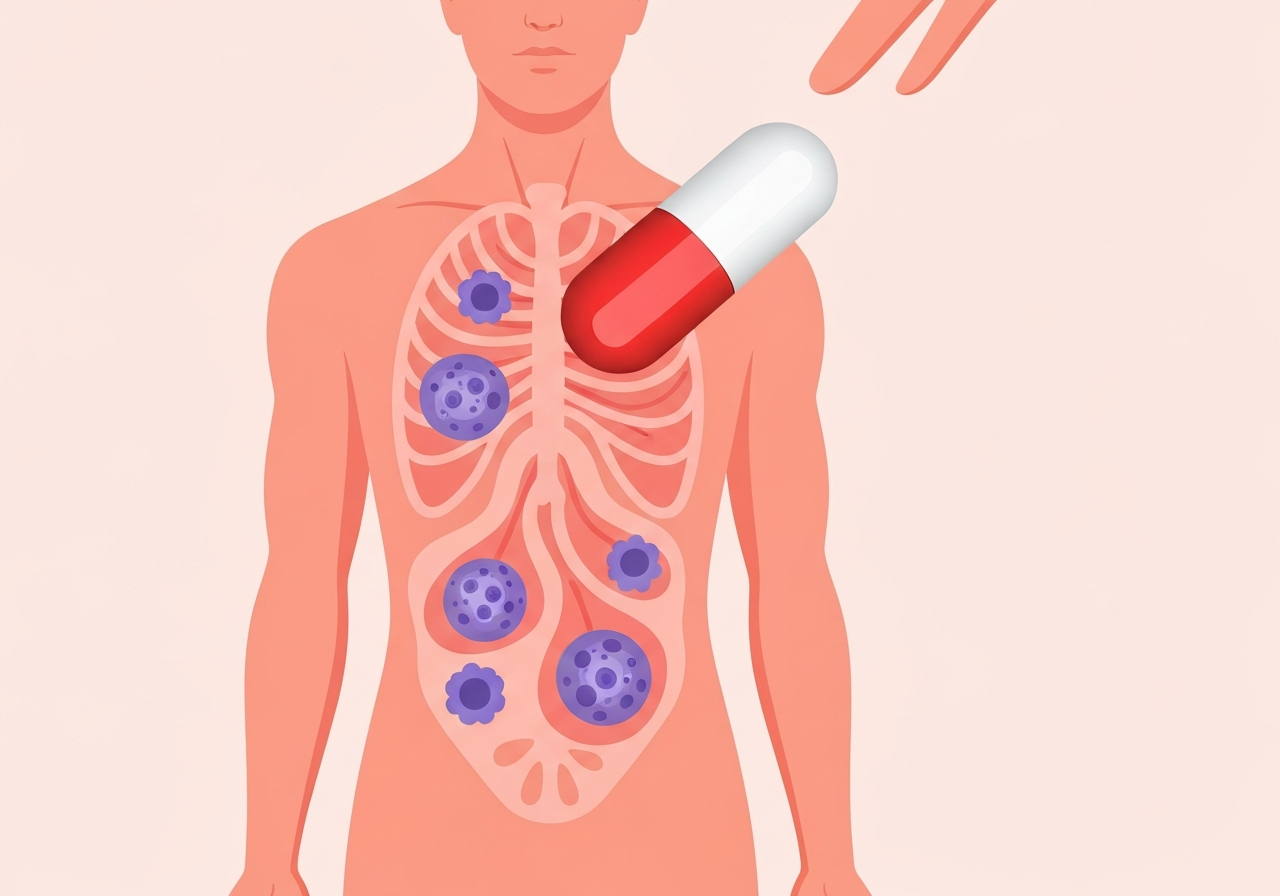
New clinical trials and laboratory research over the past decade indicate that regular low-dose aspirin can cut the risk of certain cancers and reduce recurrence, especially in genetically vulnerable groups. Landmark randomized studies led by teams in the UK and Sweden found roughly a halving of colorectal cancer incidence or recurrence in people taking aspirin for defined periods. Policy has already shifted in some countries: UK guidance changed in 2020 for people with Lynch syndrome, and Sweden began offering low-dose aspirin to selected bowel cancer patients in January 2026. Researchers now point to multiple mechanisms — from inhibition of COX-2 driven prostaglandin signalling to thromboxane-related immune effects — to explain the drug’s anti-cancer actions.
Key takeaways
- Randomized data from 861 patients with Lynch syndrome (Burn et al.) showed a 50% reduction in colorectal cancer after at least two years of daily aspirin, originally tested at 600mg; later analyses suggest 75–100mg may be similarly effective.
- A trial of 2,980 colorectal cancer patients led by Anna Martling found that 160mg daily started within three months of surgery cut recurrence by more than half versus placebo.
- Large pragmatic trials are under way: an 11,000-participant study across the UK, Ireland and India is testing 100mg versus 300mg daily in people previously treated for several tumour types, with results expected next year.
- Mechanistic work implicates COX-2/prostaglandin pathways and a thromboxane A2–linked immune evasion route; some data linking thromboxane to metastasis remain preclinical or early clinical.
- Side effects — including indigestion, ulcers, internal bleeding and rare intracranial haemorrhage — mean aspirin should be started only after clinician assessment and for selected groups.
- Policy shifts are already evident: UK advice for Lynch syndrome changed in 2020; Sweden introduced mutation-directed aspirin offers for bowel cancer survivors in January 2026.
Background
Aspirin’s story stretches back millennia: 4,400-year-old Mesopotamian tablets referenced willow-based remedies that contained salicin, the ancestor of modern acetylsalicylic acid. By the late 19th century and into the 1890s, chemists had synthesised less corrosive acetylsalicylic acid and marketed it widely; over the 20th century its antiplatelet properties prompted routine low-dose use for cardiovascular prevention. Anecdotal and experimental observations linking aspirin to lower cancer spread date back decades — a 1972 mouse study first showed reduced metastasis when animals received aspirin in drinking water.
Translating animal and observational hints into clinical practice proved difficult because proving cancer prevention in the general population requires very large, long trials. Investigators therefore focused on higher-risk subgroups where events occur sooner: people with hereditary predisposition (Lynch syndrome) and patients already treated for colorectal cancer. Those groups accelerate the signal-to-noise ratio for trials and have produced the most actionable evidence so far.
Main event
John Burn and colleagues recruited 861 people with Lynch syndrome to a randomized trial whose 2020 report showed that daily aspirin, when taken for at least two years, roughly halved the subsequent incidence of colorectal cancer. The initial protocol used 600mg, but follow-up and newer analyses indicate lower doses — around 75–100mg daily — may retain protection while reducing adverse events. Burn’s team continues long-term follow-up and a second trial is under peer review, with the first enrollee, Nick James, reported cancer-free after ten years on aspirin.
Separately, Anna Martling’s randomized trial enrolled 2,980 colorectal cancer patients and assigned them to 160mg daily aspirin started within three months of surgery versus placebo. The aspirin arm showed a highly significant reduction in recurrence — less than half the risk observed in the placebo group — and very few serious adverse events were reported. Martling’s 2025 publication prompted Swedish practice change: from January 2026, patients in Sweden are screened for the studied tumour mutations and offered low-dose aspirin when appropriate.
Ruth Langley is leading a broad prevention trial enrolling roughly 11,000 survivors of colorectal, breast, gastroesophageal and prostate cancers across the UK, Ireland and India. That study compares 100mg and 300mg daily and aims to replicate colorectal findings and test aspirin’s role in other tumours; investigators expect primary results next year. Parallel laboratory work — notably from Rahul Roychoudhuri’s group — has uncovered a potential immune mechanism: aspirin’s inhibition of thromboxane A2 may prevent an immune-suppressive gene from masking metastatic cells from T cells, a finding observed in mice and supported by human biomarker data showing persistently raised thromboxane levels after some cancers.
Analysis & implications
For people with very high baseline risk, such as Lynch syndrome carriers, the balance of benefit versus harm increasingly favours offering low-dose aspirin under medical supervision. A ~50% relative reduction in colorectal cancer incidence is a large, clinically meaningful effect; when absolute risk is high (Lynch lifetime colorectal risk ~80%), the number needed to treat is relatively low. Policy changes in the UK (2020) and Sweden (2026) reflect that risk–benefit calculus for targeted groups.
Extending aspirin to broader, ostensibly healthy populations is more contentious. Population-wide use would lower event rates only modestly in lower-risk groups while exposing many people to bleeding risks. Public-health modelling cited by trialists suggests potential all-cause mortality reductions if middle-aged adults consumed daily low-dose aspirin for a decade, but those models rest on assumptions about adherence, competing risks and bleeding rates that vary by age and comorbidity.
Mechanistically, a dual-action model is plausible and important: aspirin both alters tumour biology inside cancer cells via COX-2/prostaglandin inhibition and modulates the tumour microenvironment and systemic immune recognition by reducing thromboxane-driven immune suppression. If thromboxane proves a driver of metastasis in humans, aspirin’s antithrombotic activity may be central to its anti-metastatic effect. That would broaden potential indications but also underline why optimal dose, duration and patient selection require careful definition in trials.
Comparison & data
| Study/Group | Participants | Dose | Main outcome | Policy/publication |
|---|---|---|---|---|
| Burn et al. (Lynch syndrome) | 861 | 600mg (initial); later data support 75–100mg | ~50% lower colorectal cancer incidence after ≥2 years | Randomized trial reported 2020; UK guidance updated 2020 |
| Martling et al. (post-op colorectal) | 2,980 | 160mg | Less than half the recurrence risk vs placebo | Published Sept 2025; Sweden implemented screening and aspirin Jan 2026 |
| Langley et al. (multi-cancer survivors) | ~11,000 (ongoing) | 100mg vs 300mg | Primary results expected next year | Large randomized multicentre trial (UK/Ireland/India) |
Putting these trials side by side shows a consistent signal for colorectal disease and post-treatment recurrence, with dose and timing still under study. The largest completed randomized data are in high-risk or post-treatment cohorts; general-population prevention evidence remains circumstantial or observational.
Reactions & quotes
Clinical leaders stress cautious optimism while urging clinical oversight.
He notes that long follow-up is already showing durable protection in Lynch syndrome participants.
John Burn, Professor of Clinical Genetics, Newcastle University (trial lead)
She emphasises that translating trial results to healthy populations demands care because bleeding harms may outweigh small gains for many people.
Anna Martling, Professor of Surgery, Karolinska Institute (trial investigator)
Recent lab work points to thromboxane as a previously underappreciated mediator of immune evasion by metastases.
Rahul Roychoudhuri, Professor of Cancer Immunology, University of Cambridge (researcher)
Unconfirmed
- Whether the thromboxane–immune evasion mechanism seen in mice fully explains reduced metastasis in humans remains unproven and needs clinical validation.
- Optimal aspirin dose and minimum effective duration for different cancers are not definitively established; ongoing trials will refine these parameters.
- Net benefit of routine low-dose aspirin for the general, healthy population — outside specified high-risk groups — is still debated and may vary by age and comorbidity.
Bottom line
Strong randomized evidence now supports low-dose aspirin as a preventive option for people at markedly elevated colorectal cancer risk (for example, many with Lynch syndrome) and as a way to reduce recurrence in selected colorectal cancer patients with specific tumour mutations. Those results have already driven guideline and practice changes in some countries, reflecting a favorable balance of benefit and risk in targeted groups.
For broader use, clinicians and patients should weigh potential reductions in cancer incidence and cardiovascular events against known bleeding risks. Ongoing large trials and mechanistic studies over the next few years should clarify optimal dosing, which patient groups benefit most, and whether the protective signal extends reliably to other tumour types.