
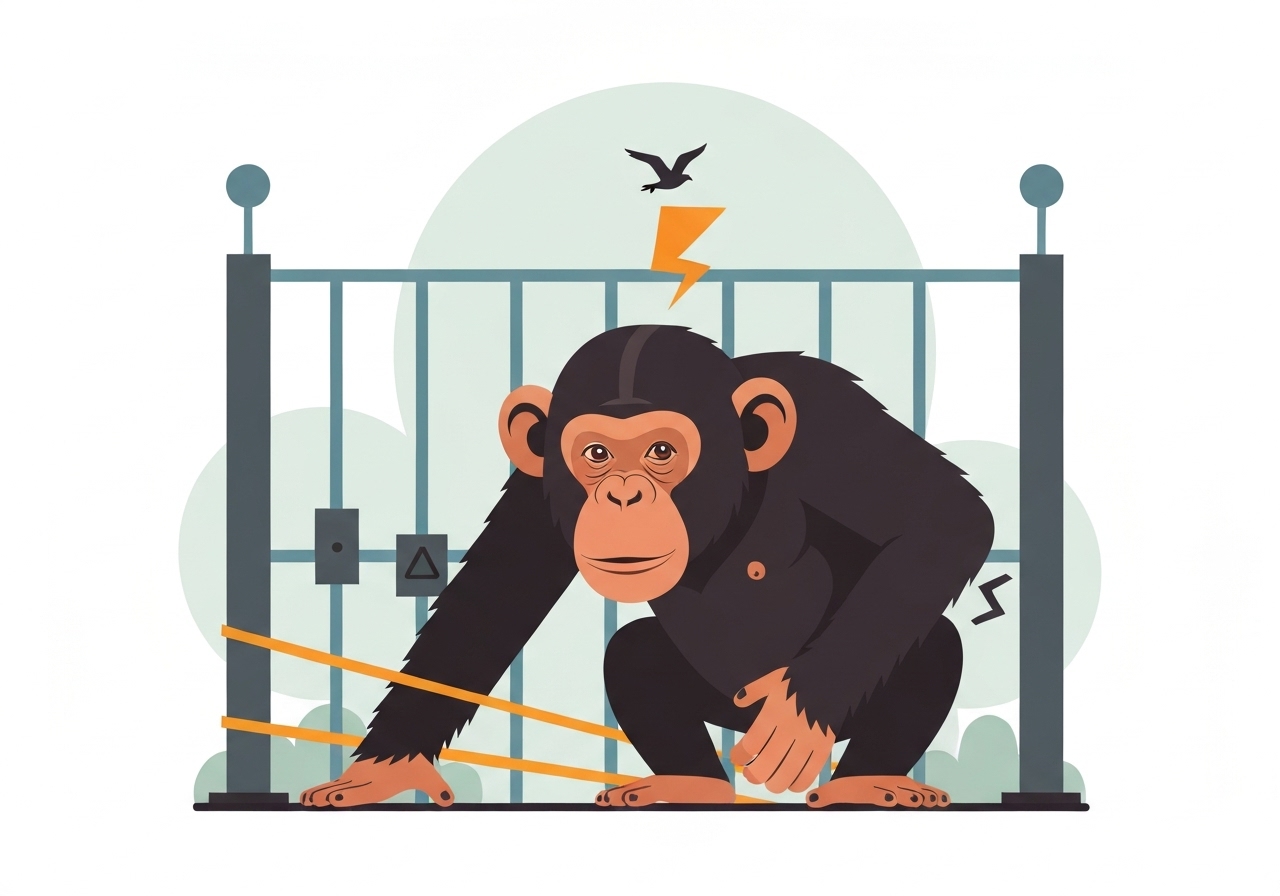
Lead: A female chimpanzee briefly left the International Chimpanzee Complex at the Indianapolis Zoo on the morning of , and was returned to the exhibit after being sedated. The zoo locked down and guided visitors to secure areas while staff contained the animal. Officials report no guests or staff were injured, and the facility reopened later the same day. Senior zoo officials said responding teams acted quickly and followed established protocols.
Key Takeaways
- At about , staff observed a female chimpanzee outside the International Chimpanzee Complex and initiated a lockdown.
- The animal was sedated on site and returned to the enclosure; zoo officials confirmed nobody was bitten or otherwise injured.
- Guests were escorted to secure locations while security, animal care and veterinary teams managed the incident.
- The Indianapolis Zoo reopened to the public later the same day after staff deemed conditions safe.
- The International Chimpanzee Complex opened over Memorial Day weekend 2024 and can house up to 30 chimpanzees; it features a trail system that spans hundreds of feet.
- Zoo leadership characterized the response as professional and consistent with training for such scenarios.
Background
The Indianapolis Zoo inaugurated the International Chimpanzee Complex during Memorial Day weekend 2024 as a large, open habitat intended to promote natural behavior and visitor encounters. The complex is among the larger chimpanzee communities in the United States and was designed with extensive trail access so animals can move through a broad environment. Zoo leadership has described the design philosophy as privileging the chimpanzees’ choices and comfort to encourage authentic interactions when animals elect to approach visitors.
Open, mixed-use exhibits like this reflect a broader trend in modern zoological design that balances animal welfare, enrichment and public education against containment and visitor safety risks. Stakeholders include animal-care staff responsible for day-to-day husbandry, veterinary teams that oversee medical interventions, security personnel, and guests whose experience the zoo aims to protect. The facility’s capacity—up to 30 chimpanzees—and the length of the trail system are part of that design trade-off, allowing animals many places to retreat or roam within the complex footprint.
Main Event
According to the zoo’s communications, staff first noticed the female chimpanzee outside the International Chimpanzee Complex at approximately 10 a.m. on Nov. 14. The zoo immediately enacted a lockdown procedure, escorting visitors and nonessential staff to predetermined secure locations while response teams assembled. Animal-care and veterinary personnel, working with security, prepared and administered a sedation plan to allow the safe return of the animal to the exhibit.
After the animal was sedated and secured, keepers placed her back into the chimpanzee area and monitored her recovery. Zoo officials reopened the facility when staff judged the environment safe for guests and animals. Senior vice president Jake Oakman emphasized that guests were kept safe during the response and that no injuries occurred.
“Zoo guests were safe at all times,”
Jake Oakman, Indianapolis Zoo (statement)
“The zoo security, animal care and veterinary teams train for these scenarios and responded in a textbook and professional manner,”
Jake Oakman, Indianapolis Zoo (statement)
Analysis & Implications
The incident highlights the operational tensions that come with expansive, choice-based exhibits: they improve animal welfare and educational value but create occasional risks that require rapid, coordinated response. From a risk-management perspective, the sequence—detection, lockdown, sedation and reintegration—follows standard containment playbooks, but it will likely prompt an internal review of how the animal left its usual area.
Regulatory and accreditation bodies that oversee zoological institutions often require incident reporting and may request documentation of procedures used, sedation protocols, and post-incident welfare assessments. The zoo’s clear, timely messaging and the absence of injuries reduce immediate public-safety concerns, but stakeholders may press for more detailed follow-up about entry/egress points, fencing or barrier performance, and any procedural changes to minimize recurrence.
Financial and reputational implications are possible but not automatic. Short-term impacts typically include heightened media scrutiny, additional safety briefings, and potential updates to emergency response plans. Longer-term effects depend on the review’s findings and whether the zoo chooses structural or procedural changes to the complex’s boundaries, staff rosters or visitor management practices.
Comparison & Data
| Metric | Value |
|---|---|
| Incident date & time | Nov. 14, 2024 — ~10:00 a.m. |
| Animal | Female chimpanzee (unnamed) |
| Outcome | Sedated and returned; no injuries |
| Complex opened | Memorial Day weekend, 2024 |
| Capacity | Up to 30 chimpanzees |
| Trail length | Hundreds of feet |
The table summarizes core, verifiable data about the episode and the exhibit. Compared with many traditional, smaller exhibits, the International Chimpanzee Complex’s emphasis on range and choice increases the number of potential points where an animal could move outside of visitors’ view, requiring layered protections and rapid detection systems.
Reactions & Quotes
Zoo leadership framed the event as an operational incident handled according to training, emphasizing guest safety and staff professionalism. Animal-welfare advocates typically weigh such statements against post-event transparency and follow-up actions that demonstrate learning and system improvement.
“We want to provide those opportunities, and the more comfortable the apes are, the more options they have,”
Dr. Rob Shumaker, President and CEO, Indianapolis Zoo (past statement on exhibit design)
“The teams responded in a textbook and professional manner,”
Jake Oakman, Indianapolis Zoo (statement)
Unconfirmed
- Whether the chimpanzee used a failure in a physical barrier, a gate left open during staff movement, or an interior route to exit the normally restricted area is not yet publicly confirmed.
- The precise sedation agent and dosage administered have not been disclosed by the zoo in initial statements.
- There is no public confirmation of prior similar escapes from this specific complex; any history of such events has not been detailed by officials.
Bottom Line
The swift recovery of the chimpanzee and the absence of injuries indicate the Indianapolis Zoo’s response capabilities were effective in this instance. Nonetheless, the episode underscores the operational trade-offs inherent in large, choice-based ape exhibits and will likely prompt a detailed internal review to identify any preventable gaps.
For the public, the principal takeaways are that no one was harmed, the zoo reopened after its teams secured the situation, and further information should follow from official incident reports. Observers should expect subsequent clarifications on how the chimpanzee exited its usual space and on any procedural or structural changes the zoo plans to implement.