
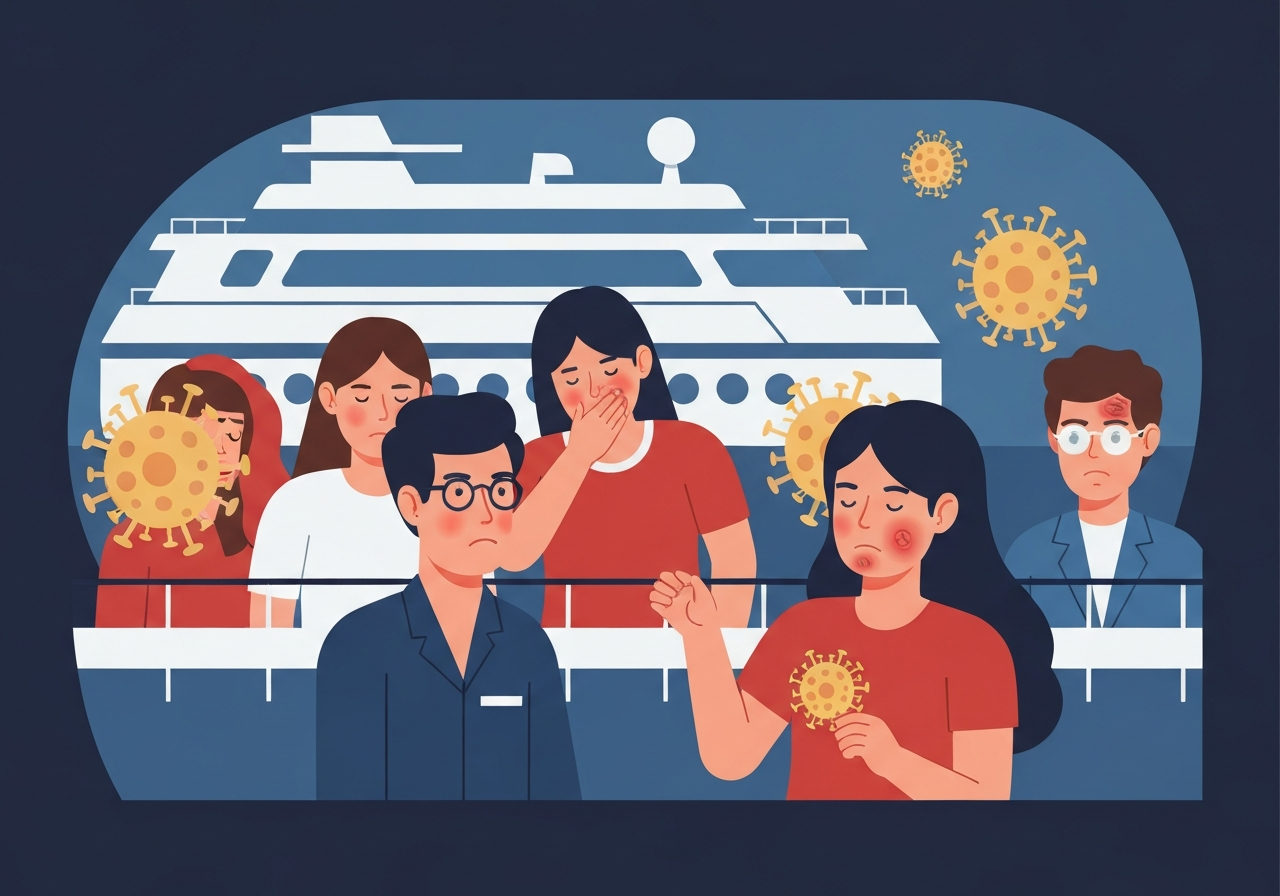
Lead: Argentine health officials and international partners are investigating whether Argentina is the origin of a hantavirus outbreak linked to an Atlantic cruise that left Ushuaia on April 1. The MV Hondius has three confirmed passenger deaths and multiple infections, while Argentina has reported 101 hantavirus cases since June 2025. Scientists say shifts in climate and weather patterns that favor rodent population growth may be driving a broader rise in cases across the country. Authorities are tracing passengers’ movements, isolating contacts and sharing viral samples with several nations to speed detection.
Key takeaways
- Argentina’s Health Ministry reported 101 hantavirus infections since June 2025, about double the caseload over the same period a year earlier.
- Three cruise passengers died: a 70-year-old Dutch man (died April 11), his 69-year-old wife (died April 26), and a German woman (died May 2).
- The Andes virus — the regional hantavirus strain involved — can cause hantavirus pulmonary syndrome and is the only hantavirus known to spread between people on rare occasions.
- Last year the disease killed nearly one-third of confirmed cases, compared with an average mortality rate around 15% in the prior five-year period.
- Argentina dispatched viral genetic material and testing kits to Spain, Senegal, South Africa, the Netherlands and the United Kingdom to assist detection efforts.
- Public-health investigators are tracing passengers’ travel before embarkation in Ushuaia, including a possible bird-watching outing, and monitoring contacts to limit further spread.
- Experts link the rise in hantavirus to climate-driven shifts — including droughts and extreme rain — that alter vegetation and rodent behavior, expanding the virus’s range.
Background
Hantaviruses are rodent-borne pathogens. In South America the Andes virus is the principal strain implicated in severe respiratory illness called hantavirus pulmonary syndrome (HPS). HPS can progress rapidly and has a high fatality rate; Argentina’s recent rise in deaths has elevated concern among clinicians and public-health authorities. The virus is typically transmitted when people inhale dust contaminated with infected rodent urine, droppings or saliva, and only the Andes strain has documented rare person-to-person spread.
Argentina has long reported some of the highest hantavirus incidence in Latin America, according to the World Health Organization. Historically, infections were concentrated in parts of Patagonia, but official data now show shifting geography: roughly 83% of cases are reported in the country’s far north. Public-health capacity in rural areas is uneven, and early hantavirus symptoms resemble common viral infections, which can delay diagnosis and care.
Main event
The cruise MV Hondius departed Ushuaia on April 1 en route to Antarctica. Cases emerged among passengers and crew during the voyage and after the ship returned; officials confirmed the presence of the Andes virus among some passengers. Argentina reported that three travelers died in mid-April and early May — two Dutch nationals and a German national — and multiple other passengers tested positive. The United Nations health agency reported the first onboard death occurred April 11.
Argentine investigators are retracing where infected passengers traveled inside Argentina before boarding, including stops around Ushuaia and other southern sites. Two investigators involved in the probe, speaking on condition of anonymity because they were not authorized to brief the media, said the leading hypothesis for the Dutch couple is exposure during a bird-watching outing in Ushuaia. Authorities are also mapping excursions into forested Patagonian hillsides where local hantavirus clusters have been recorded.
Because the virus can incubate from one to eight weeks, establishing the place and timing of infection is difficult: exposure might have occurred in Argentina before embarkation, at a scheduled stop at a remote South Atlantic island, or aboard the vessel. Argentina’s Health Ministry said it is sharing genetic material and testing equipment with Spain, Senegal, South Africa, the Netherlands and the United Kingdom to help labs identify the strain quickly. Meanwhile, contact tracing and isolation protocols have been activated for close contacts.
Analysis & implications
The surge in cases and recent cruise-linked deaths highlight several intersecting risks: ecological change, increased human mobility, and gaps in rural healthcare. Climate variability — a pattern that includes prolonged drought punctuated by intense rainfall — alters vegetation cycles and food availability, which can force rodents into new areas or allow populations to expand where seeds and other food sources proliferate. Experts warn that such shifts raise the probability of human-rodent encounters and therefore spillover of hantaviruses.
For travelers, the outbreak underscores the limits of pre-departure screening for diseases with long incubation periods and nonspecific early symptoms. A person exposed weeks before boarding can appear well at embarkation yet fall ill later, complicating outbreak control on ships and in remote destinations. Cruise operators and port authorities face operational choices about screening, reporting and disembarkation that carry logistical and reputational consequences.
On a national level, the rise in cases could strain rural health services that are already under-resourced, particularly if severe HPS cases require intensive care. Internationally, the incident has prompted cross-border laboratory cooperation, including shipment of viral material to several countries, which may accelerate understanding of viral genetics and transmission patterns. Policymakers will need to weigh investments in rodent control, public education in rural and tourist areas, and strengthened surveillance to limit future outbreaks.
Comparison & data
| Period | Reported cases | Mortality (reported) |
|---|---|---|
| Since June 2025 | 101 cases | — |
| Same period, previous year | ~50 cases (approx.) | — |
| Last 12 months | — | Nearly one-third fatalities |
| Five-year prior average | — | ~15% |
The table synthesizes publicly reported figures: 101 infections since June 2025 (roughly double the prior-year caseload for the same window). Authorities report that mortality rose to nearly one-third in the last year, compared with an average mortality around 15% in the five years before that. Regional case distribution has shifted from southern Patagonia toward northern provinces where 83% of cases now occur, according to ministry data.
Reactions & quotes
Public-health specialists and local researchers emphasized climate links and the need for surveillance in tourist areas.
“Argentina has become more tropical because of climate change, and that has brought disruptions, like dengue and yellow fever, but also new tropical plants that produce seeds for mice to proliferate,”
Hugo Pizzi, infectious disease specialist
Pizzi’s comments frame the outbreak within broader ecological change: warmer temperatures and altered precipitation can increase rodent food supplies and expand suitable habitat, raising spillover risk to people.
“When precipitation increases, food availability increases, rodent populations grow, and if there are infected rodents, the chance of transmission between rodents — and eventually to humans — also increases,”
Raul González Ittig, genetics professor and CONICET researcher
Ittig, who studies hantavirus ecology, noted that variable weather — from droughts to heavy rain — has created conditions favorable to rapid changes in rodent populations and viral transmission dynamics.
“The risk to the general public remains low, but we must trace contacts and monitor closely to prevent broader spread,”
World Health Organization (epidemic expert)
The WHO’s assessment underscores that while the cruise deaths are serious, documented person-to-person transmission of Andes virus is rare; public-health responses are focused on containment and rapid testing.
Unconfirmed
- Whether the MV Hondius was the site of transmission for the cruise passengers remains unconfirmed; incubation timing allows for infection before, during, or after embarkation.
- Investigators’ hypothesis that the Dutch couple contracted the virus during a bird-watching outing in Ushuaia is under investigation and not yet proven.
- The full extent of human-to-human transmission aboard the ship has not been established and requires genomic and epidemiological linkage to confirm.
Bottom line
The cruise-linked deaths have heightened scrutiny of a broader hantavirus upswing in Argentina that public-health officials link to climatic and ecological changes favoring rodents. The combination of increased human travel, outbreaks in rural and tourist zones, and a virus with a long incubation window complicates containment and diagnosis.
Immediate priorities are completing contact tracing, clarifying where infections occurred, expanding testing capacity, and informing travelers and rural communities about rodent avoidance and early symptoms. Over the medium term, Argentina and regional partners will likely need to strengthen surveillance, invest in rural health capacity and consider ecological measures to reduce rodent-human contact if the trend continues.
Sources
- AP News (news media) — original reporting on the cruise cases and Argentine outbreak.
- World Health Organization (international health agency) — guidance on hantavirus transmission and risk assessment.
- Argentina Health Ministry (official government) — case counts and public health notices on hantavirus.
- CONICET / National University of Córdoba (academic/research) — local research and expert commentary on hantavirus ecology.