
Lead
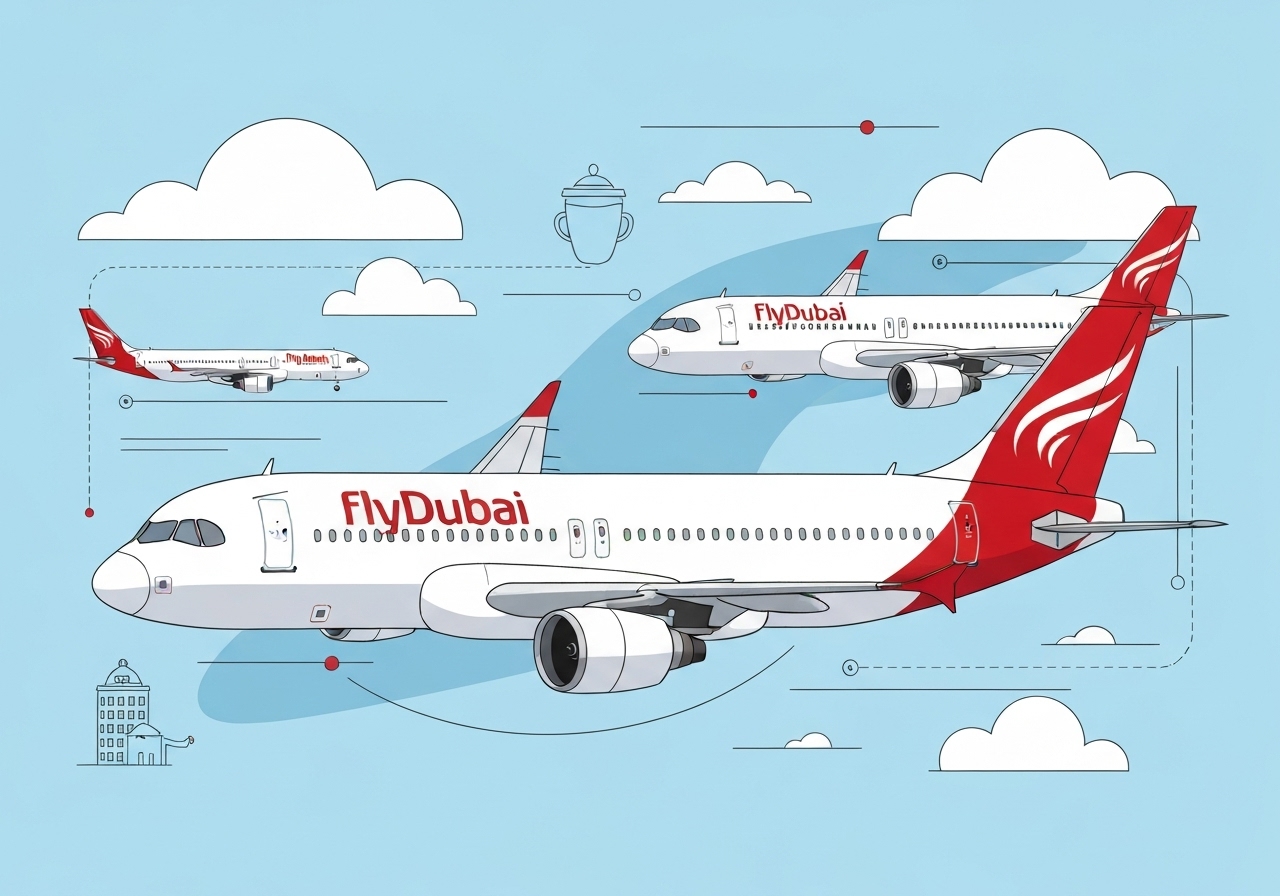
Flydubai has signed a memorandum of understanding with Airbus to acquire up to 150 A321neo family aircraft — an agreement expected to include 115 firm commitments and 35 options. The MoU, announced while the carrier readies network growth and a planned move to Dubai World Central (DWC), represents Flydubai’s first non‑Boeing narrow‑body procurement. The airline continues to operate roughly 100 Boeing 737s and has nearly 120 737 MAXs on order, along with 30 Boeing 787‑9 widebodies ordered last year. Delivery timing and the exact mix of A321neo, A321LR and A321XLR variants have not been disclosed.
Key Takeaways
- Flydubai signed an MoU with Airbus for up to 150 A321neo family jets, expected to comprise 115 firm orders and 35 options.
- The deal would mark Flydubai’s first purchase of non‑Boeing narrow‑body aircraft in its fleet history.
- Flydubai’s current fleet is nearly 100 Boeing 737s; the airline also has about 120 737 MAXs on order and ordered 30 787‑9s in the previous year.
- The carrier is evaluating multiple A321neo variants, potentially including A321LR and A321XLR for longer sectors.
- One stated strategic rationale is fleet diversification ahead of an anticipated move to Dubai World Central around 2034.
- Boeing’s 737 MAX 10 remains uncertified and provides capacity gains but less range than some A321neo family members.
- Delivery schedule and firm/option conversion timing were not included in the MoU and remain to be finalized.
Background
Flydubai launched in 2009 and has grown into a regional carrier focused on medium‑density routes from Dubai, operating predominantly Boeing 737 family aircraft. Until this announcement, the airline’s narrow‑body strategy was wholly Boeing‑centric, with a mix of 737‑800s and 737 MAX 8/9 types in service. In 2023 the airline placed a significant first widebody order — 30 Boeing 787‑9s — marking an expansion into longer international sectors.
The A321neo family is the largest member of Airbus’s A320 family and includes standard (A321neo), extended‑range (A321LR) and extra‑long‑range (A321XLR) variants. The XLR variant, in particular, has been adopted by carriers aiming to open longer thin routes that previously required widebodies. Flydubai’s MoU signals a potential strategic pivot: adding longer‑range narrow‑body types to support network stretching and complement existing MAX fleet economics.
Main Event
The memorandum of understanding between Flydubai and Airbus covers up to 150 A321neo family aircraft, with reporting that 115 would be firm and 35 held as options. The airline made the announcement alongside unrelated plans to roll out free Starlink inflight Wi‑Fi, indicating simultaneous initiatives on fleet and passenger experience fronts. Officials did not publish a delivery timetable, leaving aircraft arrival dates and the pace of fleet integration open.
Flydubai’s leadership framed the move as diversification to support long‑term growth and the carrier’s role in the expansion of Dubai World Central. Company executives highlighted the need for narrow‑body aircraft with extended range to serve new medium‑ and longer‑haul markets — routes that the A321LR/XLR can address more efficiently than many 737 variants.
Operationally, integrating Airbus narrow‑bodies into an existing Boeing fleet will require planning on training, maintenance, and spares. Flydubai already manages a substantial orderbook — approaching 300 aircraft on order when combining narrow‑body and widebody commitments — so scale and economies of operation are major drivers of the strategy.
Analysis & Implications
The MoU underlines Airbus’s competitive strength in longer‑range narrow‑body segments: the A321XLR specifically extends narrow‑body reach into transregional markets that narrow‑bodies historically could not serve. For Flydubai, securing access to the A321neo family could permit network expansion without immediate reliance on widebodies, supporting point‑to‑point and thin long‑haul markets more economically.
For Boeing, the development is a reputational setback in the narrow‑body arena where the 737 family has been dominant. Boeing’s nearest comparable model in capacity is the 737 MAX 10, which — as reported — has not completed certification and offers less range than some A321neo variants. That gap gives Airbus a tactical advantage for carriers prioritizing range and flexibility.
At a strategic level, Flydubai’s mixed‑fleet approach can be rationalized by scale: having two large narrow‑body types allows each to achieve internal economies while letting the carrier select the most suitable aircraft by route profile. Nevertheless, the move raises questions about fleet commonality costs, pilot and technician cross‑qualification demands, and longer‑term leasing and financing structures.
Finally, the MoU should be read as indicative rather than final. Memoranda outline intent and commercial understanding but require conversion to firm purchase agreements and confirmed delivery slots. Market reaction, slot availability at DWC, and negotiations on engine and support packages will shape the ultimate scope and timing of the program.
Comparison & Data
| Type | Relative Range/Role | Status/Notes |
|---|---|---|
| A321neo | Standard long‑range narrow‑body for medium sectors | In service, high production rates |
| A321LR | Extended range for longer thin routes | In service, chosen by carriers expanding reach |
| A321XLR | Longest narrow‑body range, opens transregional markets | In service, key selling point vs competitors |
| 737 MAX 10 | High capacity narrow‑body with reduced range vs some A321 variants | Not yet certified at scale; capacity focused |
The table highlights role differences rather than precise numeric ranges, reflecting that airlines choose types by mission profile (capacity, range, airport constraints) rather than a single metric. Flydubai’s interest in multiple A321neo variants suggests a desire to match aircraft capability to a wider variety of routes as the carrier expands.
Reactions & Quotes
“This strategic addition diversifies our narrow‑body fleet and supports our expansion at Dubai World Central,” said Flydubai leadership, framing the MoU as a growth enabler.
Flydubai chairman statement (shortened)
“We look forward to a partnership that enables network growth and rising demand across our markets,” the airline added, stressing long‑term cooperation with Airbus.
Flydubai official comment (summary)
Industry observers noted the significance of a major operator with a deep Boeing history engaging Airbus for a large narrow‑body package. Analysts emphasized that the move signals market appetite for increased narrow‑body range and flexibility, particularly for carriers structuring growth around DWC’s future capacity.
Unconfirmed
- The precise delivery schedule and production slots for the A321neos remain unconfirmed until firm orders are announced and contracts signed.
- The final breakdown between A321neo, A321LR and A321XLR variants in the package has not been disclosed.
- Any discussion of a future merger between Flydubai and Emirates is speculative and not substantiated by the MoU announcement.
Bottom Line
Flydubai’s MoU for up to 150 Airbus A321neos is a significant strategic signal: the carrier is preparing to broaden its route capability and reduce sole dependence on a single manufacturer for narrow‑body aircraft. If converted into firm orders, the program would accelerate Flydubai’s network ambitions ahead of the expected move to Dubai World Central and give Airbus a major customer in a market segment where its product has clear advantages.
The agreement also intensifies competitive pressure on Boeing in the long‑range narrow‑body market and underscores the operational tradeoffs of a two‑manufacturer fleet. The coming months will be critical: conversion to purchase agreements, disclosed delivery schedules, and the exact variant mix will determine whether this MoU reshapes Flydubai’s growth trajectory or remains a flexible planning option.
Sources
- One Mile at a Time — online aviation media coverage of the MoU announcement