
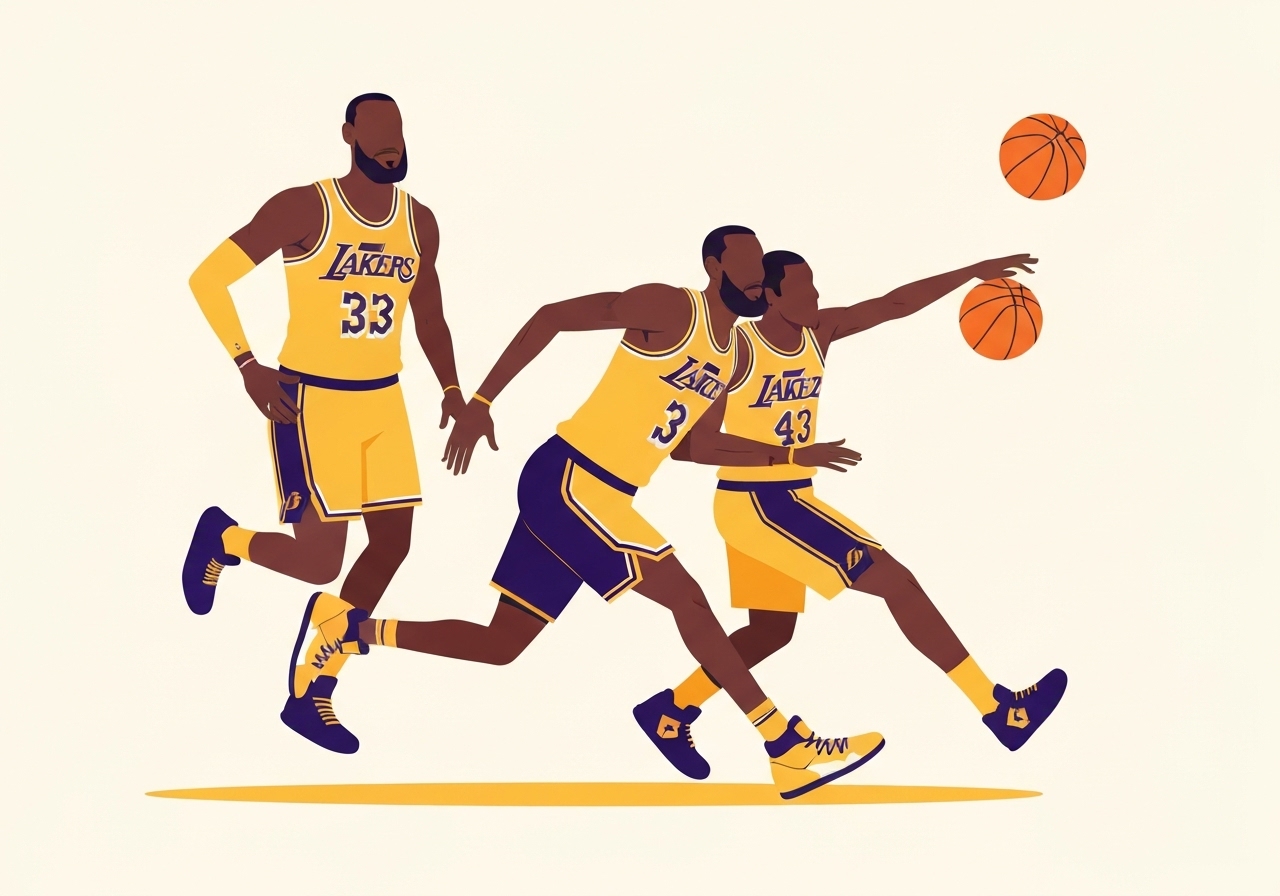
On Nov. 19, 2025 at Crypto.com Arena in Los Angeles, LeBron James returned from a 14-game absence and helped the Lakers rally past the Utah Jazz, 140-126. In his first game back after missing the season-opening stretch with sciatica, the 40-year-old produced a double-double with 11 points and 12 assists and became the first player in NBA history to appear in a 23rd season. Luka Dončić paced the Lakers with 37 points and 10 assists, but LeBron’s floor vision and late-game presence were the defining narrative. The win underscored both immediate lineup benefits and the symbolic weight of LeBron’s longevity.
- Final score: Los Angeles Lakers 140, Utah Jazz 126; game played Nov. 19, 2025 at Crypto.com Arena in Los Angeles.
- LeBron James recorded 11 points and 12 assists in his first game back after missing 14 games due to sciatica; his 12 assists generated 28 Lakers points.
- Luka Dončić led the team with 37 points and 10 assists; Dončić scored 17 points in the third quarter with three assists, a key stretch in the comeback.
- LeBron logged the 2,561st regular-season 3-pointer of his career, moving past Reggie Miller into sixth on the all-time regular-season list (Klay Thompson next at 2,729).
- Utah’s Keyonte George scored 23 by halftime and finished with a hot first half, but was limited to six points in the second half as the Lakers tightened defense.
- Lauri Markkanen finished with 31 points for Utah; the Jazz shot 3-of-18 from three in the decisive second-half stretch.
- With several Jazz players born after LeBron’s 2003 debut, his appearance marked a generational milestone as the first 23-season NBA player.
Background
LeBron James missed the first 14 games of the 2025-26 NBA season while managing sciatica, an ailment that teams and the player treated cautiously given his age and workload. The Lakers paced their early schedule without him, mixing lineups and relying on Luka Dončić’s scoring to stay competitive. Los Angeles also used short-term practices, including a session with its G-League affiliate that LeBron joined last week to rebuild on-court timing.
The Jazz came in with a roster blending young perimeter scorers and veterans such as Lauri Markkanen, who has consistently been a primary offensive option. Utah’s early-season form included streaks of efficient shooting and relying on wings like Keyonte George to attack closeouts. Both teams entered the matchup seeking stabilizing results: the Lakers for chemistry with LeBron back, the Jazz for continuity on offense and defensive adjustments that could sustain late-game leads.
Main Event
The game opened with Utah seizing momentum; Keyonte George scored 13 in the first quarter and had 23 by halftime, forcing the Lakers to regroup. Despite some early rust from James—understandable after an extended absence—his passing repeatedly found cutters and shooters, and he settled into a steady playmaking role. Dončić’s third-quarter burst (17 points, three assists) shifted the scoring balance and helped erase a halftime deficit as the Jazz cooled from long range.
LeBron’s stat line of 11 points and 12 assists belies the subtler impact: he called defensive coverages, created rotation clarity and sparked transition opportunities that accelerated Lakers scoring. Utah’s three-point accuracy dipped in the second half (3-of-18 in crucial stretches), allowing Los Angeles to open a separation that held through the fourth quarter. Lauri Markkanen finished with 31 points, but a second-half clampdown on Keyonte George blunted Utah’s comeback chances.
The night also carried historical notes: stepping on the court made LeBron the first NBA player to appear in a 23rd season, and his 2,561st regular-season three-pointer moved him past Reggie Miller into sixth on the all-time list. Teammates noted his court awareness—Deandre Ayton highlighted passes that found players at ideal moments—and Austin Reaves joked about the unusual preparation that included a G-League practice earlier in the week.
Analysis & Implications
Short term, LeBron’s return enhances the Lakers’ offensive orchestration. His 12 assists led directly to 28 points, raising the team’s efficiency when he’s on the floor by creating cleaner looks and better spacing for Dončić and the shooters. Opponents must now account for two elite creators; the Lakers can stagger lineups to maximize playmaking without sacrificing scoring.
From a health and load-management angle, the game provides an encouraging but incomplete datapoint. James looked sharp in playmaking and occasional drives, but he had missed 14 games prior due to sciatica; consistent minutes over weeks, not a single outing, will determine whether the issue is resolved long term. The Lakers’ staff will likely continue cautious minute plans and monitor recovery markers, balancing immediate competitive needs with a veteran’s injury history.
For the Jazz, the loss exposes late-game defensive lapses and three-point reliance that can be exploited by teams with switchable defenders and high-IQ passers. Utah’s first-half offense demonstrated potency, but the second-half shooting collapse underscores a need for defensive adjustments and more secondary playmaking to sustain leads. Over a season, tightening perimeter defense and limiting turnovers will be crucial for consistent results.
Comparison & Data
| Metric | Lakers (Game) | Jazz (Game) |
|---|---|---|
| Final score | 140 | 126 |
| Top scorer | Luka Dončić — 37 | Lauri Markkanen — 31 |
| LeBron | 11 pts, 12 ast | — |
| Jazz 2H 3P | — | 3-of-18 |
The table highlights the statistical swing: Utah’s first-half offense (71 points) outpaced the Lakers early, but a 36-point second half (with five minutes remaining) contrasted with Los Angeles’ improved production. The Jazz’s 3-of-18 performance from deep during the decisive stretch partly explains the turnaround; sustained outside scoring would have maintained their lead.
Reactions & Quotes
“He makes life easy, with his passing and his IQ,”
Deandre Ayton, Lakers forward
Ayton emphasized how LeBron’s vision opened immediate scoring opportunities, pointing to alley-oop timing and interceptions of defensive rotations that led to simple finishes.
“It was just fun to be out there with the guys… it’s been rough mentally for me,”
LeBron James
LeBron framed the night as both a personal milestone and a relief after missing the start of a season for the first time since childhood, stressing the psychological lift of returning to competition.
“He’s like a G‑League call‑up in the best way,”
Austin Reaves, Lakers guard (paraphrased)
Reaves used humor to acknowledge LeBron’s unique preparation, referencing a recent practice with the Lakers’ G‑League squad that helped James regain court feel.
Unconfirmed
- No official long-term minutes plan for LeBron has been released; any multi-week restriction reports are not yet confirmed by the Lakers medical staff.
- There are no public updates on whether LeBron will avoid minutes restrictions in back‑to‑back games; the team has not announced a formal policy for him moving forward.
Bottom Line
LeBron James’ return on Nov. 19, 2025 was both a performance and a statement: he remains a productive playmaker capable of reshaping how the Lakers attack and defend. His 11 points and 12 assists helped power a 140-126 victory while creating room for Luka Dončić to carry scoring load when necessary. The historical milestone of a 23rd season punctuates a career of remarkable longevity, but on-court evidence will need to accumulate to confirm sustainable health.
For the Lakers, the immediate takeaway is tactical improvement—LeBron’s presence improves spacing and ball movement—but the organization must balance short-term gains with long-term preservation. For Utah, the game is a reminder that strong first-half offense must be matched by consistent defensive stops and perimeter reliability to close out games against veteran opponents. Fans and analysts should watch minutes, recovery patterns and subsequent outings to assess whether last night marks a true turning point or a single encouraging data point.