
Lead
Late-night host Jimmy Kimmel said on Thursday that former president Donald Trump again urged ABC to remove his show, posting that Kimmel has ‘NO TALENT’ and ‘VERY POOR TELEVISION RATINGS’ on Truth Social that morning. Kimmel responded on his program the same night, noting an earlier attempt in September to have him pulled and accusing Trump of watching the show closely. The exchange comes amid an FCC announcement opening a review of broadcaster power and after a brief suspension of Kimmel’s program in mid-September. The episode underscores tensions between national political figures, major affiliates and broadcast oversight.
Key Takeaways
- Donald Trump posted on Truth Social early Thursday that Jimmy Kimmel should be fired, repeating prior public complaints about Kimmel’s talent and ratings.
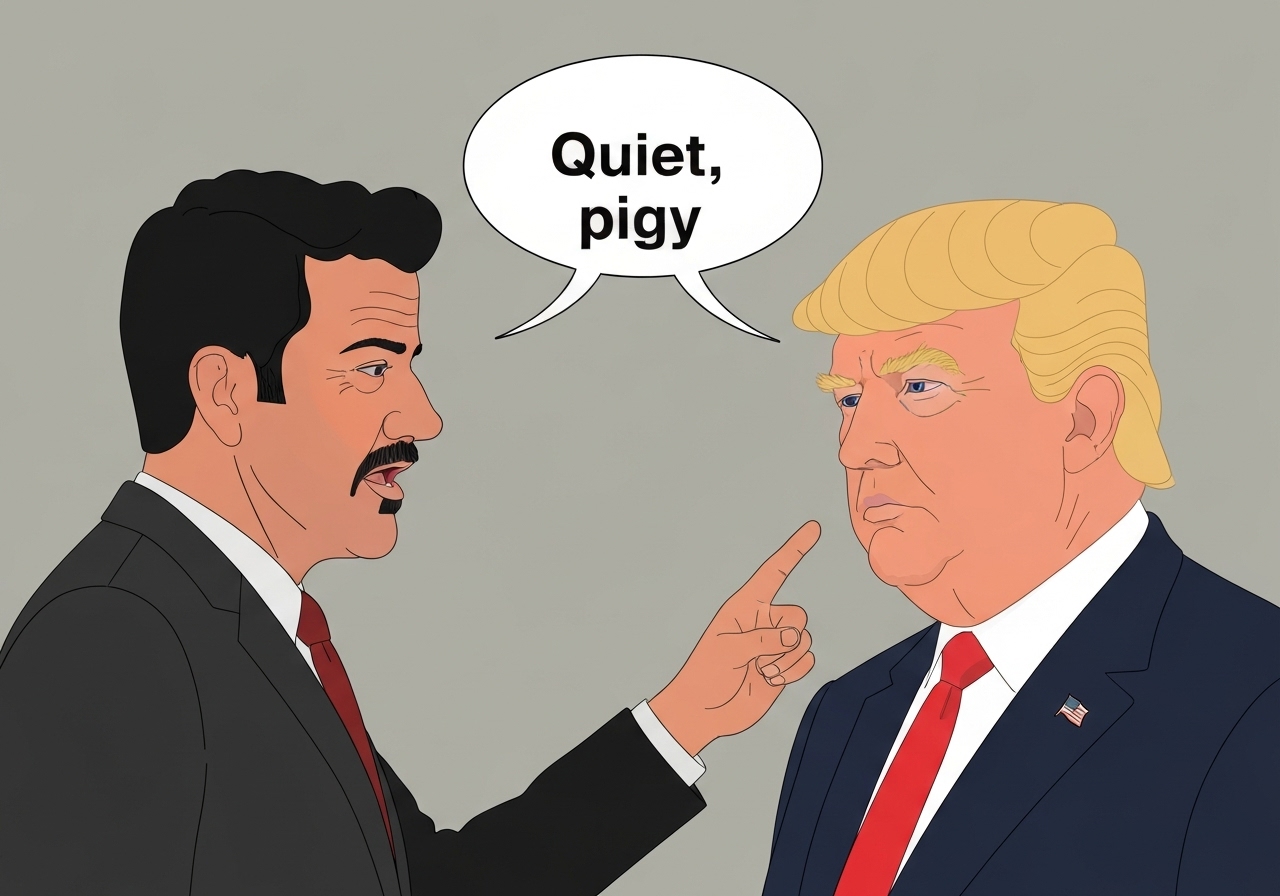
- Kimmel replied on his show the same night, referencing a September suspension and calling Trump a ‘snowflake’ while telling him ‘Quiet, piggy’.
- ABC briefly suspended Kimmel in mid-September after pressure from Nexstar and Sinclair and criticism led by FCC chair Brendan Carr.
- The FCC announced a public comment period on whether national broadcasters have excess control over local stations, with comments due on .
- Affiliates Nexstar and Sinclair reinstated Kimmel’s show after a few days, citing viewer pressure as part of their reversal.
- Trump has also pressured NBC to dismiss Seth Meyers; Meyers publicly urged ignoring such interventions while acknowledging the president’s right to express displeasure.
Background
The dispute stems from an incident in September when Kimmel made remarks about the killing of conservative activist Charlie Kirk, prompting public outcry and affiliate pressure. Nexstar and Sinclair, two of ABC’s largest affiliate partners, asked the network to suspend Kimmel, and ABC complied briefly before restoring the program within days amid backlash from viewers. FCC chair Brendan Carr, a Trump appointee, publicly endorsed stronger local control over programming, arguing national shows can override local interests. This month the FCC opened a review to solicit comments on whether national broadcasters unduly constrain local stations, formalizing a regulatory angle to what had been a transactional conflict between talent, network and affiliates.
Late-night television has long been a flashpoint for political figures who view hosts as influential cultural critics, and presidents have a history of calling out entertainers who mock them. What is different in this episode is the mix of direct public pressure via social media, formal attention from the regulatory authority, and the economic leverage of large broadcast groups. Nexstar and Sinclair operate hundreds of local stations and can exert meaningful influence over what airs on network affiliates. ABC, for its part, faces a calculus that weighs advertiser, affiliate and audience reactions against programming autonomy and free-expression considerations.
Main Event
On Thursday morning, Trump posted on Truth Social calling for ABC to fire Kimmel, using all caps to attack Kimmel’s talent and ratings. That evening Kimmel addressed the post on his show, recounting how his wife alerted him to the message and describing his reaction with dark humor about making bagels for his children. He reminded viewers that Trump had previously tried to have him taken off the air in September and said the repeated demands were disturbing, comparing such conduct to persistent harassment that would warrant a restraining order in other circumstances.
Kimmel labeled the president a ‘snowflake’ and suggested a quid pro quo: he would leave his role only if Trump resigned too, framing the dispute as theater as much as a personal attack. He also tied the latest social media intervention to the FCC review announced earlier in the week, noting that the public comment window could influence how much local stations can block national programming. The mid-September suspension was short lived; Kimmel pointed out that Nexstar and Sinclair restored his program after a few days, implicitly linking affiliate actions to both public pressure and regulatory attention.
Other late-night figures have seen similar pressure. The piece referenced Seth Meyers, who has also been targeted by Trump and who responded on air by recommending audiences ignore such provocations. The pattern shows a cross-network dynamic in which presidents and their allies single out specific hosts, affiliates react in commercially driven ways, and regulators signal potential policy changes that could alter the balance of power between networks and local stations.
Analysis & Implications
The immediate effect is reputational and operational: sustained presidential complaints can prompt affiliates to pressure networks, trigger temporary suspensions and spur regulatory scrutiny. For ABC, the incident creates a trade-off between protecting a marquee late-night talent and placating influential affiliate owners whose carriage decisions shape local revenues. The swift reinstatement of Kimmel suggests networks remain sensitive to viewer backlash and the commercial consequences of appearing to bow to political pressure.
Regulatory implications are notable. The FCC review opens a formal pathway to examine whether national networks hold excessive influence over local stations, a question with legal and economic dimensions. Should the commission propose new rules, affiliates and networks could face revisions to carriage obligations, local preemption powers and retransmission consent negotiations, all of which would alter the bargaining landscape for content and control.
Politically, the episode shows how social media posts from high-profile politicians can produce real-world consequences for media organizations. Even absent direct legal authority, a president’s public appeals can mobilize corporate actors and intensify regulatory attention. That dynamic raises concerns about chilling effects on editorial freedom if networks react to political pressure rather than journalistic standards or audience metrics.
Comparison & Data
| Event | Date | Duration/Outcome |
|---|---|---|
| Trump Truth Social post urging firing | Early Thursday, November 2025 | Prompted on-air response from Kimmel |
| ABC suspension of Kimmel | Mid-September 2025 | Suspension lasted a few days; show reinstated |
| FCC public comment deadline | Open comment period on broadcaster power |
The table frames three concrete milestones: the recent social-media appeal, the September suspension and the FCC review timetable. Together they show an interaction across corporate decisions, regulatory process and public discourse. While exact audience ratings cited by Trump are not corroborated here, the sequence of events demonstrates how reputational claims can cascade into operational and policy responses.
Reactions & Quotes
Kimmel delivered several on-air retorts that mixed personal anecdote with political critique, using humor to deflate the escalation. He described waking to his wife reporting the post and then going about family duties before addressing the matter with viewers, signaling an attempt to normalize and mock the situation.
You’ve done this before. You tried to get me fired in September. It didn’t work.
Jimmy Kimmel, late-night host
Observers noted the role of affiliate owners and the FCC. Nexstar and Sinclair’s brief campaign to press ABC illustrated how corporate partners can influence programming decisions, while the FCC’s invitation for comment raised stakes about potential regulatory change.
Local stations should have the ability to pre-empt national programming when it is in the best interest of their viewers.
Brendan Carr, FCC chair
Seth Meyers, another late-night host targeted by Trump, responded with a blend of humor and principle, saying it is the president’s right to voice displeasure while advising audiences and peers on managing such criticism. His stance exemplified a common industry position of resisting coercive pressure while acknowledging political speech as constitutionally protected.
I take no issue with the president voicing his displeasure with my show: that is his right.
Seth Meyers, late-night host
Unconfirmed
- Whether Trump’s Truth Social post directly caused Nexstar and Sinclair to press ABC in mid-September; timing suggests influence but direct causation is not verified.
- Any internal ABC deliberations tying the FCC review explicitly to the Kimmel suspension have not been publicly documented.
- Specific audience rating figures referenced by the former president were not independently corroborated in the course of reporting this article.
Bottom Line
The episode illustrates the complex interplay of political pressure, corporate decision-making and regulatory scrutiny in modern broadcast media. A president’s public calls can trigger immediate corporate reactions, brief program suspensions and formal policy responses, even when those calls concern entertainment programming. For broadcasters, the incident presents a governance challenge: balancing editorial autonomy, affiliate relations and regulatory risk management.
Looking ahead, the FCC comment process through will be a key locus for industry and public input on how national and local powers are allocated. Networks, affiliates, talent and policymakers will all watch closely for any signals that rules or norms might shift, since changes could reshape how controversial content is handled and who ultimately decides what airs in local markets.
Sources
- The Guardian — media report
- Federal Communications Commission — official regulator site and public comment portal
- Nexstar — corporate affiliate group
- Sinclair Broadcast Group — corporate affiliate group
- Truth Social — social platform where the post was published