
Lead
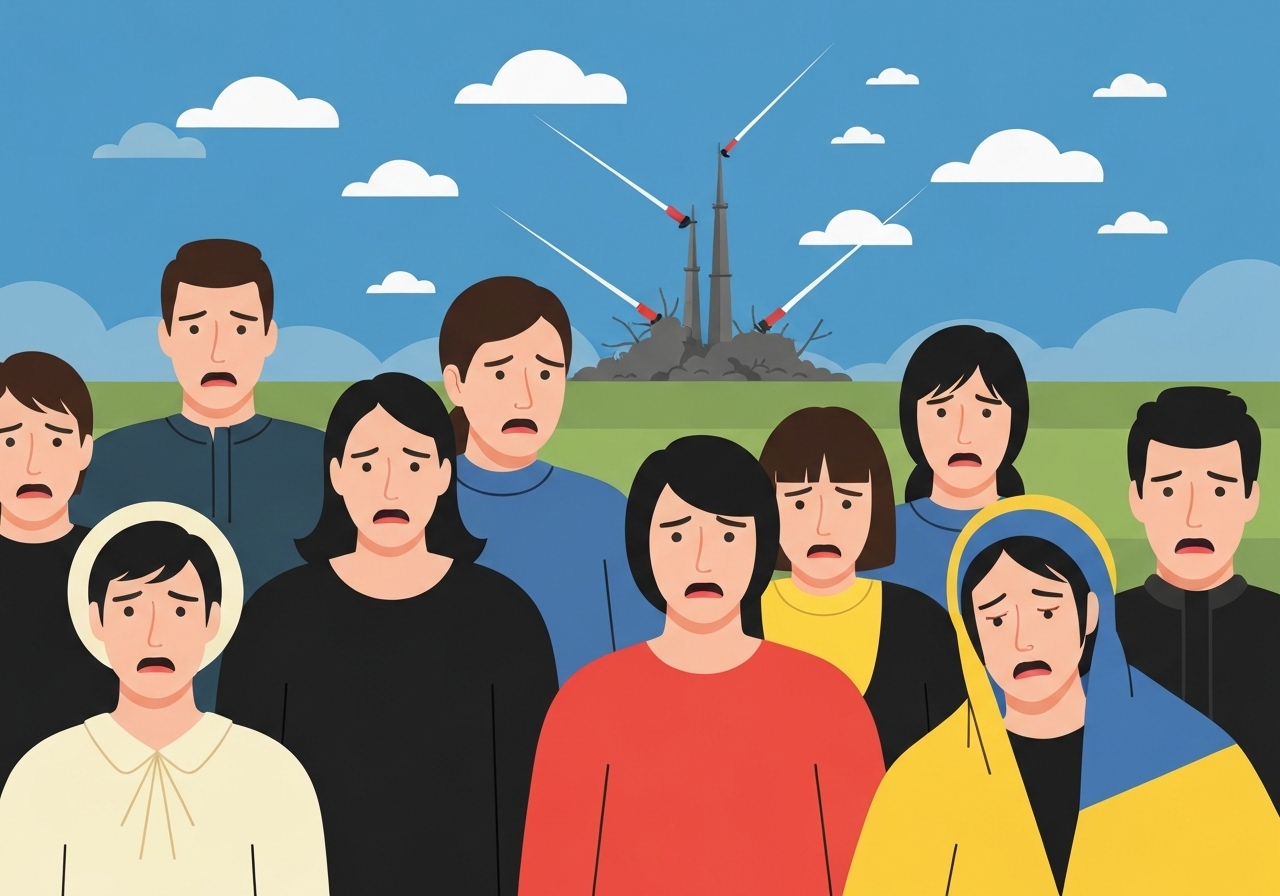
On Wednesday this week, Russian missiles struck apartment buildings in Ternopil, a city in western Ukraine far from the front line, leaving buildings gutted and rescue teams digging through rubble. Dozens of civilians, including children, were killed and many others injured as firefighters and volunteers raced to pull people from collapsed floors. Relatives and neighbors gathered at the damaged site, clinging to hope even as prospects of finding living survivors diminished. Emergency crews worked in rotating shifts amid heavy smoke and structural danger.
Key Takeaways
- Russian missiles hit residential blocks in Ternopil this week; the attack struck a city well west of active front-line fighting.
- Dozens of civilians were killed, with children among the fatalities, while many more suffered injuries.
- About 180 emergency responders worked in shifts on the scene to search for survivors and remove debris.
- Residents describe telephone calls from trapped loved ones and stairwells destroyed above the fifth floor of the impacted building.
- Local families are confronting immediate displacement and an urgent need for shelter, medical care and psychological support.
- Search operations shifted from rescue to recovery as the likelihood of finding live survivors declined over 48–72 hours.
Background
Ternopil is a regional center in western Ukraine that has historically been outside the theatre of frontline combat. Over the course of the war, however, strikes have occasionally reached deeper into territory previously considered relatively safe, raising alarm about the widening geographic reach of attacks. Apartment buildings, civilian infrastructure and other nonmilitary targets have been hit in several waves of strikes since 2022, increasing the humanitarian burden on cities far from active front lines.
The Ukrainian government and international aid organizations have repeatedly warned that attacks on populated areas violate international humanitarian norms and complicate relief efforts. Local authorities and volunteer networks have become essential to immediate response—providing rubble clearance, first aid and temporary housing—while hospitals and morgues contend with higher-than-normal patient and casualty loads. Families displaced by strikes frequently lack savings and formal assistance, amplifying long-term reconstruction needs.
Main Event
The strike struck in the morning hours, igniting a fire that sent thick black smoke across the neighborhood and destroying stairways above the fifth floor in at least one building. Survivors and witnesses recounted frantic calls and attempts to climb toward upper apartments before flames and debris blocked routes. One resident described hearing a ringing phone from inside the wreckage and then a long silence as rescuers worked to breach collapsed floors.
Rescue teams—made up of municipal firefighters, regional emergency services and volunteer crews—deployed heavy cutting equipment and worked in rotating shifts. About 180 responders labored on site, coordinating with medical teams to triage the injured and transport them to nearby hospitals. As time passed without signs of life in the deepest pockets of rubble, crews moved from life-saving drills to systematic recovery operations to document victims and clear hazards.
Local officials released preliminary casualty estimates describing “dozens” killed and numerous injured; those figures remained subject to revision as authorities completed identification and notification. Streets around the damaged buildings were cordoned off while investigators and structural engineers assessed the stability of adjoining blocks, and neighbors gathered at makeshift collection points for information and aid.
Analysis & Implications
The strike in Ternopil carries several implications beyond the immediate human toll. Strategically, attacks that reach western cities signal either increased missile range or a tactical choice to strike rear areas, both of which force Ukraine to distribute defensive resources over a broader area. That diffusion can strain air-defence coverage and limit protection for population centers previously considered lower-risk.
Humanitarian consequences will be acute and long-lasting. Beyond fatalities and physical injuries, affected families confront housing loss, disrupted livelihoods and psychological trauma—especially children who witnessed the attack or lost relatives. Local hospitals, social services and charities will require external support to handle needs that extend from emergency care to long-term mental-health services and housing reconstruction.
Diplomatically, strikes on civilian-dense districts bolster demands from Kyiv for increased international assistance and may heighten calls for accountability in international forums. Evidence-gathering and documentation of civilian harm become crucial for legal and political responses, but those efforts compete with immediate rescue and recovery priorities.
Comparison & Data
| Item | Ternopil Strike (Nov. 2025) |
|---|---|
| Reported fatalities | Dozens (incl. children) |
| Emergency responders on site | About 180 |
| Damage | Multiple apartment blocks heavily damaged; stairwells collapsed above 5th floor |
The table above summarizes confirmed elements reported by local responders and witnesses. Precise casualty counts and a final damage assessment will depend on continued recovery work and official tallies over the coming days.
Reactions & Quotes
“I realized the chances were very small,”
Ihor Cherepanskyi, resident
Standing near the ruined building, a relative of an elderly woman who lived on an upper floor described climbing as far as he could before stairways gave way; he heard a phone ring above him and then silence. His account captures the wrenching personal uncertainty many families face while rescue crews operate under life-threatening conditions.
“Search teams worked through shifts to pull people from the wreckage,”
Local emergency coordination center (official)
Officials emphasized the scale of the operation—about 180 personnel rotating in and out—and the decision to transition to recovery once the probability of finding additional survivors declined. They also requested immediate material and medical aid for displaced residents.
Unconfirmed
- Exact final death toll: official counts remain incomplete and may change as identification continues.
- Precise weapon type used in the strike: publicly available statements identified missiles but technical confirmation from weapons experts was not yet released.
- Whether the building or immediate area contained any dual-use or military-related targets: investigations into intended targeting were ongoing.
Bottom Line
The Ternopil strike underscores a painful shift: violence is reaching communities once considered distant from active combat, multiplying humanitarian needs and stretching defensive and relief capacities. For families who lost loved ones, the immediate priority is recovery, identification and dignified handling of the dead; for the city, urgent shelter, medical and psychosocial assistance will be necessary.
In the medium term, the attack may prompt Kyiv and international partners to reassess air-defence deployments, humanitarian aid flows and documentation efforts for accountability. As authorities continue recovery work, accurate casualty figures and forensic findings will determine legal and diplomatic next steps—and shape how relief is prioritized across affected regions.
Sources
- The New York Times — News report (international press)