
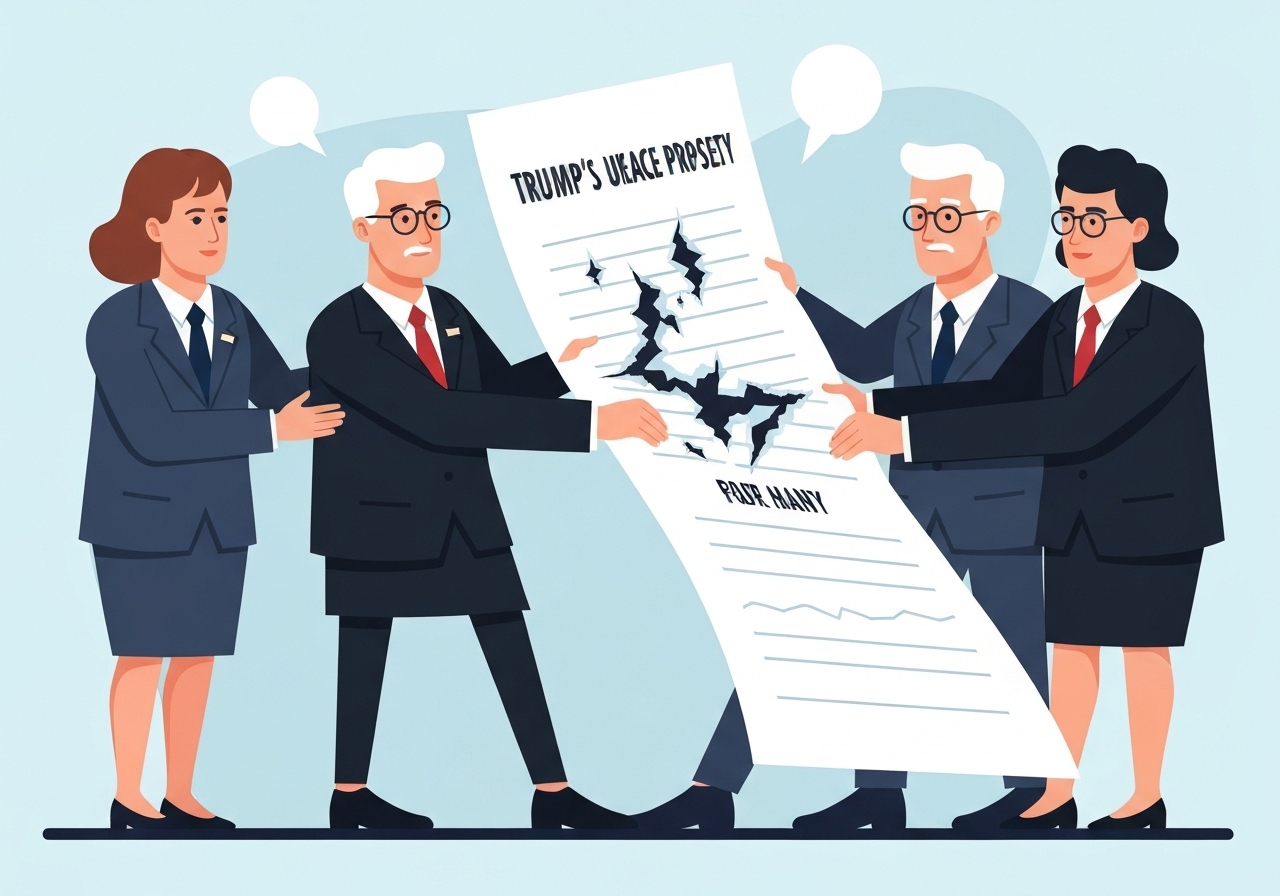
Lead: At the Halifax International Security Forum on Saturday, U.S. senators sharply criticized a 28-point Ukraine peace proposal reported to have been developed by the Trump administration in coordination with the Kremlin without Kyiv’s consent. Maine Sen. Angus King called the plan “one of the most serious geopolitical mistakes” of his lifetime, saying it would reward aggression. Other senators from both parties echoed strong objections, while President Vladimir Putin publicly welcomed the proposal as a potential basis for settlement. Ukrainian President Volodymyr Zelenskyy stopped short of outright rejection but insisted on fair treatment and cooperation with allies.
Key takeaways
- The 28-point plan was presented at the Halifax International Security Forum and is reported to have been crafted by the U.S. administration and the Kremlin without Ukraine’s input.
- Sen. Angus King labeled the proposal a grave geopolitical error and likened it to the 1938 Munich appeasement of Hitler; he warned it rewards aggression.
- Sen. Thom Tillis said Senate Republican leader Mitch McConnell’s public critique didn’t go far enough; Tillis described Vladimir Putin in stark terms and warned against giving Russia a perceived victory.
- Sen. Jeanne Shaheen called the plan “a Putin plan,” accusing the administration of allowing Kremlin influence over U.S. diplomacy.
- President Putin said the proposal could serve as a basis for final peace if Ukraine and its European partners agree; Zelenskyy urged fair negotiations and calm cooperation with Washington.
- About 300 people attended the forum in its 17th year; U.S. defense officials’ participation in think-tank events, including Halifax, has been suspended by the administration.
- Senators cited strained U.S.-Canada relations — including tariff disputes and rhetoric from President Trump — as a reason for the large congressional delegation in Halifax.
Background
The Halifax International Security Forum, now in its 17th year, gathers roughly 300 security professionals, diplomats, lawmakers and scholars at Halifax’s Westin hotel to discuss global defense and policy issues. The forum is a high-profile venue where U.S. senators and European officials often press one another on security priorities. This year’s meeting became a focal point after reporting that a 28-point peace plan on Ukraine was shaped by the U.S. administration and Russia without direct Ukrainian participation.
The reported plan contains elements Kyiv has repeatedly refused, including concessions of territory that Ukrainian leaders and many Western allies have said are non-starters. Those past refusals, voiced publicly by President Volodymyr Zelenskyy on many occasions, reflect Ukraine’s insistence on sovereignty and territorial integrity under international law. Historically, Western lawmakers have been wary of peace terms that could be read as rewarding conquest.
Main event
During a panel at Halifax, Sen. Angus King (I-Maine) said the proposed framework resembled historical appeasement and warned of the message it would send to autocratic leaders. King’s comments stressed that a U.S.-endorsed settlement that concedes territory to Russia would undermine global norms against aggression and could embolden other revisionist powers.
Republican Sen. Thom Tillis (R-N.C.) criticized the plan and said Senate Republican leader Mitch McConnell’s public rebuke did not fully capture how problematic the proposal is. Tillis used stark language to describe Russian President Vladimir Putin and emphasized that the United States should avoid policies that could be perceived as granting Russia a diplomatic victory.
Democratic Sen. Jeanne Shaheen (D-N.H.), ranking member of the Senate Foreign Relations Committee, called the plan “an outrage” and attributed its content to Russian drafting. Shaheen said President Trump’s claims of being a dealmaker ring hollow if the U.S. appears to be advancing terms that match Kremlin demands.
President Putin issued a public comment late Friday saying the plan could “form the basis of a final peace settlement” if Ukraine and European partners agree. Ukrainian President Zelenskyy, speaking separately, did not immediately reject the proposal but insisted on fair terms and pledged to coordinate calmly with the United States and partners during a period he described as exceptionally difficult.
Analysis & implications
If the reported drafting process is accurate, a U.S.-Kremlin initiative excluding Kyiv would represent a major shift in diplomacy and would raise questions about the United States’ role as a mediator. Allies who view U.S. leadership as contingent on defending international norms may see such a move as a retreat, complicating existing coalitions that have supported Ukraine’s defense and reconstruction.
Domestically, the plan risks deepening partisan and institutional tensions: senators from both parties publicly criticized it at Halifax, indicating bipartisan resistance in Congress. That opposition could translate into legislative constraints on executive action, including restrictions on how U.S. funds or diplomatic leverage are used in any settlement process.
Regionally, endorsing terms that effectively endorse territorial changes could set a precedent in Europe and beyond. Observers warn that concessions under pressure could encourage territorial revisionism elsewhere and weaken deterrence strategies that NATO and partners rely on to reassure vulnerable states.
Comparison & data
| Element | Reported Plan | Ukraine’s Stated Position |
|---|---|---|
| Territorial concessions | Contains provisions seen as accommodating some Russian claims | Firm rejection of any permanent cession of Ukrainian territory |
| Authorship | Reportedly drafted by U.S. administration and Kremlin without Ukraine | Ukraine demands inclusion in negotiations |
| International reception | Mixed; Putin welcomed proposal | Allied officials and many lawmakers voiced skepticism |
The table summarizes the central tensions: the reported content of the 28-point plan, Kyiv’s consistent public stance, and the uneven reception among international actors. These contrasts explain why lawmakers at Halifax gauged the plan harshly and why experts worry about precedent-setting consequences for global security norms.
Reactions & quotes
Before and after each quotation below, senators and officials framed their remarks in the context of legal and ethical norms governing armed conflict and diplomatic bargaining.
“You think Xi Jinping is paying attention to this? You think Kim Jong Un is paying attention? I mean, this is one of the most serious geopolitical mistakes in my lifetime,”
Sen. Angus King (I-Maine)
King used historical analogy to warn that conceding to aggression sends a dangerous message to other authoritarian leaders. He argued that the proposal lacks moral and legal justification for endorsing territorial claims.
“Putin is a murderer, a rapist and an assassin. We should not do anything that makes him feel like he has a win here,”
Sen. Thom Tillis (R-N.C.)
Tillis said Senate Republican Leader Mitch McConnell’s statement criticizing the plan fell short of the language Tillis believes the situation requires. His remarks framed the debate in stark moral terms and signaled expectations for stronger rhetorical resistance from party leaders.
“That’s a Putin plan. That was very clearly written by Putin and Russia for what they want to see,”
Sen. Jeanne Shaheen (D-N.H.)
Shaheen accused the administration of enabling Kremlin preferences and said the outcome would be a travesty for both American and Ukrainian publics. She linked the criticism to broader concerns about U.S. diplomatic credibility.
Unconfirmed
- Precise extent of White House–Kremlin collaboration on drafting the 28 points: reporting attributes drafting to both parties, but internal authorship details have not been independently published.
- Claims that President Trump explicitly demanded Canada become the “51st state” are politically charged and cited by attendees as part of broader rhetoric; direct policy proposals to that effect have not been substantiated here.
Bottom line
The Halifax exchanges reveal bipartisan U.S. lawmaker alarm over a reported peace plan that many see as accommodating Russian goals without Ukrainian consent. If implemented, elements of such a settlement could reshape European security norms and erode trust in U.S. leadership among allies.
In the near term, expect intense scrutiny in Congress and among allied capitals; bipartisan resistance at Halifax suggests potential political and legislative pushback. For Ukraine, the essential issue remains participation and preservation of sovereignty — outcomes that most attendees at Halifax said must be non-negotiable.
Sources
- Associated Press (news report summarizing statements at Halifax Forum)
- Halifax International Security Forum (forum/organizer information)