
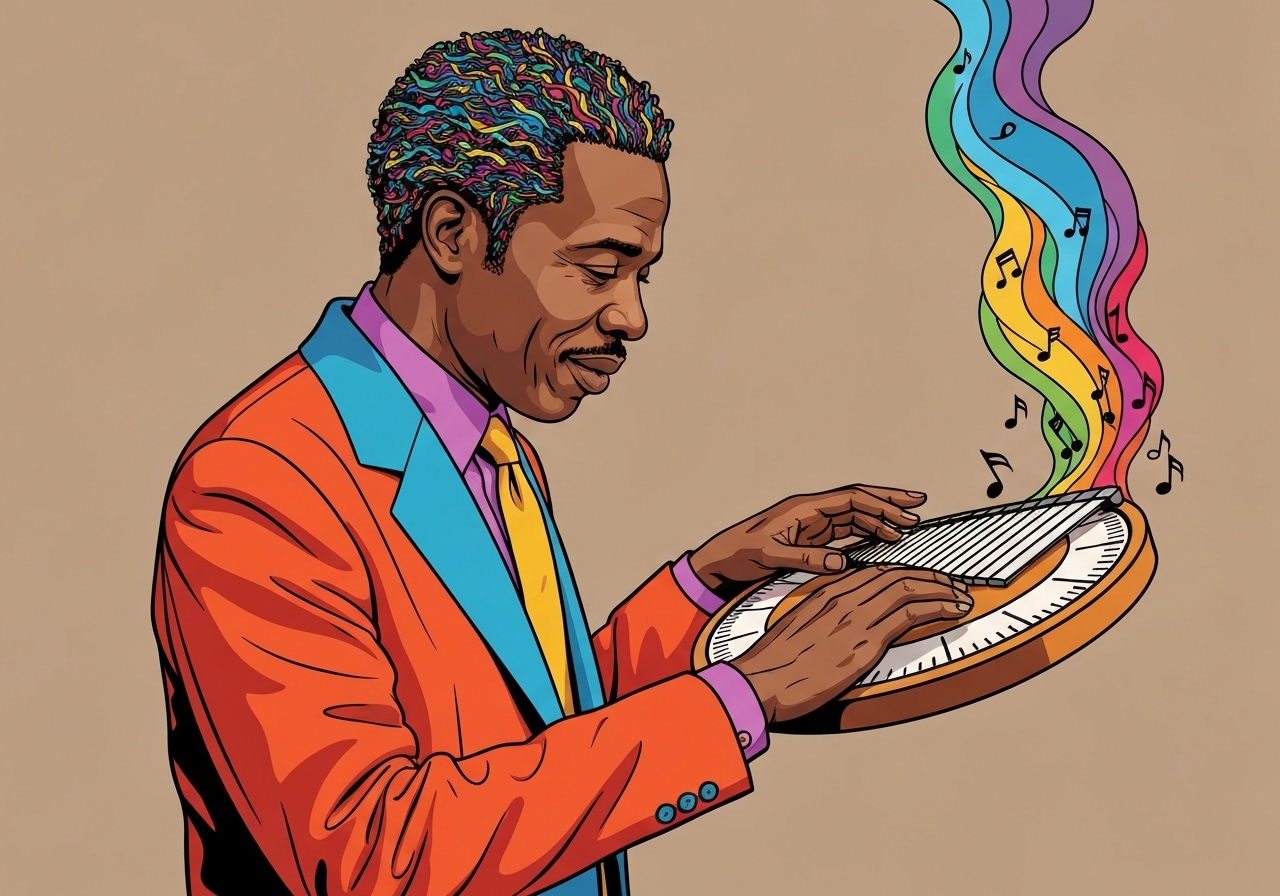
Lead: Garry ‘Jellybean’ Johnson, the multi-instrumentalist who helped define the Minneapolis Sound and served as the original and long-time drummer for the Time, died on Nov. 21 at 69. His death was confirmed by Morris Day; no cause has been released. Johnson’s career spanned performance, session work and production for major pop and R&B acts, and his passing prompted immediate tributes from collaborators and peers. This obituary summarizes his life, work, and the early reactions.
Key Takeaways
- Jellybean Johnson (born Garry George Johnson) was born Nov. 19, 1956, in Chicago and moved to Minneapolis at age 13.
- He was the original and only drummer of the Time and a key architect of the Minneapolis Sound in the 1980s.
- Johnson worked with Prince, joined the Family in 1985, and reunited with the Time for projects including 1990’s Graffiti Bridge and the album Pandemonium.
- As a producer and session musician he co-wrote or produced for Alexander O’Neal (1987’s ‘Criticize’), New Edition (1988’s Heart Break), and produced Janet Jackson’s ‘Black Cat’ from Rhythm Nation 1814 (1989).
- He released his debut solo album, Get Experienced, in 2021 at age 64, completed during the COVID shutdown.
- From 2003 to 2012 Johnson toured as a guitarist with Chicago blues artist Ronnie Baker Brooks.
- Morris Day and Sheila E. issued public remembrances; no official cause of death has been disclosed.
Background
Garry George Johnson grew up in Chicago and relocated to Minneapolis with his family at 13, where his mother bought his first drum kit and he taught himself guitar. In North Minneapolis he formed early musical ties with future collaborators including Jimmy Jam, Terry Lewis, Morris Day and Prince; those neighborhood connections would later become foundational to a regional sound. The Minneapolis Sound blended funk, rock, synth-pop and R&B influences, becoming commercially influential throughout the 1980s and altering mainstream pop production approaches.
Prince’s early success with Warner Bros. led him to assemble a band that drew on that local talent pool; Johnson became the Time’s drummer, joining a line-up that also included members of Flyte Tyme. That group served both as a platform for Morris Day as a frontman and as a vehicle for the Prince-associated studio and live projects that defined an era. After lineup changes and tensions around the Purple Rain era, the Time fractured, and Johnson shifted between performing, short-term projects and increasingly behind-the-scenes roles in production and session work.
Main Event
Johnson’s death was publicly confirmed on Nov. 21 by Morris Day, who described Johnson as a childhood friend and musical brother. Day emphasized Johnson’s dedication to performing and his habit of jamming with local bands even after headline shows, illustrating a lifelong commitment to live music. Sheila E., a longtime friend and collaborator, posted her grief on social media, recalling first meeting Johnson on tour with Prince and praising his musicianship and humor.
Johnson’s role in the Time tied him closely to Prince’s projects, including the high-profile 1984 film Purple Rain, in which the Time appeared. Personnel departures—including Jimmy Jam, Terry Lewis and Monte Moir—preceded some of the group’s major commercial moments, contributing to internal tensions. After the Time dissolved, Johnson joined the Family for its 1985 self-titled album; the group was short-lived but further linked him to Prince’s creative orbit.
Pivoting to production and session work, Johnson reconnected with former Flyte Tyme bandmates Jimmy Jam and Terry Lewis at their production company on multiple projects. He co-wrote and played on Alexander O’Neal’s 1987 single ‘Criticize’, contributed to New Edition’s 1988 album Heart Break, and produced Janet Jackson’s rock-inflected single ‘Black Cat’ for 1989’s Rhythm Nation 1814. He later toured with Morris Day and the Time in various incarnations and maintained an active career into the 21st century.
Analysis & Implications
Johnson’s career illustrates the porous boundary between regional scenes and global pop culture in the 1980s. The Minneapolis Sound was not a single genre but a production ethos that combined local musicianship with synth-driven studio craft; Johnson’s dual skill set as a drummer and multi-instrumentalist made him both a live anchor and a studio asset. His collaborations with Jam and Lewis show how personal networks translated into a production pipeline that shaped hits across R&B and pop, influencing musical textures still heard today.
As a producer on tracks like ‘Black Cat’, Johnson helped bring rock guitar energy into mainstream pop and R&B records, demonstrating the era’s genre cross-pollination. That crossover approach broadened radio formats and gave artists new avenues for creative risk. Economically, producers who could bridge styles—like Johnson—became valuable contributors to albums that sold millions and sustained long-term touring careers for associated acts.
Johnson’s late-in-life solo debut in 2021 underscores a common arc for sidemen: decades of supporting other artists followed by a desire to assert a personal artistic statement. The pandemic’s enforced studio downtime created space for such projects; Get Experienced is an example of a legacy artist consolidating a lifetime of craft into an authored record. In cultural terms, his death invites renewed interest in the Minneapolis scene’s catalog and the roles supporting musicians played in shaping hit records often attributed to more famous frontmen.
Comparison & Data
| Year | Role | Notable project |
|---|---|---|
| 1984 | Performer/actor | Purple Rain (film appearance) |
| 1985 | Band member | The Family, self-titled album |
| 1987 | Co-writer/session | Alexander O’Neal – ‘Criticize’ |
| 1989 | Producer | Janet Jackson – ‘Black Cat’ |
| 1990 | Reunion | Graffiti Bridge / Pandemonium |
| 2021 | Solo artist | Get Experienced (debut) |
The table highlights how Johnson’s contributions moved between visible performance roles and behind-the-scenes production across four decades. His career path is typical of musicians who parlay regional prominence into national influence by taking on varied studio and touring responsibilities. These shifts also track broader industry trends: 1980s major-label film tie-ins and album cycles, then 1990s production-driven R&B, leading to 21st-century catalog revisitations and late-career solo projects.
Reactions & Quotes
Morris Day released a statement confirming Johnson’s death and placing their relationship in a lifelong context, stressing both personal and musical bonds.
“He wasn’t just a bandmate, he was more like a brother to me.”
Morris Day, singer and longtime bandmate (statement)
Day’s remark frames Johnson’s role not only as a colleague but as a formative personal presence in a community of musicians who rose together in Minneapolis.
Sheila E. posted on social media expressing sorrow and recalling Johnson’s talent and humor; she specifically referenced their early touring connections with Prince.
“He was a kind human being, extremely talented and funny… Rest in peace and power.”
Sheila E., percussionist and collaborator (social post)
Her comment highlights the close-knit touring community around Prince and the affection peers expressed, underscoring Johnson’s reputation as both a musician and a friend.
Unconfirmed
- No official cause of death has been released; any reports claiming a cause should be treated as unverified until confirmed by family or an authoritative representative.
- Plans for memorial events or tributes have not been publicly announced at the time of reporting.
Bottom Line
Jellybean Johnson’s death removes a versatile and quietly influential figure from the musical community that produced the Minneapolis Sound. While he may not have always been the most visible name on hit records, his drumming, instrumental versatility and production work were integral to songs and albums that shaped late-20th-century pop and R&B. His passing is prompting both personal tributes from peers and a reassessment of the collaborative networks behind major hits.
In coming weeks expect further details about memorials and possibly family statements; music historians and fans will likely revisit the Time’s catalog and Johnson’s production credits to better understand his contributions. For listeners and fellow musicians, his career stands as a reminder of the long-term cultural impact generated by regional music communities and the sidemen who help translate local styles into global influence.
Sources
- Rolling Stone (news outlet) — primary report containing statements from Morris Day and Sheila E.
- Fox 9 Minneapolis (local news outlet) — referenced interviews and regional reporting on Johnson’s background and quotes from 2021.
- Star Tribune (regional newspaper) — coverage of Johnson’s 2021 solo album and local career context.