
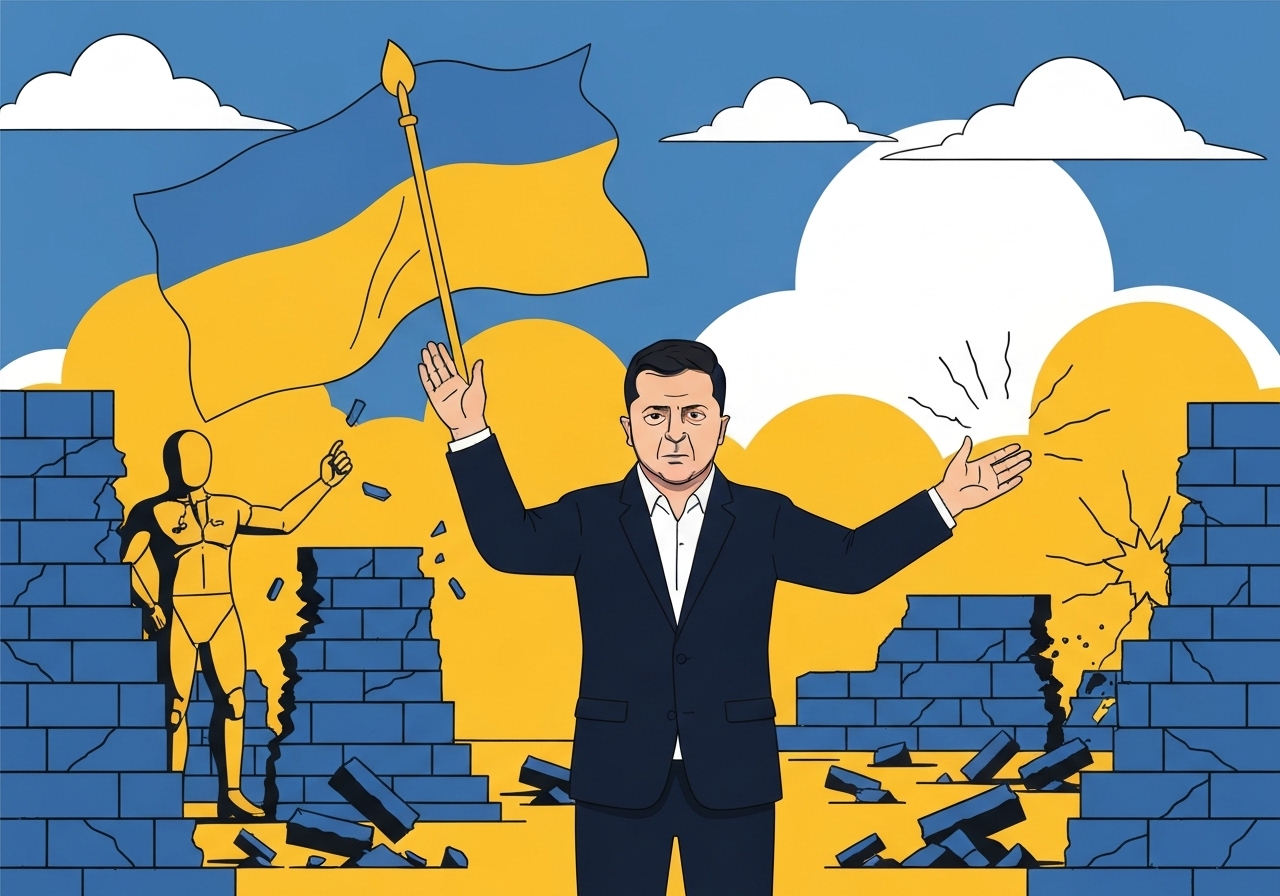
Ukraine President Volodymyr Zelensky on Sunday welcomed “important steps” after talks with US officials in Geneva but cautioned that the principal obstacle remains Russian President Vladimir Putin’s demand for legal recognition of territories Moscow occupies in eastern Ukraine. US and Ukrainian delegations reported progress and said further work would continue, yet no concrete method has been disclosed to reconcile Moscow’s territorial demands with Kyiv’s insistence on sovereignty and security guarantees. The Geneva meeting did not include Russian representatives, and Kremlin officials said they had no formal outcome from the talks. Officials now expect a direct conversation between Zelensky and US President Donald Trump to address the most contentious issues, though no date has been set.
Key takeaways
- Zelensky described the Geneva discussions as yielding “important steps,” but said the core problem was Putin’s demand for legal recognition of Russian-held eastern territories.
- US and Ukrainian officials reported “progress” on Sunday and signalled an intention to continue negotiations, with Rubio calling the advances “tremendous.”
- A 28-point peace proposal, drafted in October by US and Russian officials and presented to Ukraine last week, contains elements seen as favourable to Moscow and has alarmed Kyiv and European partners.
- Russian representatives did not participate in the Geneva meeting; the Kremlin said it had not received formal results and noted “adjustments” to the plan that Putin had previously welcomed.
- European leaders offered mixed responses: some, like Poland’s Donald Tusk, expressed caution, while Germany’s Friedrich Merz said a breakthrough was unlikely this week.
- A reported Western counter-proposal led by Britain, France and Germany reportedly rejects recognition of Russian-held regions and preserves Ukraine’s path to NATO; Kremlin advisers dismissed it as unconstructive.
- Key sticking points remain territorial integrity (notably the Donbas), Ukraine’s prospective NATO membership, and concrete security guarantees to deter future aggression.
Background
The talks in Geneva followed intense diplomatic activity after a 28-point draft peace plan — prepared in October by US and Russian officials and shown to Kyiv last week — drew sharp reactions across Europe. Several items in that draft appeared to align with long-standing Russian demands, prompting alarm in Ukraine and among its EU and NATO partners. US public comments, including a message from President Trump implying a short deadline for Ukraine to accept a deal, increased pressure and urgency around negotiations and spurred the hastily arranged bilateral talks in Switzerland.
Since Russia launched its full-scale invasion of Ukraine in 2022, Moscow has repeatedly insisted on Ukrainian withdrawal from large areas of the Donbas and has sought guarantees that Ukraine will not join NATO. Kyiv has consistently rejected territorial concessions taken by force and regards NATO membership as a constitutional and security priority. European capitals have been divided on how to respond to the US-Russian draft; some sought a counter-proposal to protect Ukraine’s sovereignty and security commitments.
Main event
On Sunday in Geneva, US and Ukrainian delegations held substantive discussions aimed at narrowing gaps on ceasefire, troop withdrawals and security arrangements. Officials from both sides reported progress and agreed to keep negotiating, but did not publish a text or timeline for further steps. Zelensky publicly welcomed the “important steps” but emphasised that any outcome must not reward aggression by ceding sovereign territory taken by force.
The Kremlin did not participate in Geneva and said it had not been briefed on the meeting’s result. Kremlin spokesman Dmitri Peskov acknowledged that “adjustments” had been made to the plan that President Putin had initially welcomed, but Moscow offered no detail on their substance. US officials signalled that a follow-up exchange between Zelensky and President Trump would tackle the hardest issues; no date has been announced for that meeting.
European governments scrambled to clarify their positions after the draft plan emerged. A reported counter-proposal from Britain, France and Germany reportedly rejects legal recognition of Russian-held regions, allows Ukraine a larger army, and leaves open future NATO accession. Kremlin foreign-policy aide Yuri Ushakov publicly dismissed that counter-plan as “completely unconstructive.”
Analysis & implications
The negotiations reveal a strategic fault line: Kyiv and many European partners treat territorial integrity and the principle of non-acquisition of land by force as non-negotiable, while elements of the 28-point draft appeared to accommodate Russian territorial claims. Accepting such claims would alter international norms on sovereignty and could embolden future territorial aggression beyond Ukraine. For Kyiv, any concession on the Donbas could undermine its long-term security and invite renewed incursions.
US involvement complicates the dynamics. Washington is simultaneously negotiating with Moscow-originated proposals and trying to reassure Kyiv and NATO allies. A direct Zelensky–Trump discussion is likely intended to broker compromises that the Geneva talks could not finalize without Russian input. However, the absence of Russian negotiators in Geneva limits the talks’ immediate capacity to produce an implementable deal.
European reactions matter because practical security guarantees and reconstruction assistance will require sustained European commitment. If Western powers coalesce around a plan that preserves Ukrainian sovereignty and offers robust guarantees, Moscow would face diplomatic and material counter-pressures. Conversely, if concessions are made under duress, European unity could fracture, complicating collective defence and assistance frameworks.
Comparison & data
| Issue | Russia (reported position) | Ukraine/EU/UK position |
|---|---|---|
| Territorial recognition | Legal recognition of Russian-held eastern territories | Reject recognition; insist on return of occupied land |
| NATO membership | No future Ukraine accession | Ukraine seeks NATO path; constitutionally affirmed |
| Security guarantees | Offers subject to territorial concessions | Seeks binding guarantees without ceding territory |
The table summarises the primary positions described in the Geneva coverage and related diplomatic reporting. These differences help explain why negotiators in Geneva reported progress on some procedural points but not on the core issues that would determine whether a durable settlement is possible.
Reactions & quotes
US Secretary of State Marco Rubio described the talks on Sunday as making substantial headway and expressed optimism about reaching an agreement. His upbeat assessment reflects Washington’s public posture that engagement can produce workable compromises, though Rubio stopped short of detailing terms.
“I honestly believe we’ll get there.”
Marco Rubio, US Secretary of State (reported)
President Trump posted on social media that “something good just may be happening,” adding a caveat urging caution. The remark signalled cautious optimism from the US president while also conveying uncertainty about immediate outcomes.
“Something good just may be happening … Don’t believe it until you see it.”
Donald Trump, US President (social media, reported)
Zelensky publicly welcomed the Geneva exchange as showing progress but reiterated that any plan must not reward aggression with territorial concessions. His stance reflects Kyiv’s persistent position that ceding land would set a dangerous precedent and weaken Ukraine’s defence.
“Important steps” but the “main problem” remains legal recognition demands for occupied territory.
Volodymyr Zelensky, President of Ukraine (reported)
Unconfirmed
- The precise content and wording of the “adjustments” to the October 28-point draft noted by the Kremlin remain unpublished and unverified.
- No official timeline has been confirmed for a direct Zelensky–Trump meeting; reports of such talks are not yet scheduled publicly.
- Details of the reported UK–France–Germany counter-proposal and its full text have not been released for independent scrutiny.
- There has been no public, verifiable acceptance by Moscow of any new draft emerging from the Geneva discussions.
Bottom line
The Geneva talks produced optimistic statements from US and Ukrainian officials about procedural progress, but the fundamental impasse — whether Ukraine should cede legally enforceable control over occupied eastern regions — remains unresolved. Without Russian participation in Geneva and with Moscow demanding territorial recognition, negotiators face a basic contradiction between restoring Ukraine’s territorial integrity and accommodating Moscow’s core demands.
Next steps to watch are a potential direct conversation between Zelensky and President Trump, any newly drafted peace text presented to Moscow, and how European capitals align around security guarantees. Because the most contentious elements touch on sovereignty and NATO, any breakthrough will require both political will and clear enforcement measures to prevent renewed hostilities.