
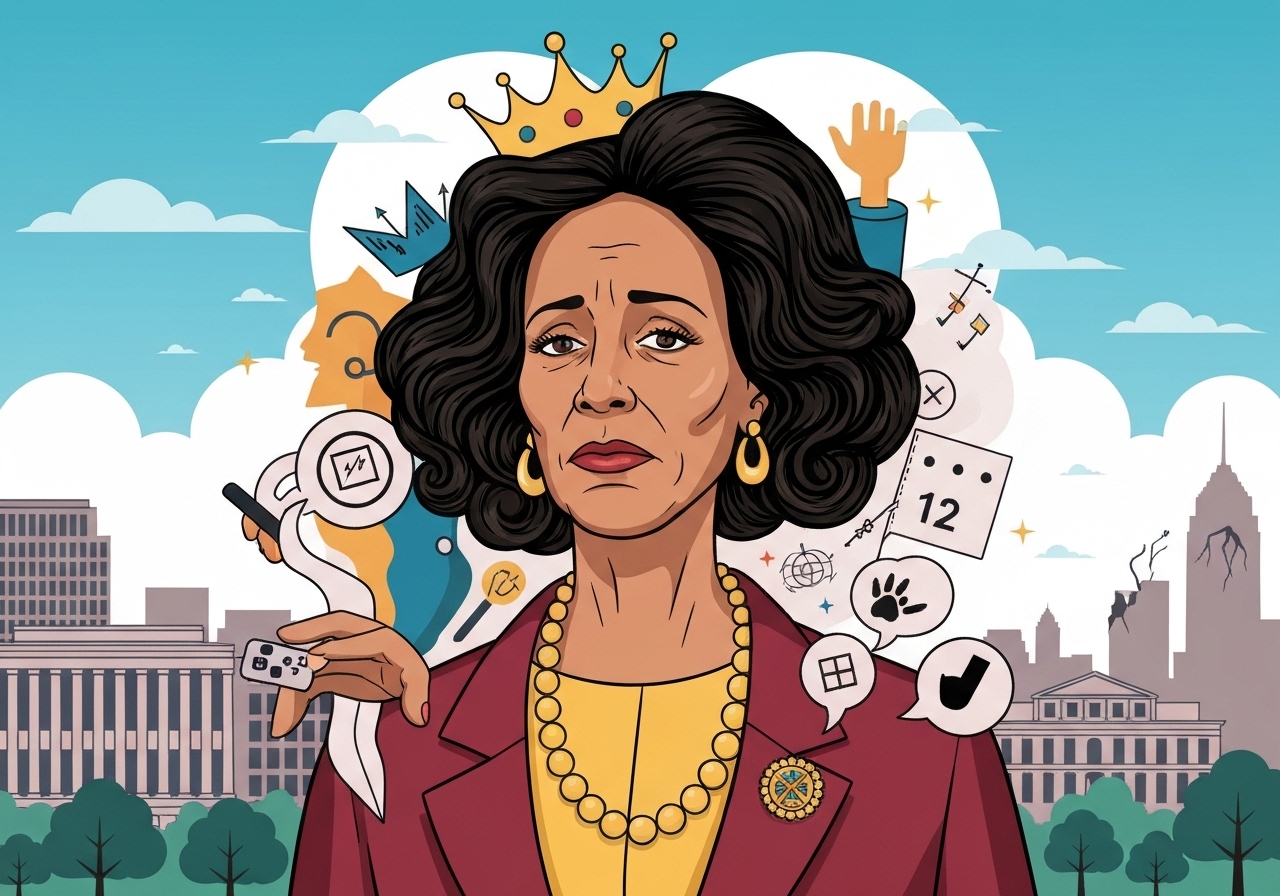
Lead: On Tuesday, Nov. 25, 2025, Washington, D.C. Mayor Muriel Bowser announced she will not seek re-election after a decade in office. Bowser said the choice was driven by family considerations and a desire to “pass the baton” to new leadership. Her tenure included high-profile clashes over federal law enforcement deployments and a public balancing act to defend the district’s limited autonomy. The announcement framed her record around infrastructure progress and preserving Home Rule amid national political tensions.
Key Takeaways
- Bowser has led Washington, D.C. for 10 years and announced on Nov. 25, 2025 that she will not run again.
- She cited family reasons and a plan to hand leadership to a new generation in an interview with NBC Washington (NBC4) and a social video statement.
- Her mayoralty has been marked by confrontations over federal law enforcement surges during President Donald Trump’s second term and resistance during his first term.
- Earlier in 2025 Bowser ordered removal of Black Lives Matter Plaza, saying the city faced more pressing fiscal and operational challenges.
- Bowser emphasized defending D.C.’s Home Rule, even as some Republican lawmakers discussed revising the Home Rule Act.
- She touted multiple infrastructure projects in her departure statement, presenting them as part of a ten-year legacy of investment.
Background
Muriel Bowser first rose to national prominence during President Donald Trump’s first term as an outspoken local leader defending the district’s autonomy. Over the past decade her office has navigated the unique legal and political constraints of Washington, D.C., where local authority is balanced against federal oversight under the Home Rule framework. The tension between local priorities and federal actions intensified in 2025 during a series of federal law enforcement deployments to the city, a development that tested relationships across party lines. Bowser’s responses reflected a pragmatic approach: publicly pushing back on incursions into municipal control while also seeking to maintain working channels with federal officials.
Those choices produced mixed reactions. Some national Democrats urged a firmer stance against federal tactics they viewed as politically motivated, while federal officials — including the president — praised D.C.’s handling of deployments as a possible model. Locally, the year’s fiscal and operational pressures prompted the administration to prioritize core services and infrastructure projects, even when symbolic decisions, like the removal of Black Lives Matter Plaza, drew sharp attention. Bowser’s assertion that she had safeguarded Home Rule became a recurring theme as she defended pragmatic compromises made under pressure.
Main Event
Bowser posted a short video statement on social platforms on Nov. 25, 2025 announcing she would not seek another term, calling her decade as mayor “the honor of my life” and highlighting infrastructure work completed under her watch. In a follow-up interview with NBC Washington (NBC4) she said the choice was personal and rooted in family considerations, and she described the moment as appropriate to hand leadership to others. She emphasized accomplishments in city investments while reiterating that protecting D.C.’s limited autonomy had been her administration’s guiding principle.
The end of her tenure also recalls contentious episodes earlier in the year, notably the decision to remove Black Lives Matter Plaza. At the time Bowser told CNN the city had “bigger fish to fry,” pointing to looming fiscal and public-safety challenges that demanded attention. Some Democrats criticized her for not taking a stronger symbolic stance; others praised her focus on pragmatic governance as the city confronted real-time crises. The federal response, including praise from the White House for the city’s cooperation in deployments, underscored the complex interplay between local leadership and national political priorities.
Bowser did not directly name President Trump in her Nov. 25 announcement but framed parts of her record as standing up to “bullies” and protecting Home Rule. Her exit immediately raised questions about who will contend for the mayoralty and how the next administration will navigate the twin pressures of local demands and federal scrutiny. Republican proposals to alter or roll back elements of the Home Rule Act were already in discussion by some lawmakers, adding a legislative dimension to the political uncertainty in the capital.
Analysis & Implications
Bowser’s departure reshapes the immediate landscape of D.C. politics. A decade-long incumbent stepping aside opens space for new coalitions within the city’s Democratic electorate and invites a competitive primary where law-and-order credentials, management experience, and positions on local autonomy will all be tested. Candidates will have to make clear choices about whether to prioritize symbolic resistance to federal action or emphasize pragmatic governance and fiscal stability. The strategic trade-offs that defined Bowser’s second-term posture will now be arguments among prospective successors.
On a policy level, the episode spotlights the fragility of Home Rule when federal authorities intervene in city affairs. If Republican lawmakers pursue changes to the Home Rule Act, the legal and constitutional status of D.C. governance could face renewed scrutiny, with consequences for municipal control over policing, budgeting and local ordinances. That debate is likely to attract national attention because changes in the capital reverberate beyond a single mayoral office, affecting federal-local relations and the precedent set for other cities.
National political actors will also watch how Bowser’s pragmatic approach is judged by voters. If voters reward managers who delivered infrastructure and services despite federal pressure, that could shift the playbook for mayors in other large, Democratic-led cities. Conversely, if the electorate prefers leaders who take louder symbolic stands, a different set of priorities could emerge. For advocacy groups and civic institutions in D.C., the transition will be a test of organizational influence in shaping the policy agenda of the next mayor.
Comparison & Data
| Metric | Bowser (2015–2025) |
|---|---|
| Years in office | 10 |
| Notable governance themes | Home Rule defense, infrastructure investment, federal law enforcement disputes |
The table summarizes tenure length and recurring themes without attributing specific program totals not publicly enumerated in the announcement. Bowser framed her record around physical projects and the preservation of local authority; the incoming administration will inherit the fiscal and institutional consequences of those choices. Comparisons with prior mayors should account for D.C.’s evolving budgetary pressures and the unusual federal oversight dynamics unique to the capital.
Reactions & Quotes
Bowser’s own words framed the announcement and her record. She emphasized service and legacy while citing family as a reason to step back.
“It has been the honor of my life to be your mayor. Together, we have built a legacy of success of which I am intensely proud.”
Mayor Muriel Bowser (social video statement)
Earlier this year, she signaled prioritization of practical crisis response over symbolic gestures when discussing public space changes and city priorities.
“We have bigger fish to fry,”
Mayor Muriel Bowser (interview cited to CNN)
Unconfirmed
- Whether Republican lawmakers will successfully pass substantive changes to the Home Rule Act remains uncertain and would require Congressional action.
- Specific candidates lining up to run in the next mayoral race have not been formally confirmed and the field is expected to evolve quickly.
- The long-term political effect of Bowser’s pragmatic decisions on voter preferences in D.C. is not yet established and will depend on upcoming electoral dynamics.
Bottom Line
Muriel Bowser’s decision to leave the mayor’s office after ten years closes a chapter in D.C. politics defined by efforts to balance local priorities with federal pressures. Her emphasis on infrastructure and Home Rule frames a legacy of pragmatic governance that prioritized city operations amidst national contention. The mayoralty’s open seat will sharpen debates over how best to protect D.C.’s limited autonomy while addressing fiscal and service delivery challenges.
For national observers, the transition in Washington is notable because the capital is both a municipal government and a national symbol; shifts in its governance can influence broader discussions about federal-local relations. In the weeks ahead, attention will focus on prospective candidates, potential legislative moves on Home Rule, and whether the next mayor follows Bowser’s pragmatic playbook or adopts a more confrontational stance toward federal interventions.
Sources
- CNN (national news report of Bowser’s announcement and related interviews)