
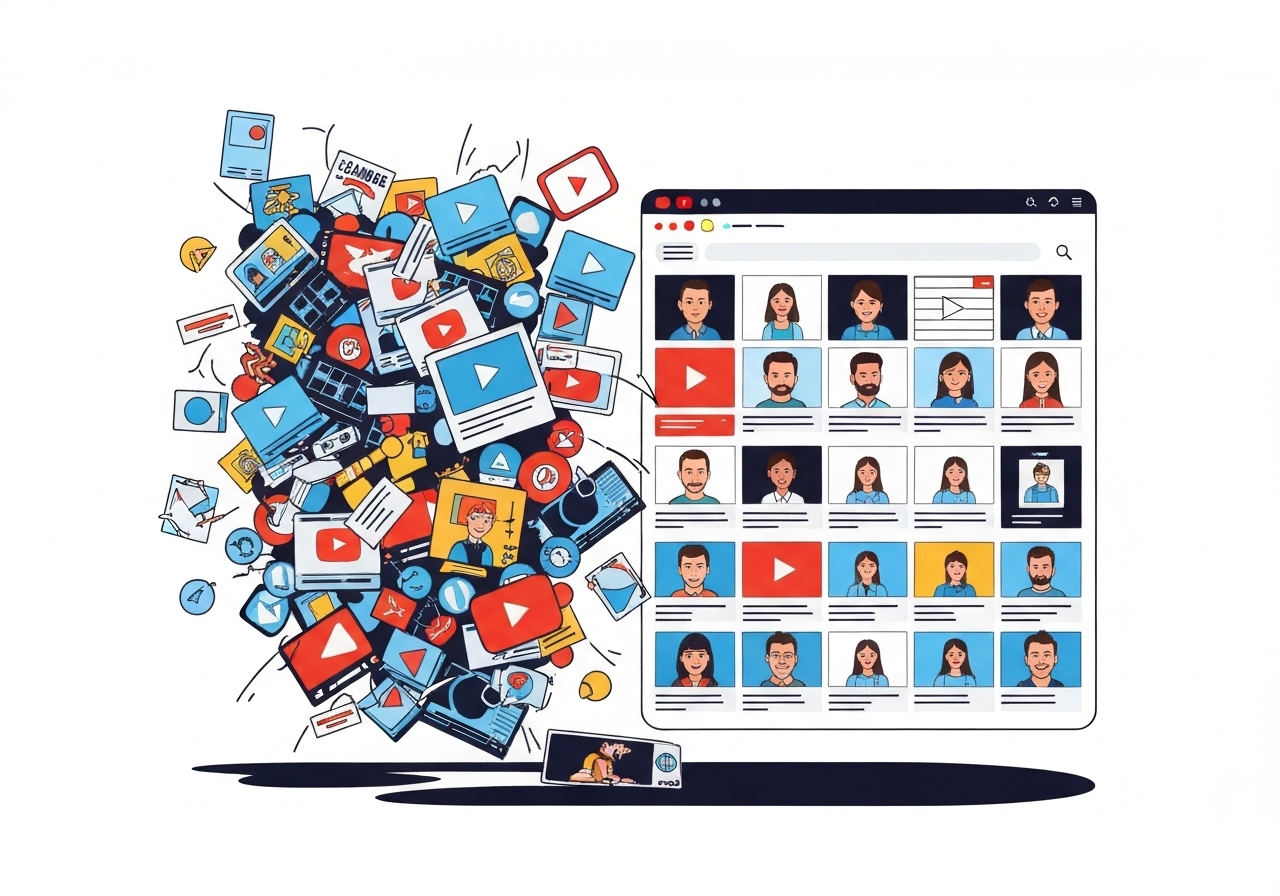
YouTube is experimenting with a prompt-driven option called “Your Custom Feed” that appeared in tests on November 25, 2025. Participants reported seeing the new feed next to the standard Home button, and the interface invites users to enter interest prompts to shape recommendations. The trial aims to reduce mismatches from algorithmic suggestions that can overemphasize a narrow pattern of past views. Early reports suggest this could let viewers prioritize topics they want without repeatedly using “Not interested” or channel-blocking tools.
Key Takeaways
- YouTube began testing “Your Custom Feed” in a visible experiment on November 25, 2025; the option appears adjacent to the Home button for some users.
- The feature asks users to type interest prompts (for example, “cooking”) to bias the feed toward those topics rather than relying only on passive viewing history.
- The test is experimental and limited in rollout; YouTube has not announced a global release date or participation numbers.
- This approach follows broader industry moves: Threads and X have both explored user-configurable feed controls earlier in 2025.
- If adopted broadly, custom feeds could reduce reliance on manual actions like “Not interested” and “Don’t recommend channel,” changing how viewers discover content.
- Potential implications include different creator reach patterns and questions about ad targeting and algorithmic transparency.
Background
YouTube’s recommendation engine has long balanced watch history, engagement metrics and personalization signals to populate the Home feed. Observers and users have frequently reported that the system can overfit to short viewing streaks — for instance, a handful of themed videos may prompt the algorithm to deliver a heavy stream of similar material. To counter poor matches, YouTube offers per-video controls such as “Not interested” and “Don’t recommend channel,” but those tools are granular and require repeated user effort.
In 2025 several social platforms pivoted toward giving users more direct control over algorithmic outputs. Threads ran experiments that let users tweak ranking parameters, while X explored ways to tag content preferences for its Grok chatbot and feed. That environment has created pressure for major platforms, including YouTube, to test more explicit personalization features that reduce friction and improve perceived relevance.
Main Event
On November 25, 2025, testers noticed a new option labeled “Your Custom Feed” placed beside the traditional Home control in the homepage UI. Clicking it opens a prompt field where participants can type topics, keywords or short descriptions of the content they want to see prioritized. The stated intent is to let viewers actively steer the recommendation model toward interests they choose, rather than passively trusting the algorithm to infer intent from viewing history alone.
TechCrunch’s coverage reported that the custom feed emphasizes entered prompts in subsequent recommendations; for example, typing “cooking” should increase the likelihood that cooking-related uploads surface. The feature remains in limited experiment mode and is not yet visible to the majority of users. YouTube has not published participation metrics, so the scope and geographic distribution of the test are unknown.
Design-wise, the custom feed represents a hybrid between manual curation and automated recommendation: users provide textual signals that the recommender treats as high-priority inputs. If YouTube refines the model to honor those inputs reliably, the platform could reduce repetitive corrective actions by viewers and shorten the discovery path for niche interests.
Analysis & Implications
Giving users a simple prompt field addresses a core usability problem: many viewers want predictable, topic-focused results without training an opaque model through hours of browsing. A prompt-based feed could increase satisfaction by aligning outputs with explicit user intent, improving retention and time-on-platform among users seeking curated topic streams.
For creators, a reliable custom-feed signal could change how discovery works. Niche creators might gain traction if user prompts consistently surface aligned content, while channels that previously benefited from incidental algorithmic amplification could see shifts in reach. That redistribution would affect creator strategies and possibly advertising inventory patterns tied to audience composition.
Operationally and ethically, the change raises questions about transparency, moderation and ad targeting. If prompts override other signals, YouTube will need to balance user intent with content-safety policies and advertiser suitability. Moreover, platforms must be clear how prompt inputs interact with paid promotions and recommendation ranking to avoid unexpected monetization effects.
Comparison & Data
| Experience | Main Mechanism | Pros | Cons |
|---|---|---|---|
| Standard Home | Passive algorithm (watch history, engagement) | Broad discovery; low setup | Can overfit and show repetitive content |
| Your Custom Feed (test) | User prompts prioritize topics | More precise topic control; faster discovery | Limited rollout; moderation and ad questions |
| Manual selection | Subscriptions, playlists, direct search | User control; predictable | High effort; narrower reach |
The table highlights trade-offs between passive and prompt-driven approaches. Custom prompts reduce the need for corrective clicks but introduce new design and policy trade-offs that platforms must resolve before wide release.
Reactions & Quotes
Early coverage and user reports framed the test as a potentially significant usability upgrade. Tech outlets described the feature as a way to make YouTube less prone to “over-personalization” from short-term viewing patterns.
“‘Your Custom Feed’ appears beside the Home button for participant accounts in current tests.”
TechCrunch (media)
Observers noted that giving viewers direct textual control mirrors moves by other platforms to surface configuration options for recommendation systems. That could reshape expectations about how much agency platforms should give users over what they see.
“A prompt-based feed lets users signal intent more explicitly than current corrective tools like ‘Not interested.'”
Industry analyst commentary (summarized)
Unconfirmed
- It is not yet confirmed how widely YouTube plans to roll out “Your Custom Feed” or the exact criteria for participation.
- There is no public information on whether prompt inputs will influence ad targeting or revenue allocation for creators.
- Claims about long-term effects on creator reach and platform engagement are speculative until scaled A/B results are published.
Bottom Line
YouTube’s experimental “Your Custom Feed” is a deliberate attempt to give viewers more direct control over homepage recommendations by accepting typed prompts. The approach could reduce the friction of correcting poor matches and speed up discovery for focused interests, but it remains an experiment with limited visibility as of November 25, 2025.
Before the feature reaches general availability, YouTube will need to clarify rollout plans, moderation interactions and monetization impacts. If implemented carefully, prompt-driven personalization could become a meaningful option alongside traditional algorithmic feeds and manual discovery tools — but many practical and policy questions must be answered first.
Sources
- TechCrunch — media report summarizing the experiment and early user reports.