
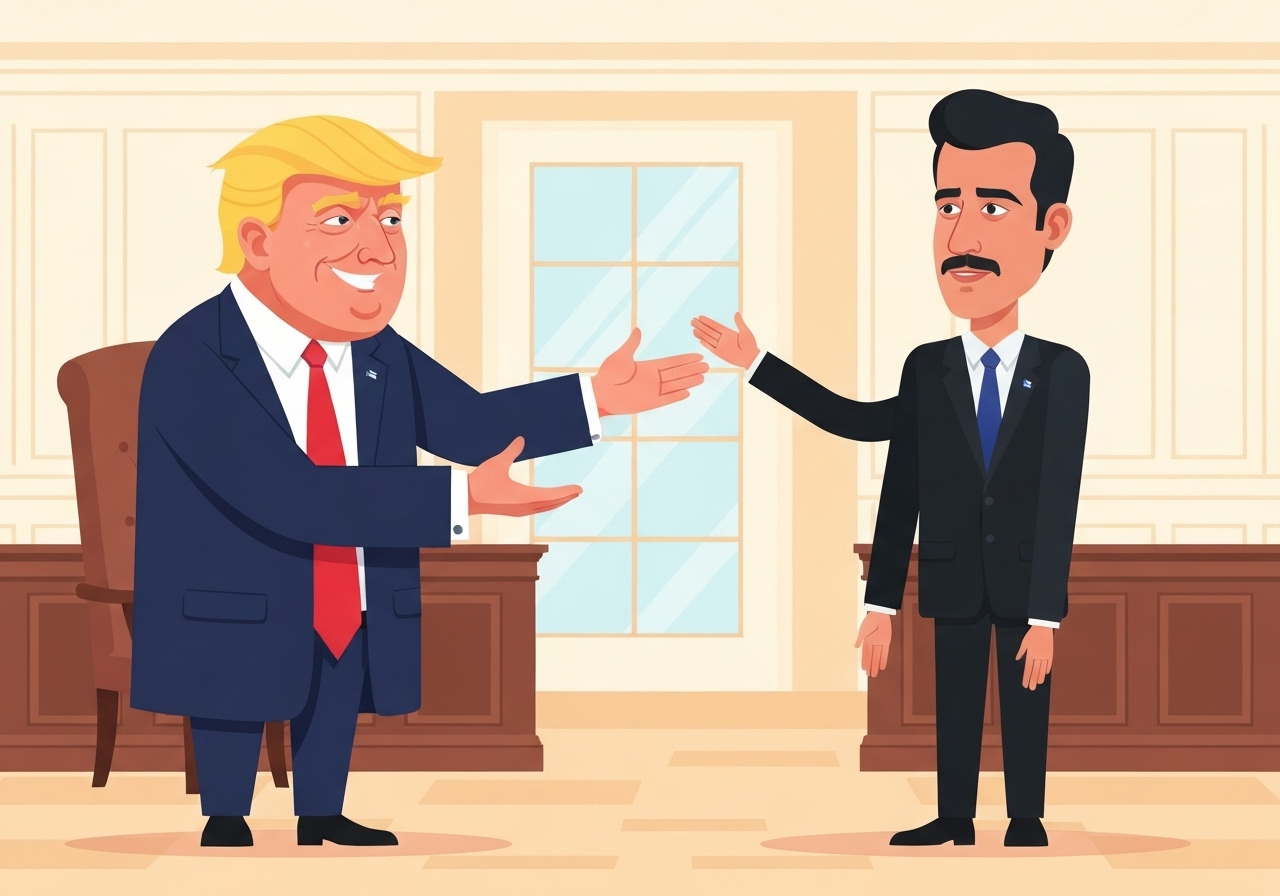
Lead
Former US president Donald Trump announced on Truth Social that he will grant a “full and complete pardon” to Juan Orlando Hernández, the ex-president of Honduras who is serving a 45-year US prison sentence on drug trafficking and weapons charges. Hernández was convicted in March of last year and sentenced in June; Trump made the pledge on Friday as Hondurans prepare to vote in a closely contested presidential election. The announcement ties into broader US-Honduras ties and comes amid long-standing US efforts to counter narcotics flows from Central America. The move would mark a high-profile use of presidential clemency affecting a foreign head of state convicted in US courts.
Key Takeaways
- Donald Trump said on Truth Social on Friday he will grant a “full and complete pardon” to Juan Orlando Hernández, who is serving a 45-year federal sentence in the United States.
- Hernández was convicted in a US trial in March of last year on charges that he accepted millions in bribes to protect cocaine shipments bound for the United States.
- An assistant US attorney described Hernández during closing arguments as having “paved a cocaine superhighway to the United States.”
- Hernández governed Honduras from 2014 to 2022 and was arrested shortly after leaving office; he has repeatedly called his conviction wrongful.
- Trump’s statement coincides with his public backing of candidate Tito Asfura in Honduras’ election, which was described as a near tie between multiple contenders.
- The announcement sits alongside Trump’s prior hardline drug policies, including designations of cartels as foreign terrorist organizations and operations that drew U.N. criticism.
- Honduran voting slated for Sunday will determine the country’s leader for 2026–2030; observers including the OAS and US officials are monitoring the vote.
Background
Juan Orlando Hernández led Honduras from 2014 until 2022 and was long viewed by many in Washington as a key regional partner on security and migration. Prosecutors in the United States charged that, while in office, he accepted millions of dollars in bribes to shield cocaine shipments destined for the US—charges he has denied. After leaving office he was arrested and extradited to the United States to face trial, where a federal jury convicted him in March of last year.
Hernández was sentenced in June to 45 years in federal prison for drug trafficking and related weapons offenses. His trial included testimony and financial records alleging cooperation with powerful traffickers; US prosecutors argued his actions enabled large-scale cocaine flows toward US markets. The case became a focal point for debates over corruption, US influence in Central America, and the limits of holding foreign leaders to account in US courts.
Main Event
On Friday, Trump posted that he would issue a full pardon to Hernández, saying the former leader had been “treated very harshly and unfairly” according to people Trump respects. The declaration was short and delivered via Trump’s Truth Social platform rather than through an official White House channel. The message was paired with public support for Honduras presidential candidate Tito Asfura and a warning about potential consequences if Asfura loses.
The announcement comes days before Hondurans vote in a presidential election described by some polls as a tight race among candidates including Asfura, Rixi Moncada of the ruling LIBRE Party, and Salvador Nasralla of the Liberal Party. Trump framed the pardon pledge within a broader geopolitical outlook—promising US support for a friendly Honduran leader while signaling skepticism about continued aid if an unfavorable candidate prevails.
Observers note the apparent tension between the pledge and Trump’s previous public posture on drugs: his administration designated multiple cartels as foreign terrorist organizations and authorized actions against suspected narcotics shipments that provoked international criticism. The clemency move would therefore shift the narrative from strict enforcement toward individualized political intervention in a foreign corruption case.
Analysis & Implications
A presidential pardon for a foreign head of state convicted in US federal court is legally possible but politically fraught. Legally, the US Constitution grants the president broad clemency powers for federal offenses; politically, issuing clemency to Hernández could spark bipartisan concern in Congress, complicate US relations with regional partners, and raise questions about precedent for other foreign officials convicted in the US.
Domestically, the move could solidify Trump’s appeal among constituencies prioritizing toughness on what they view as selective prosecutions, while alienating voters who favor strict anti-corruption stances. On the regional stage, a pardon may be welcomed by Hernández’s political allies and critics of US prosecutions, but it could deepen mistrust among governments and organizations that supported the trial as a step toward accountability.
For Honduras, the timing—immediately before a national election—adds uncertainty. If implemented, the pardon may embolden Hernández’s allies and those aligned with Asfura, but it could also further polarize an electorate concerned about corruption and governance. International institutions monitoring the vote, including the Organization of American States, may see the development as adding pressure to an already contested political environment.
Comparison & Data
| Item | Detail |
|---|---|
| Presidency | Juan Orlando Hernández, 2014–2022 |
| Conviction | March of last year (US federal court) |
| Sentence | 45 years (federal prison) |
| Charges | Drug trafficking and weapons offenses; alleged bribery to protect cocaine shipments |
The table summarizes the core timeline and legal outcomes central to this case. Contextually, a 45-year federal sentence places Hernández among the more heavily punished foreign officials convicted in US courts, reflecting prosecutors’ contention about the scale of the alleged criminal conduct and its impact on US drug markets.
Reactions & Quotes
Trump’s post framed the decision as correcting an injustice; his brief message invoked the view of unnamed advisers and supporters who deem Hernández’s treatment unfair. The statement also explicitly tied US backing to Honduran electoral outcomes, endorsing Tito Asfura.
“I will be granting a Full and Complete Pardon to Former President Juan Orlando Hernandez…”
Donald Trump (Truth Social post)
At trial, prosecutors delivered blunt characterizations of Hernández’s alleged role in narcotics trafficking. During closing arguments, an assistant US attorney summarized the government’s case about Hernández’s coordination with traffickers.
“He paved a cocaine superhighway to the United States.”
Assistant US Attorney Jacob Gutwillig (trial closing)
Regional actors and observers are watching closely. Honduran president Xiomara Castro—whose government has reoriented ties toward Cuba and Venezuela—has adopted a pragmatic posture toward Washington, but a US pardon for Hernández would intersect with broader diplomatic shifts in Central America.
Unconfirmed
- Whether paperwork and formal clemency procedures have already begun—Trump announced intent but formal actions and timing were not specified publicly.
- The scale of political leverage or quid pro quo involving Honduran election actors tied to the announced pardon remains unproven and lacks documented evidence in public sources.
- How other branches of US government or international partners will respond, including potential legal or policy countermeasures, has not been confirmed.
Bottom Line
Trump’s pledge to pardon Juan Orlando Hernández is a consequential use of presidential clemency that intersects with immigration, anti-corruption, and drug-enforcement policy debates. It would absolve a foreign head of state convicted in a US court of grave charges tied to narcotics flows, raising legal and diplomatic questions about accountability and precedent.
The timing—on the eve of a tightly contested Honduran election—amplifies the political stakes both in Honduras and in Washington. Observers should watch for the formal clemency paperwork, responses from Congress and international partners, and how the development affects Honduran voters and regional relations in the weeks ahead.
Sources
- The Guardian (news media) — original report summarizing the announcement, trial history, and regional context.