
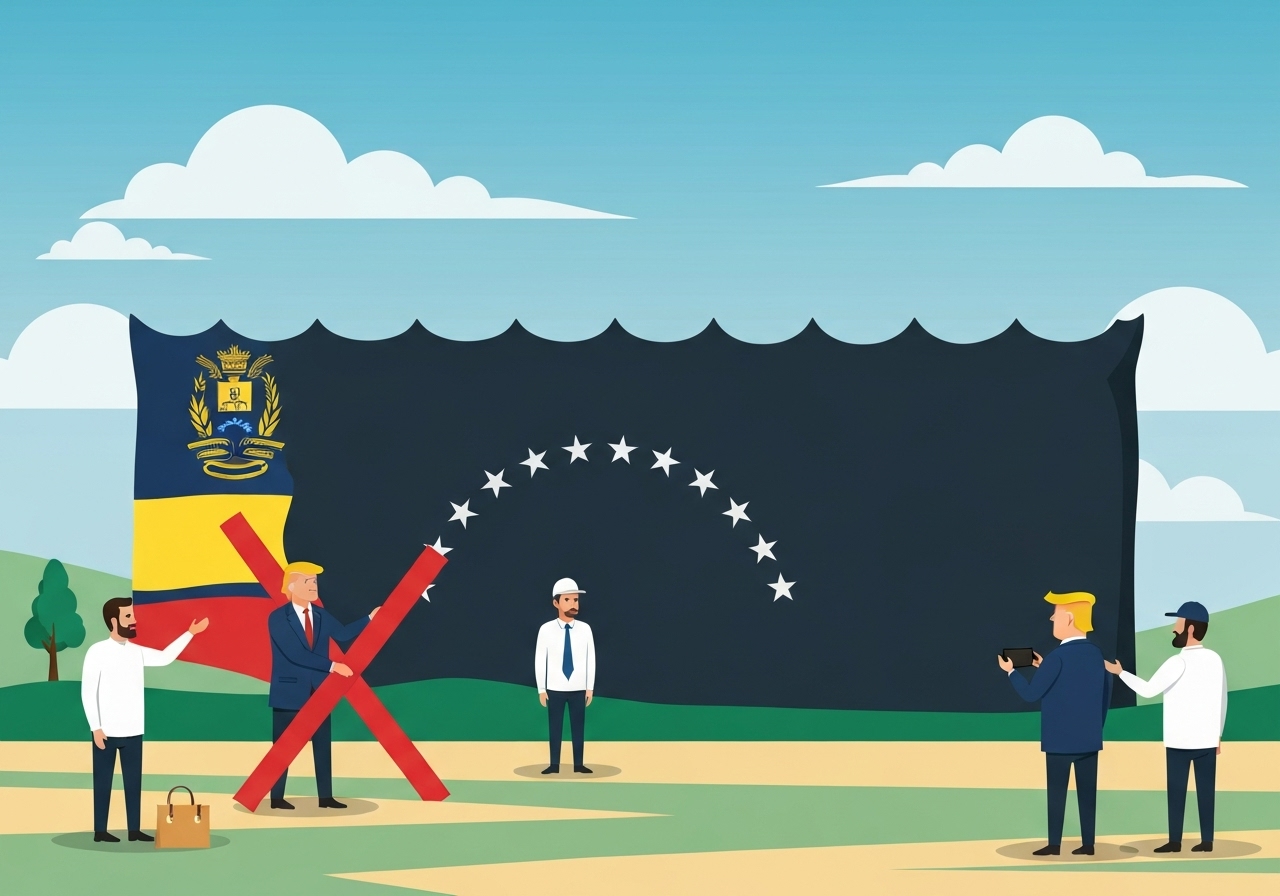
On 29 November 2025, former US president Donald Trump posted on Truth Social that the airspace above and surrounding Venezuela should be considered closed. His message came amid an ongoing US military buildup in the Caribbean and repeated US strikes on alleged drug-trafficking vessels. The Federal Aviation Administration had earlier warned airlines about a potentially hazardous situation over Venezuela, and Venezuela in turn revoked operating rights for six carriers. Officials in Caracas and the US Department of Defense did not immediately respond to requests for comment.
Key takeaways
- Donald Trump declared the airspace above and around Venezuela “to be closed in its entirety” in a Truth Social post on 29 November 2025.
- The US has carried out at least 21 strikes on alleged drug boats in the Caribbean and Pacific since September 2025, with at least 83 reported deaths.
- The FAA issued a warning to major airlines about a “potentially hazardous situation” when flying over Venezuela, prompting cancellations and a Venezuelan revocation of six airlines’ operating rights.
- The US has increased military presence in the region and reportedly authorised covert CIA operations in Venezuela; the Pentagon had no immediate public response to Trump’s post.
- Trump told military personnel this week that the US would “very soon” begin land operations targeting suspected Venezuelan drug traffickers, a timeline that has not been independently confirmed.
Background
The US-Venezuela relationship has been sharply adversarial for years, with the US government accusing President Nicolás Maduro of facilitating drug trafficking and Maduro denying those charges. Maduro has led Venezuela since 2013 and portrays US actions as efforts to remove him from power; Caracas has mobilised rhetoric and some resources in response. Since September 2025, US forces and assets in the Caribbean and eastern Pacific have focused on counter-narcotics missions, including strikes on vessels the US says were carrying drugs.
Those operations coincided with warnings from the US Federal Aviation Administration that heightened military activity and a worsening security situation around Venezuela could create risks for civil aviation. Several major carriers suspended flights or rerouted, and Venezuela responded by revoking operating permissions for six international airlines. At the same time, reports of covert intelligence activity and a US military buildup have raised concerns among regional governments about the potential for escalation beyond counter-narcotics objectives.
Main event
On 29 November 2025, Trump used his Truth Social platform to order airlines, pilots, and those he named — including drug dealers and human traffickers — to treat the airspace above and around Venezuela as closed. The post mirrored a blunt public posture and arrived against the backdrop of recent US strikes and military deployments in nearby waters. Venezuelan state channels did not immediately reply to inquiries routed through the communications ministry.
The FAA’s advisory earlier this month warned of a “potentially hazardous situation” when flying over Venezuela because of increased military activity; that advisory prompted the suspension of several international routes. In response, Venezuela revoked operating rights for six carriers; the specific airlines were not named in the immediate reporting but were described as major international operators who had paused flights after the FAA notice.
US defence activity in the region has included at least 21 strikes against alleged drug-carrying boats since September 2025. US officials reported that these strikes resulted in at least 83 deaths. Separately, multiple outlets reported that the US had authorised covert Central Intelligence Agency operations in Venezuela to pursue trafficking networks — a move that highlights a mix of publicly declared and clandestine tools in the US approach.
Trump also told service members this week that land operations aimed at suspected Venezuelan drug traffickers would begin “very soon.” The timing and scope of any such ground operations remain unclear in public sources, and Pentagon spokespeople did not provide an immediate clarification to reporters after Trump’s post.
Analysis & implications
Trump’s public declaration of closed airspace functions more as a political signal than as an immediately enforceable aviation directive. Domestic and international aviation rules (and sovereign airspace control) involve legal and diplomatic processes; a former or sitting leader’s post can alter perceptions and behaviour but does not by itself codify international airspace restrictions. Airlines and regulators typically rely on formal notices (NOTAMs) and intergovernmental channels for actionable restrictions.
Operationally, the concentration of US forces and repeated strikes indicate a sustained counter-narcotics campaign that has already produced lethal outcomes. The scale of deployed firepower, as noted by regional analysts, significantly exceeds what would be required solely for maritime interdiction, raising concern about mission creep. If ground operations materialise, they would represent a substantial escalation with legal, operational and diplomatic consequences across the hemisphere.
Regionally, Latin American governments may react in diverse ways: some could support enhanced counter-narcotics efforts, while others will perceive the moves as undue US intervention, potentially prompting diplomatic friction. Venezuela’s revocation of airline rights and rhetoric about resisting an ouster underscore how quickly security measures can spill into broader economic and civil aviation disruptions, affecting third‑country carriers and regional connectivity.
Comparison & data
| Metric | Since September 2025 |
|---|---|
| Reported strikes on alleged drug boats | 21 |
| Reported fatalities linked to strikes | At least 83 |
The numbers above summarise public reporting; independent verification of each incident varies, and casualty figures may change as investigations proceed. Comparatively, the tempo of strikes since September represents a notable intensification relative to typical seasonal patrols in these maritime regions.
Reactions & quotes
“To all Airlines, Pilots, Drug Dealers, and Human Traffickers, please consider THE AIRSPACE ABOVE AND SURROUNDING VENEZUELA TO BE CLOSED IN ITS ENTIRETY.”
Donald Trump (Truth Social)
The post drew immediate attention from aviation and diplomatic circles because it was issued outside the formal channels usually used to communicate airspace restrictions.
“The FAA warned major airlines of a potentially hazardous situation when flying over Venezuela due to a worsening security situation and heightened military activity in or around the country.”
US Federal Aviation Administration (advisory summary)
The FAA advisory prompted airlines to alter routes and some to suspend Venezuela services, which in turn led to Caracas revoking operating rights for six carriers.
“Trump is seeking to oust me; Venezuelans and the military will resist any such attempt.”
Nicolás Maduro (statement reported by Venezuelan state channels)
Maduro framed US actions as an existential threat to his government and has pledged resistance to any external attempt to remove him.
Unconfirmed
- Whether the Truth Social post constitutes an immediate, enforceable closure of Venezuelan airspace under international law is not confirmed.
- The precise timeline and authorisation for any US land operations in Venezuela remain unverified and lack public documentation.
- Details and scope of reported covert CIA operations in Venezuela have not been independently confirmed in publicly available official records.
Bottom line
Trump’s declaration that Venezuela’s airspace is “closed” has sharpened international attention on a region already experiencing heightened US military activity and repeated strikes on alleged drug trafficking vessels. For airlines and regulators, the immediate practical effect so far has been cautionary: route changes and suspended services prompted by FAA advisories, and reciprocal Caracas actions affecting airline permissions.
Looking ahead, the critical uncertainties are legal and operational: whether formal airspace restrictions will be issued through established channels, whether ground operations will proceed and under what mandate, and how regional and global actors will respond diplomatically. Independent verification of strike claims and casualty figures will remain important to assess the proportionality and objectives of US actions.
Sources
- The Guardian (international news reporting)
- US Federal Aviation Administration (official aviation authority)
- US Department of Defense (official government)