
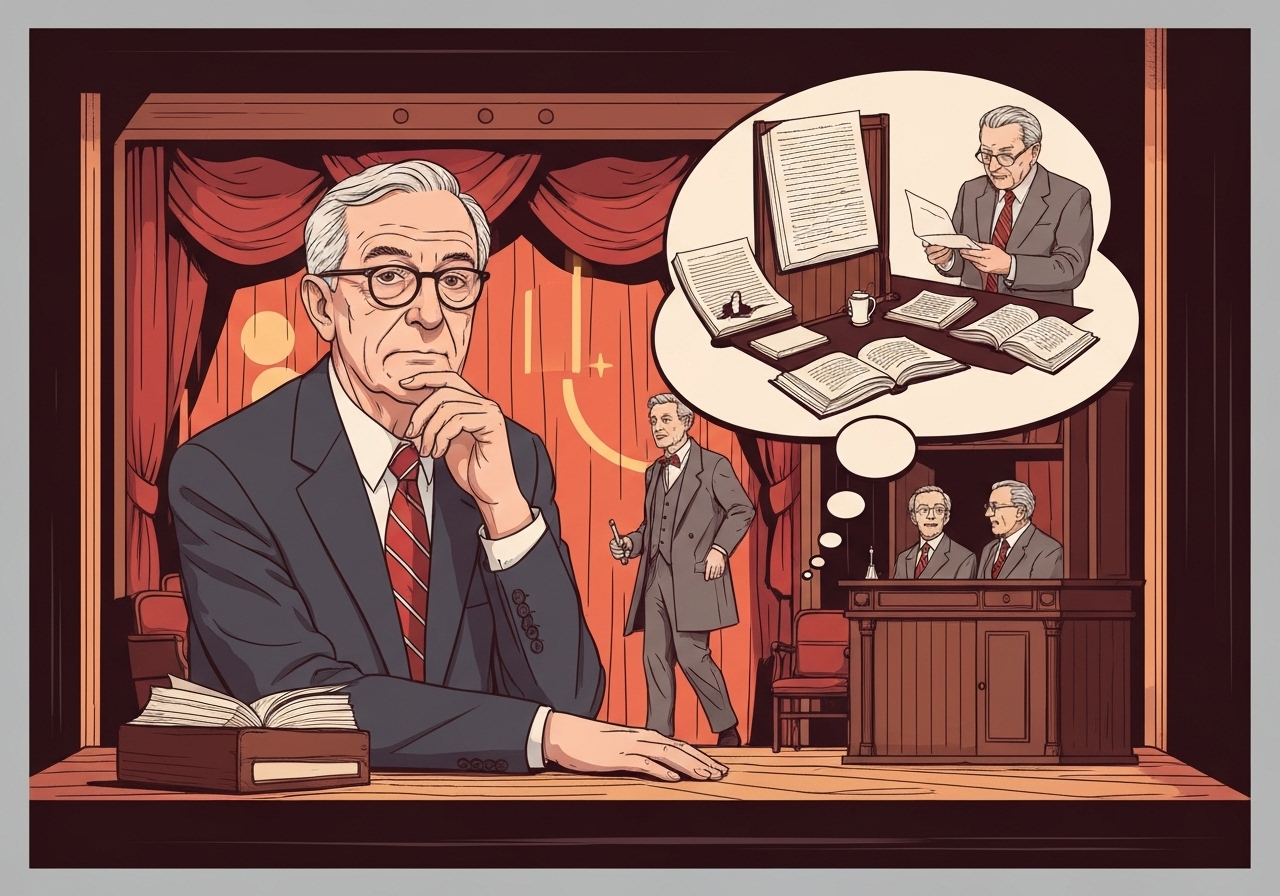
Tom Stoppard, the Czech-born British playwright famed for intellectual bravura and theatrical wit, has died aged 88, his passing reported on 29 November 2025. Over six decades his plays and screen work — from the Edinburgh-discovered Rosencrantz and Guildenstern Are Dead to late masterpieces such as Leopoldstadt — reshaped modern theatre and entered the wider cultural lexicon. Celebrated for marrying high ideas to lively stagecraft, Stoppard also lent his skills to major films and advised prominent directors, extending his influence beyond the stage. His death closes the career of a writer who made philosophical puzzles and historical inquiry central to popular theatre.
Key takeaways
- Tom Stoppard died aged 88, with reports of his death published on 29 November 2025.
- Born Tomáš Straussler in Czechoslovakia, he fled the Nazis to Singapore in 1939 and was later evacuated to India; his father died in the Japanese occupation.
- His breakthrough came with Rosencrantz and Guildenstern Are Dead (first noticed at the 1966 Edinburgh Fringe); his major plays include Jumpers (1972), Arcadia (1993) and Rock ’n’ Roll (2006).
- He wrote for stage, radio and screen, credited on films such as The Russia House, Brazil and jointly on Shakespeare in Love; he consulted on high-profile films including Schindler’s List.
- Awards include CBE (1978), knighthood (1997) and the PEN Pinter Prize (2013) for his “determination to tell things as they are.”
- Later work, notably Leopoldstadt, revisited Jewish central European history; he learned of his Jewish origins in his 50s and addressed that heritage in his late career.
- Stoppard described his politics as a “timid libertarian” and was publicly associated with centre-right figures; he signed a 1984 letter supporting the US invasion of Grenada.
Background
Tomáš Straussler was born in Czechoslovakia and, before his second birthday in 1939, his Jewish parents fled the Nazi invasion for Singapore. In 1942 he and his brother were evacuated to India with their mother; their father, serving as an army medical officer, later died during the Japanese occupation. After the war their mother married Kenneth Stoppard, who adopted the boys and relocated the family to England, where Tom took his stepfather’s surname.
Stoppard left formal schooling at 17 and began as a reporter on the Western Daily Press in Bristol, then experimented with radio pieces before a stage script was staged in Hamburg and broadcast on British television. A Ford Foundation grant sent him to Berlin, where he developed the idea that became Rosencrantz and Guildenstern Are Dead; the play’s early discovery at the 1966 Edinburgh Fringe launched him to international attention. From that point on, any new Stoppard production became a major theatrical event.
Main event
Stoppard combined a prolific theatre output — more than 30 stage plays — with radio and television dramas and film work. He delighted in unexpected juxtapositions: the physical and philosophical in Jumpers (1972), the entwining of landscape history and mathematical ideas in Arcadia (1993), and rock politics with classical lyricism in Rock ’n’ Roll (2006). Critics and audiences alike came to use the adjective “Stoppardian” to describe his particular blend of wit, erudition and structural ingenuity.
Rosencrantz and Guildenstern Are Dead, which reimagined two minor Shakespearean characters, established his reputation and became a staple of repertory and academic study. His midcareer play The Real Thing (1982) shifted perceptions of him as merely cerebral by foregrounding emotion and marital betrayal; the West End production starred Felicity Kendal and Roger Rees and later played on Broadway with Jeremy Irons and Glenn Close.
Beyond theatre, Stoppard’s screen credits and collaborations expanded his cultural footprint. He adapted John le Carré’s The Russia House and worked on Terry Gilliam’s Brazil; he shared credit on the Oscar-winning screenplay for Shakespeare in Love and acted as a sought-after script doctor for blockbusters. Anecdotes of directors calling on him in moments of crisis — including one involving Steven Spielberg and Schindler’s List — speak to his reputation for linguistic sharpness and structural clarity.
In later years he returned to subjects tied to his roots and to twentieth-century Central Europe. Every Good Boy Deserves Favour (1977) combined music and drama to address political repression, and Professional Foul (1977) was dedicated to Václav Havel. Leopoldstadt, produced in his eighties, traced a Viennese Jewish family from 1899 to 1955 and has been widely regarded as a late masterpiece that confronts identity, loss and historical memory.
Analysis & implications
Stoppard’s work altered expectations for mainstream theatre by showing that plays could integrate rigorous ideas without losing theatrical vitality. His combination of philosophical argument, formal invention and dramatic warmth broadened playwriting’s subject matter and influenced generations of dramatists and screenwriters. The repeated staging and academic study of plays like Arcadia and Rosencrantz suggest a durable legacy that crosses the divide between popular success and scholarly interest.
Politically and culturally, Stoppard occupied a distinctive position: personally sociable and celebrated, he professed a politically heterodox stance that did not align with many of his contemporaries on the left. That independence of outlook — and occasional public endorsements of conservative figures — complicated simple readings of him as a liberal dramatist and meant his plays could not be easily boxed into partisan categories.
Economically, his ability to move between commercial film projects and serious theatre provided a model for writers seeking both influence and financial stability. His consultancy work on major films underscores a now-common industry practice of using respected playwrights to sharpen dialogue and structure in tentpole projects. Internationally, his repeated engagements with Czech and Austrian themes helped reintegrate Central European histories into anglophone theatre at a high profile.
Comparison & data
| Work | Year | Form |
|---|---|---|
| Rosencrantz and Guildenstern Are Dead | 1966 | Play |
| Jumpers | 1972 | Play |
| Arcadia | 1993 | Play |
| Rock ’n’ Roll | 2006 | Play |
| Leopoldstadt | —late period | Play |
This table highlights select milestones across a career that spanned more than 50 years; the chosen titles demonstrate Stoppard’s range from early absurdist invention to historically rooted later works. Although not exhaustive, the list shows recurring themes: intellectual curiosity, political engagement and formal experiment. Productions of Arcadia and Rosencrantz continue to appear in major theatres and university syllabuses, indicating sustained academic and theatrical interest.
Reactions & quotes
Colleagues, critics and institutions responded swiftly, underlining both admiration for his craft and recognition of his cultural reach. The following quotations capture aspects of how Stoppard was perceived during his life and by awarding bodies.
“It is actually one of Tom’s achievements that one envies him nothing, except possibly his looks, his talents, his money and his luck.”
Simon Gray (playwright, colleague)
Gray’s wry remark, made in public commentary about Stoppard’s charmed reputation, encapsulated the mixture of envy and warmth his social circle often expressed. It also underlined the perception of Stoppard as uniquely fortunate across talents and circumstances.
“Determination to tell things as they are.”
PEN Pinter Prize (award citation, 2013)
The PEN Pinter Prize citation framed Stoppard’s later recognition as rooted in a moral clarity and directness that sat alongside his intellectual playfulness. The award highlighted how his work engaged truth-telling across political and historical subjects.
“Timid libertarian” / “an honorary Englishman”
Tom Stoppard (self-description)
Stoppard’s own short self-descriptions have been used by commentators to explain his uneasy fit with the dominant left-leaning theatre culture of the late 20th century. Those phrases point to a complex public identity — patrician in taste, contrarian in politics, and cosmopolitan in outlook.
Unconfirmed
- No official cause of death had been published at the time early reports appeared; family statements had not been released publicly.
- Details of funeral arrangements and any planned commemorations had not been confirmed by a named representative when first reported.
Bottom line
Tom Stoppard was a singular figure whose career transformed late-20th and early-21st-century theatre by proving that intellectual rigor and theatrical enjoyment are mutually reinforcing. His body of work spans comic gamesmanship, intimate relationship drama and serious historical reckoning; that range secured him a place both in popular repertory and in academic study.
For the theatre world and beyond, Stoppard’s death is the loss of a writer who made language and ideas central to drama without sacrificing heart. Expect renewed productions, critical reappraisals and scholarly attention in the months and years ahead as theatres, universities and film-makers reassess a complex, influential oeuvre.
Sources
- The Guardian — UK national newspaper (report and obituary, 29 November 2025)