
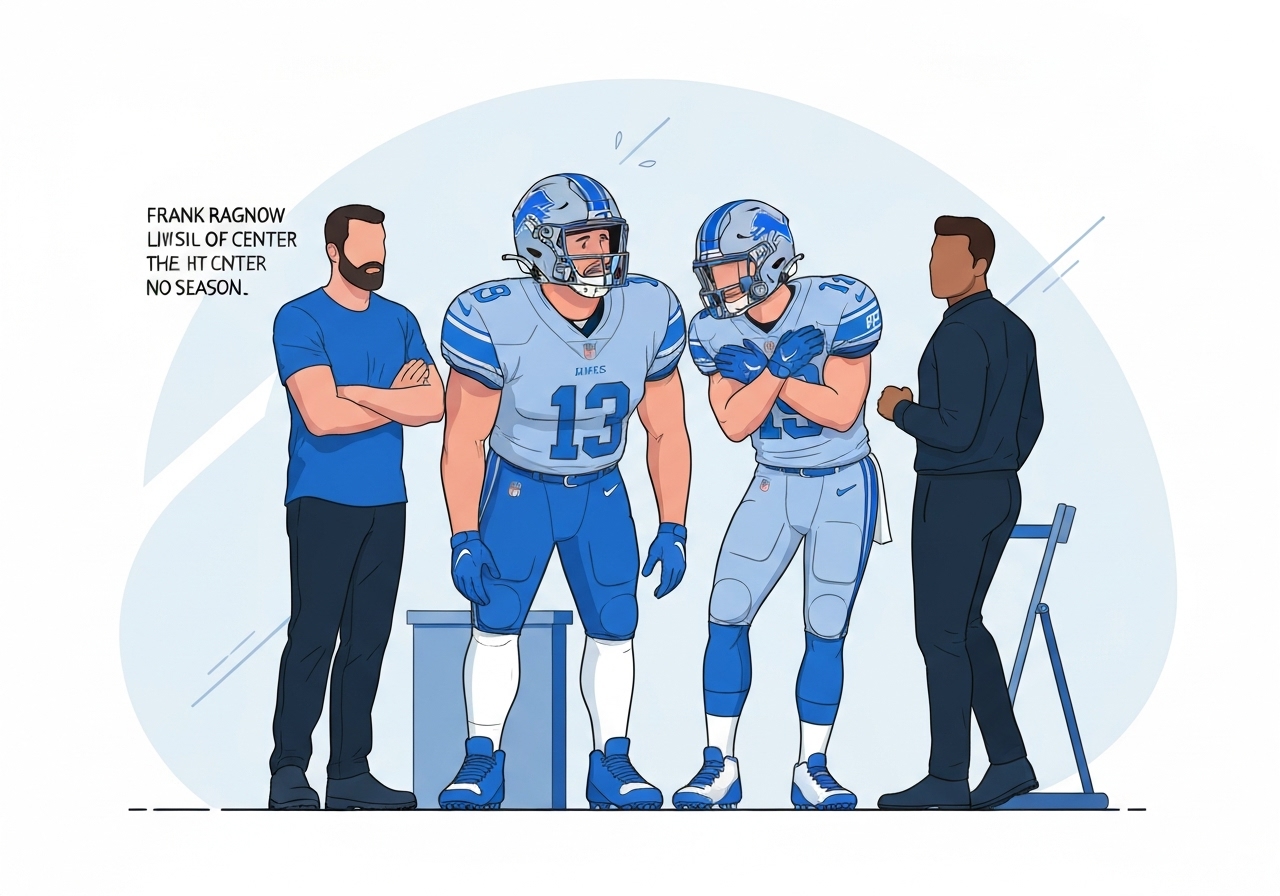
Lead: The Detroit Lions announced Saturday morning that center Frank Ragnow will not rejoin the team this season after failing a physical. Ragnow had been reinstated from the retired list earlier in the week, but medical testing revealed a Grade 3 hamstring strain. The injury, the team said, will prevent him from returning to action before the end of the year. The Lions reiterated that Ragnow will “forever be a Lion” as they prepare to address their offensive-line needs in the season’s final weeks.
Key Takeaways
- Frank Ragnow was reinstated from the retired list this week and then failed a physical announced Saturday morning.
- The team confirmed a Grade 3 hamstring strain, which typically indicates a severe tear and a prolonged recovery period.
- Ragnow will not play again this season; the Lions must seek alternate offensive-line options for remaining games.
- The Lions’ social announcement used the phrase “forever be a Lion” while giving no return timetable.
- The setback affects a core offensive lineman whose absence alters short-term lineup plans and depth chart strategy.
- Medical classification (Grade 3) implies increased likelihood of surgery or extended rehab, changing roster and cap management choices.
Background
Frank Ragnow, an established starting center for the Detroit Lions, had been on the retired list before the team reinstated him this week in hopes of a late-season return. Centers are pivotal to offensive-line communication and run/pass blocking assignments, and Ragnow’s experience has been a stabilizing factor for Detroit’s front unit. The Lions’ midseason roster moves reflected an attempt to add proven interior line help ahead of crucial late-season matchups and potential postseason positioning. The decision to bring Ragnow back signaled both the player’s interest in returning and the team’s desire to bolster depth, but medical clearance remained a necessary final step.
Hamstring injuries are common among football players and are graded by severity: Grade 1 (mild strain), Grade 2 (partial tear), and Grade 3 (complete tear). Higher-grade strains are associated with longer recovery and sometimes surgical repair, depending on the location and extent of the injury. For decision-makers in NFL front offices, such an injury late in the season forces a reassessment of short-term personnel plans and may prompt emergency acquisitions, practice-squad elevations, or lineup shuffles. Historically, clubs faced with late-season injuries to core linemen have balanced immediate competitive needs with long-term medical and contract considerations.
Main Event
This week the Lions moved to reinstate Ragnow from the retired list, a move that raised hopes he could re-enter the lineup quickly. On Saturday morning the team posted an update stating that Ragnow failed the physical exam required to clear him for play. Team officials attributed the failed clearance to a Grade 3 hamstring strain discovered during the evaluation, a finding that the organization said will prevent his return this season.
The medical determination arrived after the team’s physicians conducted imaging and a physical assessment; the Lions did not provide a detailed medical timeline or say whether surgery is planned. In their public message the organization emphasized Ragnow’s standing with the franchise, saying he would “forever be a Lion,” but also acknowledged the pragmatic need to find offensive-line help for upcoming games. The staff will therefore continue with contingency plans already in place for interior-line depth.
From a roster standpoint, the immediate consequence is increased playing time demands on current interior linemen and a likely search for short-term reinforcements on the market or from practice squads. The Lions have several regular-season games remaining, and coaching staff must adjust protections and assignments to compensate for Ragnow’s absence. The team’s statement was brief and focused on the medical ruling rather than operational specifics about roster moves.
Analysis & Implications
On-field impact: Losing Ragnow removes a veteran anchor from the center position and will affect both run-blocking cohesion and pre-snap communication. Quarterback protections and line calls often flow through the center; replacing him mid-season requires a backup who can handle calls under pressure. In the short term, the Lions are likely to emphasize schematic adjustments, additional slide protections, and quicker throws to mitigate pass-rush exposure.
Roster and cap considerations: With the season underway, options to add experienced starters are limited by roster deadlines and available free agents. The team may pursue a veteran backup with prior starting experience or promote a younger player who has practiced within the system. Salary-cap implications are typically manageable for short-term signings, but durable solutions—like signing a multi-year free agent—carry longer financial consequences and evaluation requirements beyond this season.
Medical and recovery outlook: A Grade 3 hamstring strain generally means a severe tear and often requires months of rehabilitation; surgical intervention is sometimes recommended depending on tendon involvement. That recovery horizon aligns with the Lions’ statement that Ragnow will not return before the season ends. The club and the player will need to coordinate next steps—surgery versus conservative rehab—based on further imaging and specialist opinions.
Competitive ramifications: As the Lions navigate the final stretch, this change may alter win-probability calculations for each remaining game given the central role of the position. Opponents will test Detroit’s interior protection and run-blocking without Ragnow, and coaching adjustments will be judged on short notice. Longer term, how the team manages his contract and rehab could factor into offseason planning and the next training camp.
Comparison & Data
| Hamstring Grade | Typical Injury Description | Usual Recovery Range |
|---|---|---|
| Grade 1 | Mild strain, few fibers involved | 1–3 weeks |
| Grade 2 | Partial tear, more fibers affected | 4–8 weeks |
| Grade 3 | Complete tear or significant rupture | Several months; may require surgery |
This table summarizes typical clinical classifications and recovery windows for hamstring injuries; individual cases vary by severity, exact tissue involved, and treatment approach. Given the timing (late in the NFL season) and the Grade 3 designation, the practical expectation is that Ragnow will not be available before season’s end, consistent with the Lions’ announcement. Teams often weigh expedited surgical repair against conservative rehab depending on player age, contract status, and offseason plans.
Reactions & Quotes
“He will forever be a Lion.”
Detroit Lions (team announcement)
The organization used that phrase in its social announcement, signaling support for Ragnow while confirming the medical outcome. The message balanced empathy with a factual update on roster availability.
“A Grade 3 hamstring strain often implies a complete tear and can require months of recovery, sometimes including surgery.”
Mayo Clinic (medical overview)
Medical authorities describe Grade 3 as the most severe common classification, which explains the team’s decision to rule him out for the season. That clinical framing helps account for why the Lions did not provide a shorter timetable.
“This is disappointing news for the locker room, but the team will pivot and find answers up front.”
Local beat coverage (paraphrase of reporting)
Local reporters and beat writers immediately contextualized the announcement as both a medical update and a roster challenge, noting the urgency of finding interior-line help for upcoming matchups.
Unconfirmed
- Whether Ragnow will undergo surgery or pursue non-surgical rehabilitation remains unannounced and is not confirmed by the team.
- Precise imaging details (e.g., tendon avulsion vs muscle belly tear) have not been released and are unconfirmed.
- Any specific roster moves, free-agent signings, or practice-squad promotions in direct response to this announcement are not yet confirmed.
Bottom Line
Frank Ragnow’s failed physical and the diagnosis of a Grade 3 hamstring strain remove a core interior lineman from the Lions’ roster for the remainder of this season. The team’s public message emphasized loyalty while making clear the medical reality prevents a comeback before year-end. In practice, Detroit must accelerate contingency plans for the offensive line, balancing short-term performance needs with careful medical management for the player.
For fans and analysts, the development changes the immediate outlook for the Lions’ offensive front and raises questions about offseason planning around Ragnow’s recovery and future availability. The club will likely provide further updates only after additional medical review, and any surgical decision or timetable will be decisive for both roster construction and the player’s long-term career path.