
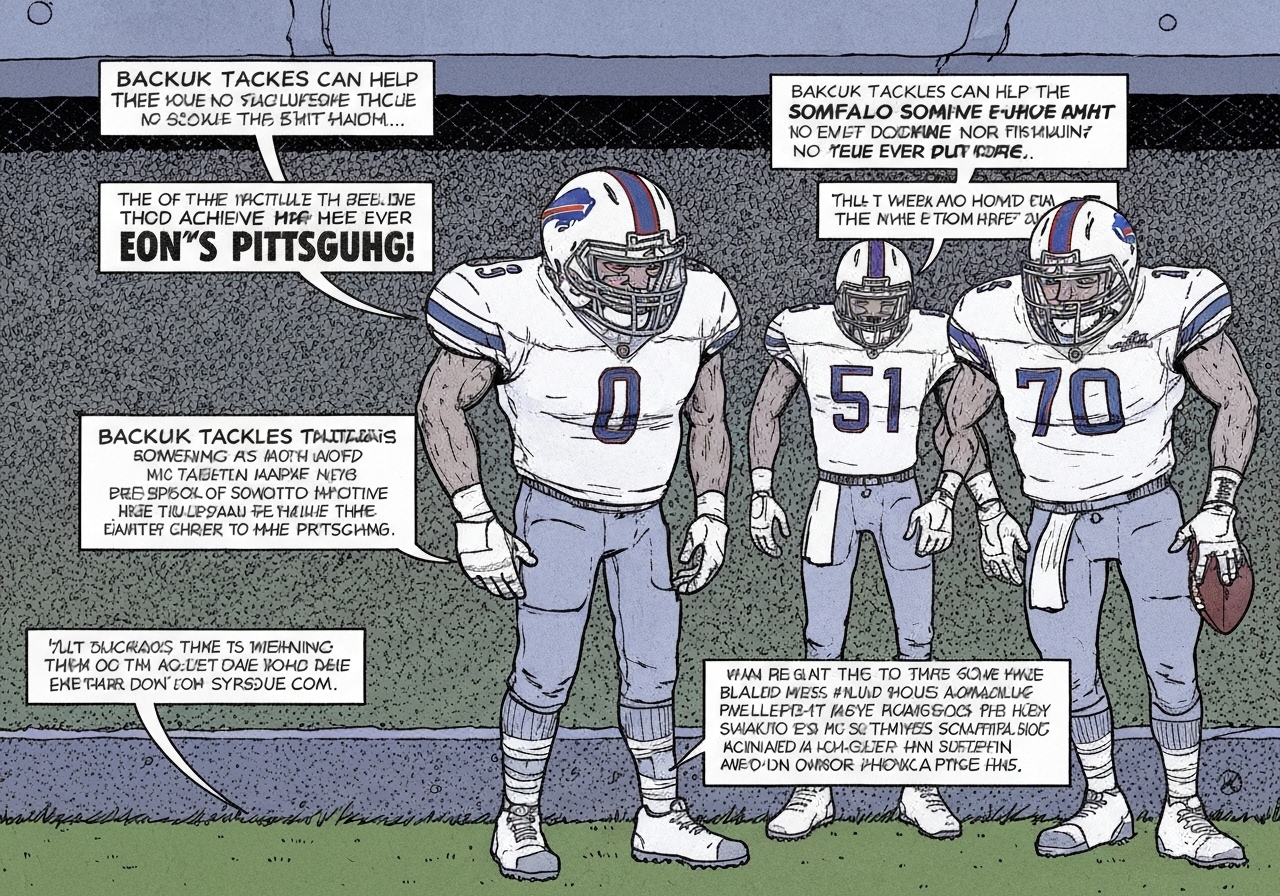
Lead: On Nov. 30, 2025, in Week 13 at Acrisure Stadium, the Buffalo Bills beat the Pittsburgh Steelers 26-7 to earn their eighth win of the season. Facing a sluggish first half without multiple starters, Buffalo turned the game in the third quarter with a defensive strip-sack returned for a touchdown and a subsequent interception. The Bills then leaned on a dominant ground game — 249 rushing yards, the most ever by a visiting team at Acrisure Stadium — while two backup offensive tackles, Ryan Van Demark and Alec Anderson, helped pave the way. The result was a comprehensive second-half performance that sealed a road statement win in Pittsburgh.
Key Takeaways
- Final score: Buffalo Bills 26, Pittsburgh Steelers 7 (Nov. 30, 2025, Week 13).
- Bills rushed for 249 yards, the most by any visiting team in Acrisure Stadium history.
- James Cook led Buffalo with 144 rushing yards on 32 carries.
- Ray Davis contributed 62 yards on 9 carries; Ty Johnson and Josh Allen also added rushing yardage.
- Defensive swing: Joey Bosa strip-sacked Aaron Rodgers; Christian Benford returned the scoop for a touchdown and later intercepted Mason Rudolph.
- Pittsburgh finished with 108 passing yards and 58 rushing yards overall.
- Buffalo recorded 23 unanswered points in the second half to pull away.
- Backup offensive tackles Ryan Van Demark and Alec Anderson stepped in and helped fuel the record-setting ground performance.
Background
The Bills entered Week 13 already dealing with personnel gaps: Buffalo was without its top offensive tackles, top pass-catcher and one of its leading receivers during the trip to Pittsburgh. Those absences left questions about whether the offense could sustain drives against a physical Steelers front at Acrisure Stadium. Historically, Pittsburgh has been a difficult venue for opposing run games, making Buffalo’s plan to establish the ground attack a bold tactical choice.
Buffalo’s defense had been a steadying force through the season, and the club leaned on that unit when the offense struggled early. The Steelers’ only first-half touchdown came after a James Cook fumble created a short field, underscoring how turnovers changed early momentum. Coaching staffs on both sides entered the second half with clear adjustments to make, but Buffalo’s halftime changes produced the decisive sequence that flipped the game.
Main Event
The second half opened with a defining defensive play. Joey Bosa pressured Aaron Rodgers, wrestled the ball free and forced a turnover that Christian Benford scooped and returned for a touchdown. That play erased Buffalo’s halftime deficit and energized the sideline. On Pittsburgh’s next possession, Mason Rudolph — who came in at quarterback during the game — threw a pass that Benford intercepted, again halting a Steelers drive and setting up Buffalo’s offense in favorable field position.
With the turnover margin swinging in their favor, Buffalo leaned into the run. James Cook bore the brunt of the workload, finishing with 144 yards on 32 carries while repeatedly converting short-yardage and early-down situations. Ray Davis produced several contact-heavy gains and finished with 62 yards on nine carries; Ty Johnson and Josh Allen supplemented the attack and kept Pittsburgh’s defense honest.
Despite missing starters on the edges, Buffalo’s offensive line — anchored by backups Ryan Van Demark and Alec Anderson — opened lanes consistently in the second half. The Bills ran for 249 yards as a team, a total that stands as the highest ever recorded by a visiting club at Acrisure Stadium. Pittsburgh’s offense could not respond: the Steelers finished with only 108 passing yards and 58 rushing yards and struggled to sustain drives after halftime.
Analysis & Implications
Strategically, Buffalo’s game plan shifted from trying to generate chunk passes to imposing a ground-first identity once the turnovers gave them momentum. With the running game working, the play-calling simplified and the Bills repeatedly returned to the same effective personnel groupings and concepts. That helped wear down Pittsburgh’s front and shortened the game clock, advantages valuable late in the season.
The performance highlights depth on Buffalo’s roster. Achieving a historic rushing mark while starting backup tackles at the edges speaks to both the quality of the reserves and the schematic adjustments by offensive coordinator Joe Brady. His willingness to double down on inside runs and leverage tempo mismatches paid immediate dividends and reduced reliance on the passing game, which had been uneven.
Defensively, the Bills showed complementary value: turnovers created sudden-scoring opportunities and prevented the Steelers from establishing any offensive rhythm. Joey Bosa’s strip that led to the scoop-and-score and Christian Benford’s follow-up interception changed both scoreboard and narrative. For Buffalo, that means confidence in the defense’s ability to close games even when the offense sputters early.
Looking ahead, the win gives Buffalo momentum as it pursues playoff positioning; however, persistent issues in the passing game and special teams remain. Kicker Matt Prater missed extra points in consecutive games, a small but potentially consequential trend. Buffalo’s coaching staff must also decide whether to continue the heavy reliance on the ground game or re-integrate missing offensive pieces when healthy.
Comparison & Data
| Team | Rushing Yards (Game) |
|---|---|
| Buffalo Bills (road) | 249 (Acrisure Stadium record for visiting team) |
| Pittsburgh Steelers (home) | 58 |
The table underlines the disparity: Buffalo dominated time of possession and yardage on the ground, while Pittsburgh managed only 58 rushing yards. Buffalo’s 249-yard total set a stadium visiting-team record; that single number accounts for the bulk of the Bills’ offensive production and explains the 23 unanswered points in the second half.
Reactions & Quotes
Coaches and players emphasized the collective effort and the importance of the turnover sequence that swung the game.
Benford’s third-quarter plays — the scoop-and-score and the interception — were described as game-turning momentum events by Buffalo’s staff.
Syracuse.com (local sports coverage)
Buffalo’s coaching staff highlighted the offensive line’s performance, noting that backups Ryan Van Demark and Alec Anderson executed assignments that opened consistent rushing lanes.
Buffalo Bills (official game recap)
Pittsburgh observers pointed to the short field after the Cook fumble and the team’s inability to sustain drives as the decisive factors in a difficult afternoon for the home offense.
Pittsburgh regional coverage (postgame analysis)
Unconfirmed
- Specific cause for Aaron Rodgers’ exit from the game is not fully detailed here; reports show Mason Rudolph entered at quarterback but the official reason for the change should be confirmed with team injury reports.
- Exact previous visiting-team rushing record at Acrisure Stadium is not stated in available summaries; the Bills’ 249 yards are reported as the new high but the prior numeric mark was not provided.
- The precise reasons behind Matt Prater’s missed extra points (mechanics, snap/hold issues, or field conditions) have not been publicly clarified.
Bottom Line
This game was a showcase of complementarity: timely defensive turnovers and an overwhelmingly effective ground attack turned a first-half struggle into a decisive 26-7 road victory. The Bills’ ability to rush for 249 yards at Acrisure Stadium — with backup tackles handling edge duties — underscores both roster depth and adaptable game-planning.
For Buffalo, the win advances momentum and offers a blueprint for winning without full offensive personnel: prioritize ball security, trust the run, and let a turnover-minded defense create swing plays. For Pittsburgh, the loss highlights the need for more consistent offensive execution and fewer short-field turnovers if the team aims to protect home turf moving forward.