
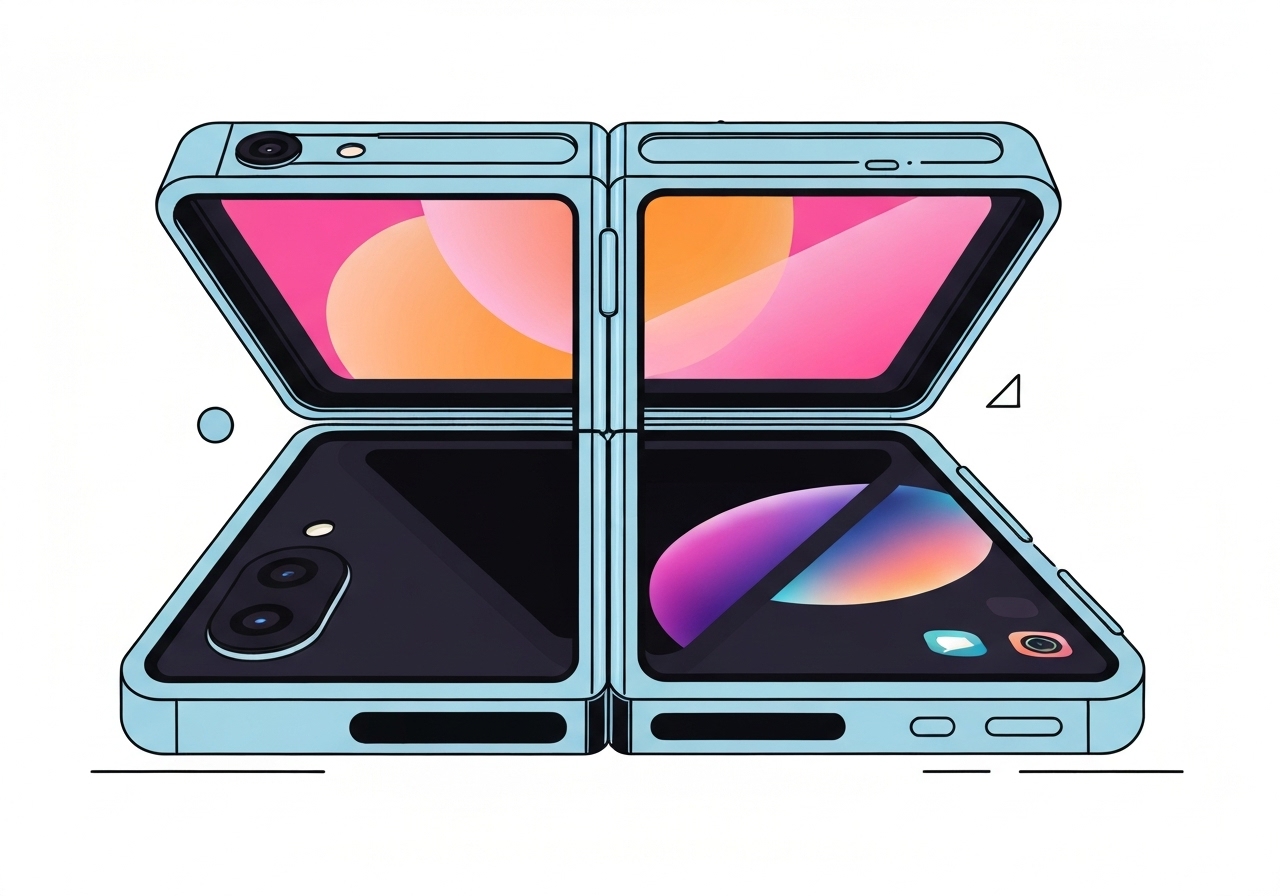
Lead: On Dec. 2, 2025, Samsung Electronics unveiled the Galaxy Z TriFold, its first three-panel, two-hinge consumer smartphone, signaling a new experiment in foldable form factors. The company said the device will go on sale in South Korea on Dec. 12 at 3.59 million won (about $2,450). Samsung confirmed plans to offer the TriFold in the U.S. and other markets including China, Taiwan, Singapore and the United Arab Emirates, but U.S. pricing has not been announced. The launch highlights Samsung’s continued engineering push in foldables even as mainstream adoption remains limited.
Key Takeaways
- Samsung formally introduced the Galaxy Z TriFold on Dec. 2, 2025; official South Korea release is set for Dec. 12, 2025.
- The TriFold carries a South Korean launch price of 3.59 million won, roughly $2,450 at current rates.
- The handset uses a two-hinge, three-panel design that allows transformation into a larger, tablet-like display when fully opened.
- Samsung will sell the TriFold in multiple markets — South Korea, China, Taiwan, Singapore and the United Arab Emirates — with U.S. availability confirmed but pricing still unspecified.
- The debut comes months before any expected foldable iPhone, positioning Samsung as an early mover in multi-hinge devices.
- Industry observers note the device underscores Samsung’s manufacturing capabilities but question consumer demand at the premium price point.
Background
Foldable smartphones first reached mainstream attention with single-hinge devices that open like books or flip vertically. Samsung has been a pioneer in the segment, commercializing multiple generations of the Galaxy Z Fold and Z Flip lines over recent years. Despite technical progress, folding phones have remained a premium, niche category with higher prices and mixed consumer adoption compared with traditional slab smartphones.
Manufacturers have explored multi-hinge and multi-panel concepts to increase usable screen area without making a single, large rigid device. Those designs raise distinct engineering and durability challenges — hinge mechanics, display crease management and software optimization for larger, variable screens. Carriers and retailers have also been cautious in promoting pricier form factors amid uncertain demand.
Main Event
Samsung unveiled the Galaxy Z TriFold on Dec. 2, 2025, describing it as the company’s first consumer trifold phone that folds across two hinges into a larger display. The company confirmed a Dec. 12 launch in South Korea with a price point of 3.59 million won (about $2,450). Samsung said it will offer the device in other markets including China, Taiwan, Singapore and the United Arab Emirates, and indicated U.S. distribution is planned, though did not disclose U.S. pricing or exact timing.
The TriFold’s two-hinge architecture allows a compact closed footprint and a tablet-sized surface when fully expanded, a step beyond single-hinge foldables that open to one large panel. Samsung emphasized the engineering required for additional moving parts and hinted at tailored software behaviors to adapt apps across three panels. The company presented the device as proof of ongoing investment in flexible-display manufacturing and hinge design.
Retail availability, accessory support and carrier promotion were not fully detailed at the announcement. Samsung’s initial distribution appears targeted at markets where foldables have a stronger foothold, with South Korea serving as the launch market. Pricing at 3.59 million won places the TriFold in a premium segment likely to draw early adopters rather than mainstream buyers.
Analysis & Implications
Samsung’s TriFold launch reiterates the firm’s focus on engineering leadership in flexible displays. Two-hinge devices add complexity and cost but expand usable screen area, which could appeal to users who prioritize multitasking or media consumption on a single pocketable device. For Samsung, the move reinforces a product roadmap that experiments with form while leveraging its display and manufacturing scale.
From a market perspective, high price and uncertain mainstream demand remain significant obstacles. At roughly $2,450 in South Korea, the TriFold targets a premium buyer cohort; broad adoption would likely depend on price reductions, carrier subsidies, or killer applications that exploit the trifold layout. If those factors do not materialize, the form factor risks remaining a curiosity for early adopters and tech enthusiasts.
The timing — months ahead of any widely reported foldable iPhone — also shapes competitive dynamics. Samsung gains a public relations and engineering milestone that could complicate Apple’s market positioning if Apple enters with a foldable later. However, Apple’s entry could ultimately expand consumer interest in foldables, benefiting the entire category, including Samsung.
Comparison & Data
| Design | Hinges | Primary Trait |
|---|---|---|
| Typical single-hinge foldable | 1 | Book-like openable display |
| TriFold (two hinges) | 2 | Expandable, tablet-sized surface when fully opened |
The simple comparison above illustrates the structural difference that separates single-hinge foldables from a trifold concept. Two hinges increase mechanical complexity and component count, which typically raises manufacturing cost and potential points of failure. Software and app optimization are also more complex for three-panel layouts, requiring attention from OS-level teams and app developers.
Reactions & Quotes
Samsung confirmed the TriFold will go on sale in South Korea on Dec. 12 and that additional market rollouts are planned.
Samsung Electronics (company announcement)
Industry observers noted the launch underscores Samsung’s hardware lead in foldables but questioned whether the premium price will broaden consumer adoption.
Industry analysts (market research commentary)
Unconfirmed
- Exact U.S. pricing for the Galaxy Z TriFold has not been released and remains unconfirmed ahead of a U.S. launch.
- Any firm timetable for a folding iPhone remains publicly unconfirmed; reports of Apple timelines vary and should be treated as speculative.
- Long-term reliability metrics for a two-hinge consumer phone are not yet available; independent durability testing results have not been published.
Bottom Line
Samsung’s Galaxy Z TriFold is a deliberate technical statement: it showcases multi-hinge engineering and expands the foldable product portfolio beyond single-hinge designs. The South Korea launch on Dec. 12 at 3.59 million won formally puts a trifold device into consumer hands and positions Samsung as an early mover in this subcategory.
Whether the TriFold will shift the broader market hinges on price, carrier support and whether applications meaningfully leverage the extra screen area. In the near term, expect the device to be judged primarily by reviewers and early adopters; its impact on mainstream smartphone purchasing will depend on subsequent generations, cost reductions, and ecosystem support.