
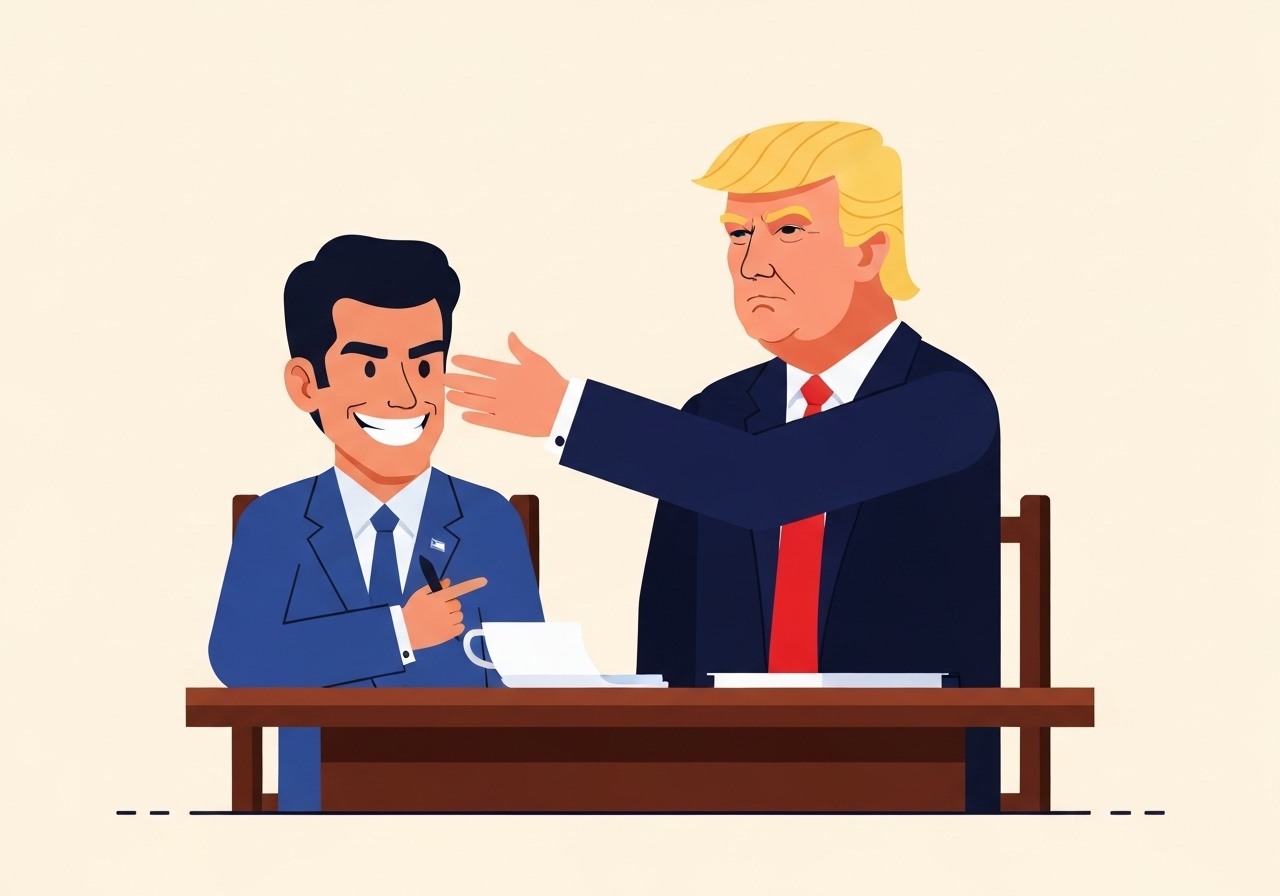
— Former Honduran president Juan Orlando Hernández was released from a federal prison in West Virginia on Tuesday after President Donald J. Trump issued a formal pardon. Hernández had been convicted in U.S. federal court and sentenced to 45 years for his role in what prosecutors described as a major international drug‑trafficking conspiracy that sent large quantities of cocaine to the United States. The pardon follows a private four‑page letter dated Oct. 28 that Hernández sent to the former president and a public post on Mr. Trump’s social platform announcing impending clemency.
Key takeaways
- President Trump granted clemency to Juan Orlando Hernández on Dec. 2, 2025, and the White House confirmed the pardon and Hernández’s release from a West Virginia federal prison.
- Hernández was convicted in U.S. court and sentenced to 45 years for his participation in a drug‑trafficking conspiracy prosecutors said flooded the United States with cocaine.
- The pardon came after Mr. Trump publicly signaled a clemency decision and after Roger J. Stone Jr. said he delivered a four‑page letter from Hernández dated Oct. 28 to Mr. Trump.
- An anonymous White House official told reporters Mr. Trump had not seen the letter prior to a social media post announcing the pardon plan; that account remains part of the official record of events surrounding the clemency.
- Legal experts warn the pardon will complicate bilateral relations with Honduras and could affect U.S. cooperation on counternarcotics and extradition matters.
- Civil society groups and victims’ advocates in both countries expressed dismay, framing the pardon as an interruption of criminal accountability for transnational drug crimes.
Background
Juan Orlando Hernández served as Honduras’s president and rose to international prominence amid accusations of ties to drug traffickers and violent criminal networks. U.S. prosecutors later built a case alleging Hernández’s involvement in a wide‑ranging trafficking conspiracy that channelled significant quantities of cocaine into the United States. After a U.S. trial, a federal jury convicted Hernández and a judge sentenced him to 45 years in prison, a penalty reflecting the gravity of the charges and the cross‑border scope of the alleged crimes.
Presidential pardons are a constitutional power in the United States, and they have been used historically in a variety of politically sensitive cases. This pardon is notable both for the foreign status of the beneficiary and for the timing: Mr. Trump announced his intention to grant clemency publicly on his social platform shortly before formal documentation was filed. The involvement of a political adviser in transmitting a letter from Hernández underscores how private channels intersected with public executive action in this instance.
Main event
On Dec. 2, 2025, the White House confirmed that Mr. Trump had issued a full pardon to Hernández, and federal authorities released Hernández from confinement in West Virginia. The administration’s confirmation followed public posts and private communications in the days before the pardon was issued. According to statements reported by journalists, Roger J. Stone Jr. said he provided Mr. Trump with a four‑page letter from Hernández dated Oct. 28; the letter portrayed Hernández as subject to political persecution.
An anonymous White House official told reporters that Mr. Trump had not seen the letter prior to posting about an impending clemency decision on his social network, raising questions about the sequence of communications that preceded the formal pardon. U.S. officials have emphasized that clemency powers are vested in the presidency, while some legal analysts say the optics of how this particular pardon unfolded could erode trust in prosecutorial outcomes for transnational crime.
Hernández’s legal team issued a concise statement announcing his release and thanking supporters; authorities in Honduras and elsewhere reacted with a mixture of alarm and cautious inquiries about next steps. The release will shift immediate questions to Honduras’s domestic political scene and to whether U.S. agencies will alter ongoing investigations or cooperative operations tied to the original prosecution.
Analysis & implications
The pardon alters a high‑profile criminal accountability case with international dimensions. For U.S. counternarcotics policy, removing a convicted foreign head of state from prison raises practical and diplomatic concerns: partner governments and law enforcement agencies may need to reassess cooperation frameworks, evidence sharing, and extradition policies that were shaped by the conviction. The move could also influence how other countries view the reliability of U.S. judicial outcomes in transnational criminal matters.
Politically, the clemency is likely to deepen polarization in both the United States and Honduras. In Washington, the decision will be framed by supporters as an act of executive discretion and by critics as undermining the rule of law. In Tegucigalpa and across Latin America, the pardon may be interpreted as an external interference with processes that affected domestic victims and institutions, potentially complicating governance and reform efforts that target corruption and organized crime.
Economically, the near‑term effects are limited but nontrivial: international assistance programs tied to governance benchmarks could face scrutiny from donors and lawmakers. Multilateral institutions and bilateral partners may condition certain forms of cooperation on reforms or clarifications from Honduran authorities about how they will pursue accountability for alleged networks that operated during Hernández’s tenure.
Comparison & data
| Item | Detail |
|---|---|
| Conviction sentence | 45 years |
| Pardon date | Dec. 2, 2025 |
| Letter to President Trump | Dated Oct. 28, 2025; 4 pages (per Roger J. Stone Jr.) |
| Location of release | Federal prison in West Virginia |
This table summarizes the verifiable data points at the center of the case: the original sentence length, the formal pardon date, the existence and date of the letter conveyed to Mr. Trump, and the reported site of Hernández’s release. These items form the factual backbone for assessing legal and diplomatic consequences.
Reactions & quotes
The following excerpts capture how key actors and observers framed the pardon. Context surrounds each quotation to explain its source and significance.
Before the quote: Roger J. Stone Jr. publicly said he handed a letter from Hernández to Mr. Trump; Stone described the document as outlining Hernández’s claim of mistreatment and requesting clemency.
“He sent a four‑page letter dated Oct. 28 and I provided it to the former president.”
Roger J. Stone Jr., political adviser (public statement)
After the quote: Stone’s account links a private appeal from Hernández to the timing of the clemency; independent verification of the delivery chain is limited to Stone’s public statements and contemporaneous reporting.
Before the quote: A White House official, speaking on the condition of anonymity, addressed whether Mr. Trump had read Hernández’s letter before announcing a clemency decision on his social feed.
“The president had not seen the letter before he posted about the forthcoming clemency.”
Anonymous White House official (reported comment)
After the quote: That anonymous account introduces a conflicting timeline compared with Stone’s claim and is part of the unresolved sequence of communications surrounding the pardon. The anonymity of the source is standard in White House reporting but means the claim cannot be directly confirmed by named officials.
Before the quote: Human rights and victims’ groups in Honduras and the U.S. briefed reporters that the pardon represented a setback for accountability in drug‑related violence and corruption cases.
“This pardon undermines justice for the victims of cartel‑linked violence and impedes the fight against impunity.”
Victims’ advocates (statements to press)
After the quote: Advocacy groups framed the pardon as harmful to victims’ interests and to institutional reform; their statements signal likely public and legal challenges in the weeks ahead.
Unconfirmed
- Whether Mr. Trump personally read Hernández’s four‑page letter before posting on his social platform remains unresolved beyond contrasting public statements.
- Any private agreements, concessions, or undisclosed communications that might have influenced the clemency decision have not been independently verified.
- The long‑term impact of the pardon on active U.S. investigations or on ongoing mutual legal assistance requests has not been publicly detailed by federal agencies.
Bottom line
The pardon of Juan Orlando Hernández by President Trump removes a convicted former head of state from U.S. imprisonment and inserts a new layer of political and diplomatic complexity into counternarcotics cooperation. It preserves the executive branch’s broad clemency authority while raising questions about consistency in enforcement and the message sent to partner nations wrestling with corruption and organized crime.
In practical terms, expect immediate scrutiny from lawmakers, civil society, and foreign governments; potential congressional inquiries and legal reviews may follow. For observers of Latin American governance and U.S. foreign policy, the case will be a reference point in debates over accountability, executive power and the limits of transnational criminal justice.