
Lead
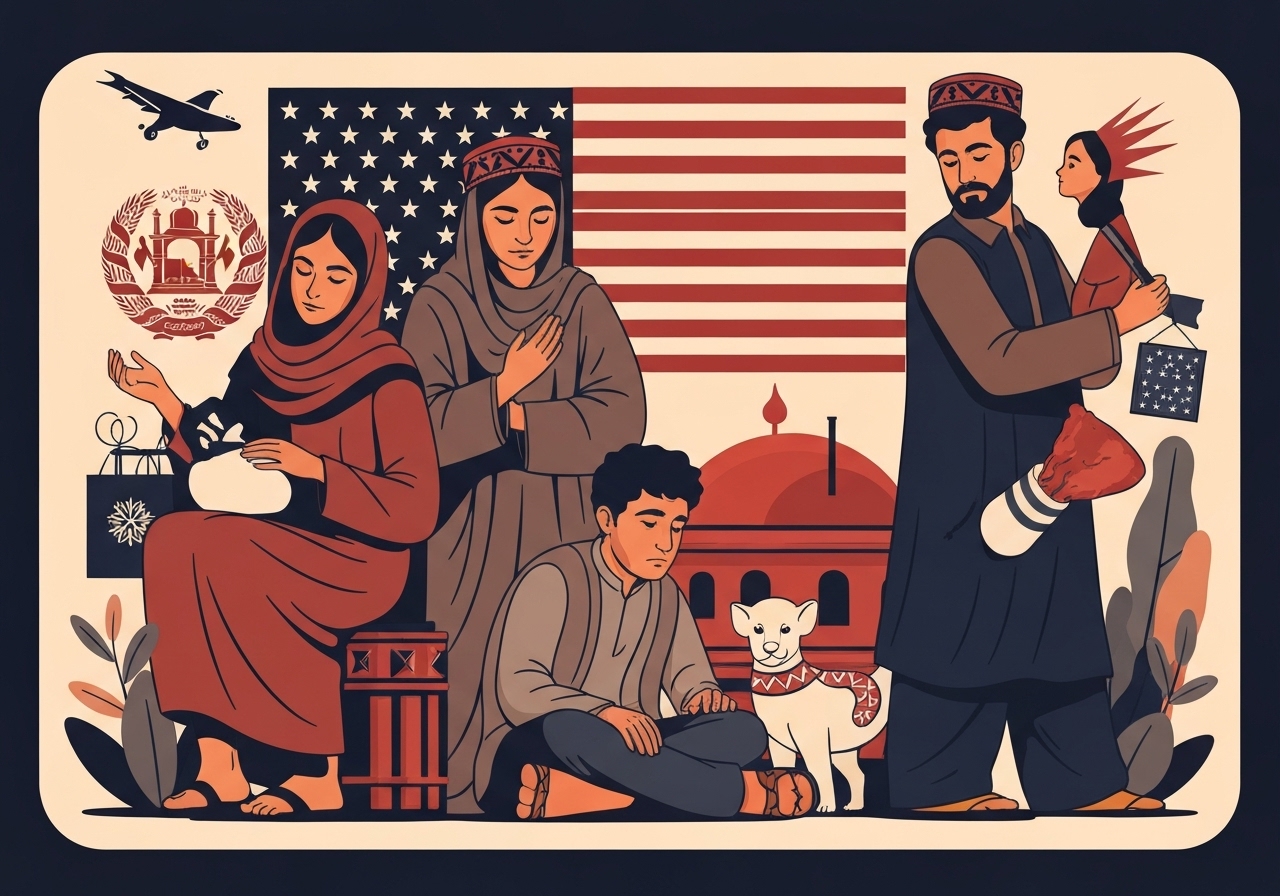
Thousands of Afghans legally residing in the United States say fear and uncertainty have surged since an Afghan national was accused of shooting two National Guard members near the White House last week. The accused, identified as Rahmanullah Lakanwal, was resettled during the 2021 evacuation and later granted asylum; the attack killed 20-year-old Sarah Beckstrom and critically wounded 24-year-old Andrew Wolfe. In response, the Trump administration has broadened restrictions: U.S. Citizenship and Immigration Services (USCIS) paused processing for nationals from 19 countries and announced a review of immigration benefits. Afghan communities across multiple states report stress over potential reexaminations of green cards, halted visa processing and interrupted family reunifications.
Key Takeaways
- Rahmanullah Lakanwal, an Afghan resettled after the 2021 withdrawal, is the suspect in the shooting that killed Sarah Beckstrom, 20, and critically injured Andrew Wolfe, 24.
- USCIS has suspended asylum decisions for applicants from 19 countries designated in a June travel ban and stopped processing many Afghan-related immigration requests indefinitely.
- USCIS Director Joseph B. Edlow announced a reexamination of green cards issued to nationals of those 19 countries; the State Department paused visa issuance for Afghan passport holders.
- More than 190,000 Afghans have been resettled in the United States since 2021; community leaders report a sharp rise in calls about family reunification and work-authorisation concerns.
- The administration says it is reviewing Biden-era immigration benefits for nationals from “Countries of Concern,” while critics warn policy changes are punitive to broadly law-abiding communities.
- Authorities are also pursuing more than 1,860 Afghans who have final deportation orders but are not in custody, according to reporting by The New York Times.
Background
The accused shooter, Rahmanullah Lakanwal, entered the United States under emergency resettlement after the Taliban takeover in 2021 and later applied for — and was granted — asylum in April. That sequence places the case squarely at the intersection of two politically charged decisions: the 2021 evacuation and the Trump administration’s June designation of 19 countries as high risk in a travel ban. Officials now cite those policies to justify reviews and tighter controls.
Afghan arrivals since 2021 include individuals evacuated for having worked with U.S. forces, people who held Special Immigrant Visas (SIVs), asylees and humanitarian parolees. Many are rebuilding livelihoods, studying for professional licensing exams, or supporting families while awaiting paperwork. Community leaders and advocacy groups say the group has a high proportion of former coalition partners and professionals who sought safety after Afghanistan’s collapse.
Main Event
After the shooting near the White House, the federal government moved rapidly. USCIS halted processing of certain asylum claims and other immigration actions affecting nationals from the 19 named countries. USCIS Director Joseph B. Edlow said his agency would reexamine green cards issued to people from those countries, and the State Department paused visa issuance for holders of Afghan passports. The Department of Homeland Security indicated a review of immigration benefits granted under the prior administration for nationals from what it calls Countries of Concern.
The policy shift has immediate effects: renewals of work authorizations and pending family reunification cases are now in limbo, community groups report. In Oregon and Florida, green-card holders and SIV recipients described heightened anxiety; some said they had received outreach from immigration authorities, others said they feared being singled out because of nationality or origin. Afghans working in health care, academics, and essential services described abrupt disruptions to plans they had made since resettling.
Community leaders publicly condemned the attack and sent condolences to the families of the National Guard members, while pleading that one person’s alleged crime not be used to reshape policy for hundreds of thousands. Afghan officials abroad — including Afghanistan’s foreign minister — likewise called the shooting an individual act unrelated to the Afghan people as a whole.
Analysis & Implications
The administration’s response reflects a common political calculus: high-profile security incidents prompt rapid policy reactions that often prioritize signal-sending over targeted investigation. Pausing broad categories of immigration processing can create immediate perceptions of control, but it also risks destabilizing trust with immigrant communities who are sources of intelligence, civic participation and labor.
A practical consequence is procedural backlog and legal uncertainty. Reexamining previously granted green cards and pausing visa issuance create administrative work for USCIS and the State Department while prompting legal challenges from affected individuals and advocacy groups. For many Afghans, delays in work authorization or family reunification translate directly into economic and psychological hardship.
Politically, the moves may play to constituencies demanding stricter immigration controls, but they also risk criticism for collective punishment. Experts warn that policy responses triggered by single incidents can harden public perception and feed discrimination, complicating long-term integration and public-safety cooperation with immigrant communities.
Comparison & Data
| Metric | Figure |
|---|---|
| Afghans resettled in U.S. since 2021 | 190,000+ |
| Countries in travel ban list | 19 |
| Afghans with final deportation orders not in custody | ~1,860 |
The numerical context shows scale: policies affecting nationals of 19 countries potentially touch hundreds of thousands of residents and pending applicants. The paused procedures risk slowing integration milestones such as employment authorization and family reunification. Historically, sweeping pauses on immigrant processing have produced legal contests and, in some cases, reinstatement of prior approvals after review.
Reactions & Quotes
“There’s no question that what was done was horrible. The problem is, why is it coming back to the larger community?”
Yahya Haqiqi, Afghan Support Network (nonprofit)
Haqiqi summarized community frustration: broad policy measures tied to a single suspect have triggered alarm among Afghans trying to rebuild lives in the U.S.
“A single act should not be used to justify unnecessary restrictions on legal migration or to reinforce prejudice.”
Abdul Wahid Gulrani, visiting scholar (George Washington University)
Gulrani emphasized that most recent arrivals are law-abiding and working to integrate, warning against reactionary policy that could stigmatize a large, diverse group.
“The Trump Administration is reviewing all immigration benefits granted by the Biden administration to aliens from Countries of Concern… We will take no chances when the future of our nation is at stake.”
Department of Homeland Security (official spokesperson)
The DHS comment framed the actions as security-motivated and emphasized precaution in benefit adjudication.
Unconfirmed
- Whether the administration will review asylum or other immigration benefits granted during its own current tenure beyond public statements remains unverified.
- The precise criteria and timeline for any revocation or reexamination of green cards issued to nationals from the 19 listed countries have not been fully released.
- Reports about specific outreach or arrests tied to the reexamination process are fragmented and not independently confirmed across jurisdictions.
Bottom Line
The shooting near the White House has prompted swift federal action that extends well beyond the individual suspect, affecting large numbers of Afghans resettled in the United States since 2021. While officials frame reviews and pauses as security measures, community leaders and scholars warn those steps risk collateral harm to lawful immigrants, interrupting work, family reunifications and integration efforts.
Policymakers face a choice between narrowly targeted investigations that preserve due process and broad administrative pauses that may satisfy immediate political pressure but create long-term legal and social costs. For Afghans rebuilding their lives in the U.S., clarity, targeted review and transparent criteria will be essential to restoring confidence and ensuring public safety without blanket measures that penalize the many for the act of one.