
Lead
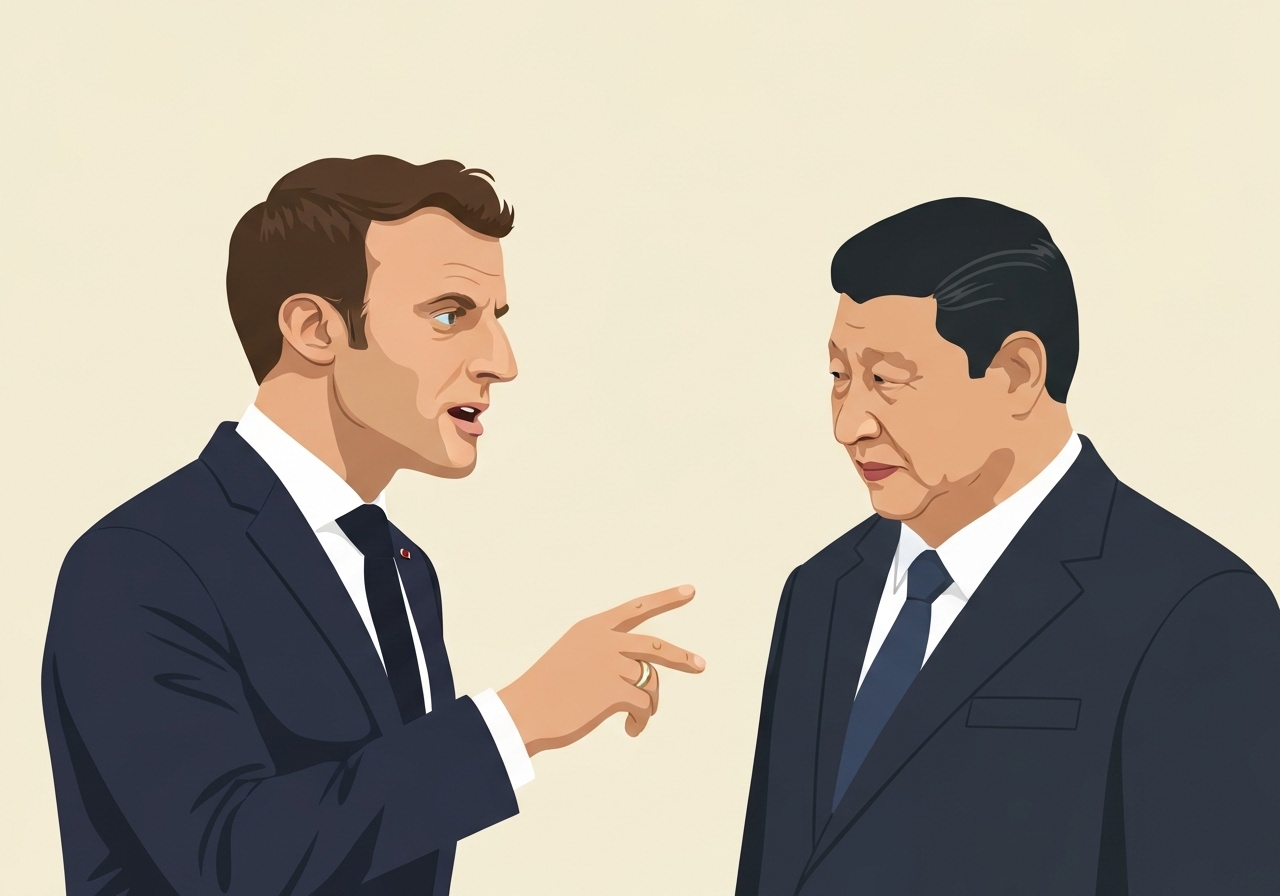
On December 4, 2025 in Beijing, French President Emmanuel Macron met Chinese leader Xi Jinping to seek Beijing’s backing on Ukraine and to press for greater Chinese direct investment into Europe. Macron called for a clearer legal and policy framework to attract more Chinese capital, saying the current imbalance — a growing Chinese trade surplus and comparatively low investment into Europe — is unsustainable. The talks reflect Paris’s effort to rebalance economic ties with China while advancing a diplomatic push on the Ukraine crisis. No major, fully confirmed investment pledges were announced publicly at the time of the meeting.
Key Takeaways
- Meeting date and place: December 4, 2025, Beijing — French president met Chinese leader to discuss both geopolitical and economic issues.
- Ukraine diplomacy: Macron sought China’s support on the Ukraine issue, framing it as part of strategic consultations between Paris and Beijing.
- Investment plea: Macron urged stronger direct investment from China into Europe and called for clearer frameworks to attract such capital.
- Trade imbalance warning: Macron warned that China’s growing trade surplus with the rest of the world is becoming unsustainable for global economic balance.
- Policy aim: Paris intends to rebalance bilateral ties with Beijing and to narrow a persistent France-China trade gap through policy adjustments.
- Immediate outcomes: No detailed, independently verified investment commitments were confirmed publicly after the meeting.
Background
Over the past decade Europe has deepened trade ties with China while wrestling with a widening goods surplus on Beijing’s side and limited Chinese direct investment flowing into the continent. European capitals have sought ways to attract long-term, productive foreign direct investment while protecting critical infrastructure and technology through screening mechanisms.
France has combined economic outreach with strategic diplomacy: Paris aims to expand market access and inward investment without compromising security or regulatory standards. The diplomatic dimension of Macron’s trip — including Ukraine discussions — follows broader Western efforts to engage China on geopolitical issues where Beijing’s influence could matter.
Main Event
During the Dec. 4 meeting in Beijing, Macron emphasized the need for a clearer, predictable framework to encourage Chinese firms to increase direct investment in Europe, saying current flows are too low relative to trade volumes. He cautioned that the imbalance created by a rising trade surplus on China’s side risks distorting global commerce if not addressed.
Macron also raised Ukraine as a diplomatic priority, asking Beijing to play a constructive role in reducing hostilities and supporting a path toward resolution. The French delegation presented Ukraine as both a security and humanitarian concern where China’s influence could alter dynamics on the ground.
Chinese officials received the appeals, but publicly available accounts immediately after the meeting did not list concrete, independently verified investment commitments or a detailed Chinese response to the Ukraine request. Beijing typically frames such high-level dialogues as opportunities for deeper cooperation while weighing domestic priorities and international strategy.
Analysis & Implications
Macron’s combined political and economic agenda signals a pragmatic French approach: pressing China for strategic leverage on Ukraine while trying to convert trade relations into more balanced capital flows. Success would require Beijing to accept more transparent rules for European market participation and to increase outbound direct investment that aligns with EU regulatory expectations.
If China were to step up investment into France and Europe, it could help narrow trade imbalances and support industrial projects, but it would also intensify debates inside the EU over reciprocity, ownership screens and technology transfer. European policymakers face the task of making investment frameworks both attractive and robust against strategic risks.
On Ukraine, Beijing’s position remains calibrated: China seeks to expand its global diplomatic footprint but must balance ties with Russia, economic interests, and relations with Europe. Any Chinese move perceived as materially supporting conflict de-escalation would shift diplomatic dynamics, but expectations should be cautious given competing priorities.
Comparison & Data
| Metric | Current Characteristic |
|---|---|
| China’s trade surplus | Described by Macron as growing and potentially unsustainable |
| Chinese direct investment into Europe | Relatively low compared with the scale of bilateral trade |
| European policy stance | Seeking clearer frameworks and screening to balance access with security |
The table provides a qualitative snapshot rather than new numeric data; it places Macron’s public concerns in context. Policymakers will be watching subsequent capital flows, announced projects and any formal agreements to measure whether the meeting led to tangible economic changes.
Reactions & Quotes
“Europe, including France, needs a clearer framework to attract more Chinese direct investment.”
Emmanuel Macron / French Presidency
“China’s growing trade surplus with the rest of the world is becoming unsustainable; investment into Europe remains too low.”
Emmanuel Macron / French Presidency
Unconfirmed
- No independently verified list of new Chinese investment commitments had been published immediately after the meeting.
- The specific nature and timeline of any Chinese response to Macron’s request on Ukraine remain unconfirmed in public sources.
Bottom Line
Macron’s Beijing meeting combined political diplomacy on Ukraine with a push to recalibrate economic ties through more Chinese direct investment. The French strategy aims to convert trade volumes into deeper capital links while insisting on predictable rules — a balancing act that echoes wider EU priorities.
Short-term outcomes are likely to be limited unless Beijing signals concrete, verifiable investment plans or policy shifts. Observers should watch for formal announcements of projects, legal agreements on investment frameworks, and any joint statements from Beijing that indicate a substantive Chinese reply on Ukraine or investment commitments.
Sources
- Bloomberg — News outlet (report on meeting and Macron’s remarks)