
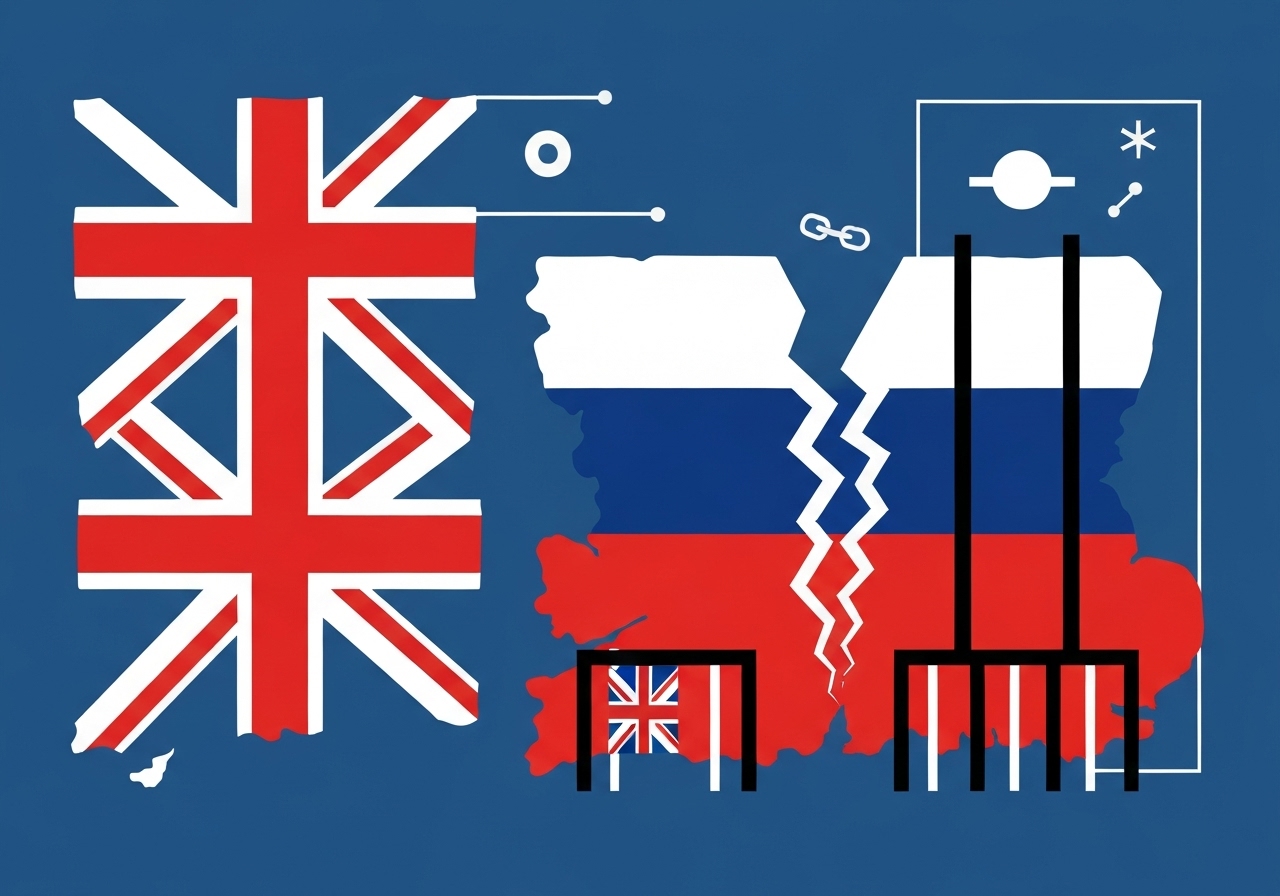
On Dec. 4, 2025, the U.K. government announced fresh sanctions and summoned Russia’s top diplomat in London after a judicial inquiry concluded that President Vladimir Putin authorised the 2018 Novichok operation that led to the death of Dawn Sturgess. The inquiry tied the same operation to the March 2018 poisoning of former Russian double agent Sergei Skripal and his daughter in Salisbury. The sanctions specifically target Russia’s GRU military intelligence agency and aim to disrupt the services and individuals linked to what London called an ongoing campaign of hostile acts on British soil. The action is framed by ministers as both a response to a single criminal act and part of a broader effort to counter destabilising Russian operations in Europe.
Key Takeaways
- The inquiry released on Dec. 4, 2025, concluded that President Vladimir Putin authorised the March 2018 operation that used the Novichok nerve agent in Salisbury, England.
- The probe found that a Novichok-contaminated bottle used in the Skripal attack was later picked up by Dawn Sturgess, who applied the substance believing it to be perfume and later died.
- The U.K. announced targeted sanctions against the GRU and summoned Russia’s top diplomat in London as an immediate diplomatic response.
- Officials said the GRU has used hybrid tactics including cyber operations, disinformation, and criminal proxies to pursue state objectives across Europe.
- Prime Minister Keir Starmer described the sanctions as part of a sustained campaign to squeeze Russia’s finances and shore up Ukraine’s negotiating position.
- The inquiry noted that the alleged GRU agents departed Salisbury on Sunday, 4 March 2018, and had shown disregard for public safety by discarding a contaminated item.
- The case remains singular in the U.K.: the inquiry said there had been no other known Novichok poisonings on British soil before or since these events.
Background
The Salisbury incident began in March 2018 when Sergei Skripal, a former Russian military intelligence officer who had defected to the U.K., and his adult daughter were found unconscious on a public bench. Both were later identified as victims of the military-grade nerve agent Novichok, an organophosphate compound linked to Soviet-era chemical programs. The attack drew immediate international condemnation and led to the expulsion of diplomats between London and Moscow.
In June 2018 a separate exposure occurred in nearby Wiltshire: Dawn Sturgess and her partner, Charlie Rowley, fell ill after contact with a substance later identified as the same nerve agent. Sturgess died after applying what she believed was perfume; the inquiry concluded the bottle was connected to the earlier Salisbury operation. British authorities long accused the GRU — Russia’s military intelligence service — of carrying out the initial Novichok attack.
Main Event
The inquiry, led by former U.K. Supreme Court Justice Anthony Hughes, concluded that the assassination attempt on Skripal was authorised “at the highest level,” and that those involved were morally responsible for Sturgess’s death. The report describes how GRU agents allegedly brought the Novichok into the U.K., applied it to a surface at the Skripal residence, and subsequently discarded a contaminated container in public or semi-public space in a manner that endangered civilians.
On Dec. 4, 2025, the U.K. government made public a package of measures targeting the GRU, citing a pattern of hybrid activity — including cyber-attacks, disinformation campaigns and recruitment of criminal proxies — intended to cause “devastating real-world consequences.” London also summoned the senior Russian diplomat in the U.K. to explain what officials termed ongoing hostile actions against the country.
Prime Minister Keir Starmer framed the sanctions as part of a broader strategy to weaken Moscow’s capacity to finance and execute such operations and to strengthen Ukraine’s diplomatic position. Government statements emphasised coordinated work with allies to counter attempts to destabilise democracies and public safety in Europe.
Analysis & Implications
The inquiry’s attribution of direct responsibility to President Putin marks a serious intensification in the U.K.’s legal and diplomatic framing of the 2018 incidents. Judicial attribution at this level narrows the gap between criminal accountability and state responsibility, increasing pressure on foreign-policy instruments such as sanctions, asset restrictions, and coordinated diplomatic measures among Western partners.
Targeting the GRU seeks to degrade a key organ of Russian intelligence operations abroad, but the practical impact depends on the comprehensiveness of measures and allied participation. Sanctions focused on services, individuals and financial chokepoints may raise operational costs for espionage activities, yet they rarely eliminate capabilities without sustained multilateral enforcement.
Domestically, the ruling places renewed emphasis on public-safety protocols for hazardous materials and on investigative cooperation between law enforcement, intelligence and public-health agencies. Internationally, the decision strengthens legal and political arguments for tighter coordination among NATO and EU partners on countering malign state activity, including cyber and covert actions.
Comparison & Data
| Event | Date | Known victims | Attributed actor |
|---|---|---|---|
| Skripal poisoning (Salisbury) | 4 March 2018 | Sergei Skripal, daughter (seriously ill), police officer (seriously ill) | GRU (alleged) |
| Amesbury exposure | June 2018 | Dawn Sturgess (died), Charlie Rowley (seriously ill) | Linked to same operation |
The table summarises the two linked incidents in 2018: the March attack on the Skripals and the later June exposure that led to Sturgess’s death. The inquiry highlights the same Novichok contaminant as the connecting factor and finds operational links back to GRU-directed activity. This consolidated view underpins the U.K.’s choice to pursue sanctions aimed at the responsible intelligence service rather than solely at individual operatives.
Reactions & Quotes
The government framed the measures in security terms and diplomatic recourse. Before and after the sanctions announcement ministers underlined both justice for the victims and wider deterrence aims.
“The U.K. will always stand up to Putin’s brutal regime and call out his murderous machine for what it is.”
Keir Starmer, U.K. Prime Minister (official statement)
Experts noted the political weight of a judicial finding attributing state-level responsibility, and the constraints of translating that finding into enforceable international measures.
“A judicial conclusion that ties a president to an overseas assassination attempt increases diplomatic leverage, but sanctions take time and coalition-building to have operational effect.”
Independent security analyst (expert commentary)
Victim advocates and public voices in Wiltshire emphasised the human cost and the long tail of contamination risks from nerve agents in public spaces.
“This report finally names a line of responsibility. For families who lost loved ones, the legal and political recognition matters greatly.”
Victim advocacy representative (civil society)
Unconfirmed
- Specific identities of the GRU operatives alleged to have executed the operation remain not publicly disclosed and have not been criminally convicted in a U.K. court.
- Precise motive beyond state-directed targeting of Skripal—such as whether collateral contamination was an intended risk—cannot be independently verified from the public inquiry documents alone.
- Details about any direct communications between Moscow and the operatives in the U.K. at the time have not been independently corroborated in open-source material.
Bottom Line
The inquiry’s attribution that President Putin authorised the 2018 Novichok operation sharpens the U.K.’s legal and political case for sanctioning the GRU and signals a sustained posture toward countering Russian hybrid tactics. While sanctions and diplomatic measures express clear condemnation and aim to raise costs for Moscow, their effectiveness will hinge on multilateral coordination and persistent enforcement.
For the public and policymakers the case underscores two linked priorities: ensuring robust domestic mechanisms to detect and mitigate chemical contamination risks, and fortifying international cooperative tools—intelligence-sharing, legal instruments and economic measures—to deter and respond to state-directed hostile activity abroad.
Sources
- CBS News (news media) — original report summarising the inquiry and government response.
- UK Government (official) — government statements and sanctions announcements relevant to national security measures.
- Judiciary of England and Wales (judicial) — repository for inquest and inquiry reports and related legal materials.