
Lead
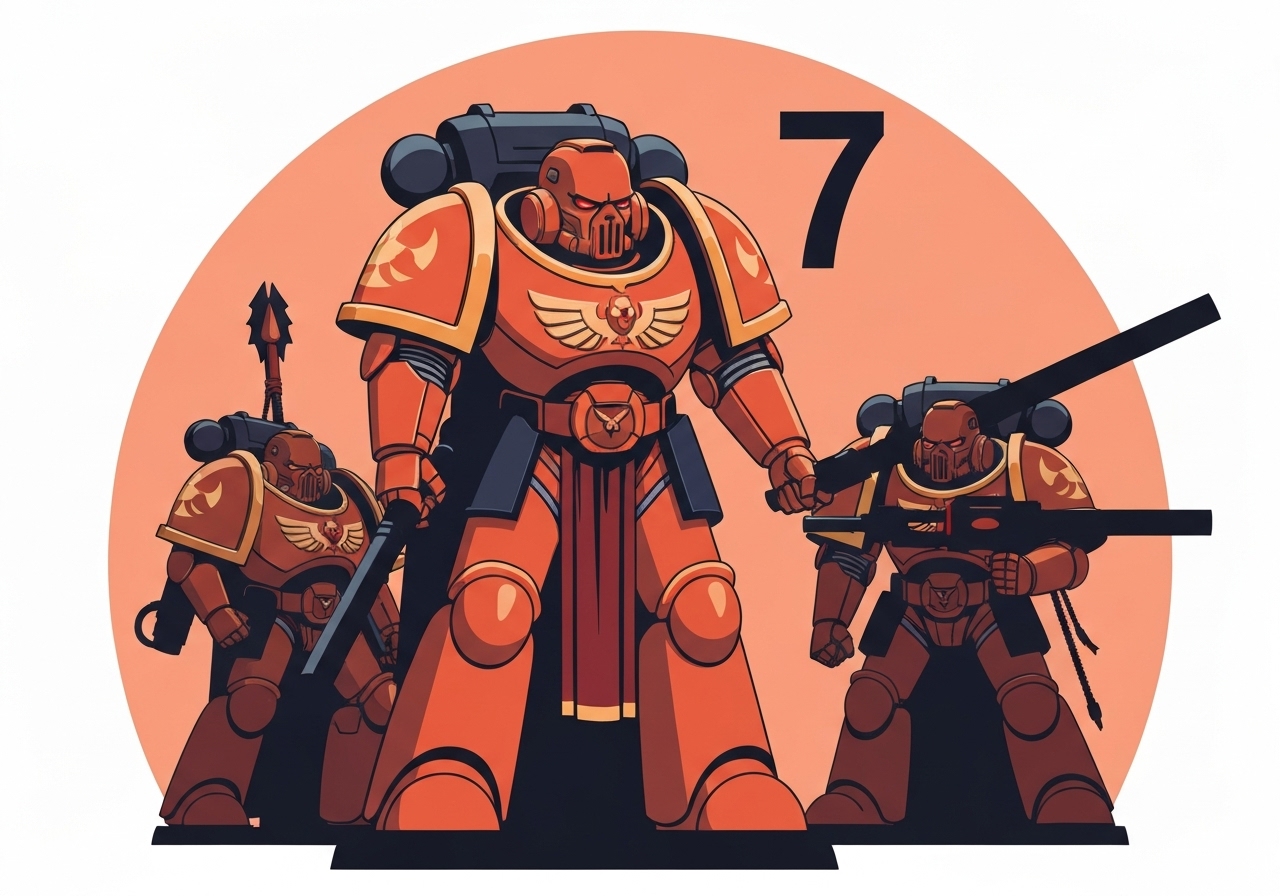
Day 7 of the Grotmas Calendar delivers a new Blood Angels Detachment that leans into the chapter’s tragic instincts: the Red Thirst and Black Rage. Released as one of six new Detachments in this year’s calendar, the list intentionally rewards units that embrace savage, last-ditch fury at the cost of battlefield stability. Players with Death Company contingents will find clear incentives to deploy them aggressively, while opponents must respect sudden, high-risk spikes in damage output. The overall effect is a rules package designed to capture the Blood Angels’ lore-driven volatility and translate it into sharp tabletop moments.
Key Takeaways
- One of six Detachments in this year’s Grotmas Calendar, revealed on Day 7 and themed around the Blood Angels’ Red Thirst and Black Rage.
- Adeptus Astartes units in the Detachment can re-roll 1s to wound in combat, and charging units gain +1 Attack (or +2 if the unit is battle-shocked).
- Enhancements include a unit scouting 6″, a 6″ re-roll battle-shock aura, a 6″ +1 Strength aura for Death Company, a once-per-game “fights first” option, and Sustained Hits 2 versus Character/Monster/Vehicle.
- Several stratagems offer a stronger effect at the cost of inflicting battle-shock on the activating unit, e.g., converting an advance-and-shoot into shoot-and-charge if battle-shocked.
- Other stratagems can lower incoming AP, auto-secure an objective when a nearby unit is slain, grant Death Company 5+ Feel No Pain, or allow a Death Company model to fight on after dying.
- The Detachment is pitched to players who already field Death Company, amplifying close-combat brutality at tactical cost, and may alter opponent target priorities.
Background
The Blood Angels’ twin afflictions—the Red Thirst and the Black Rage—are foundational to the chapter’s identity in Warhammer 40,000 lore. Red Thirst drives an intensified thirst for close combat and blood, while the Black Rage is a maddening, tragic possession that transforms affected battle-brothers into avatars of fury. Both conditions have long been represented in game mechanics and narrative tools, but the new Detachment formalises those traits into a cohesive army-level option.
Historically, designers have balanced the Blood Angels by giving them strong assault profiles offset by fragility or moral costs; Death Company units are powerful but sacrificial. The new Detachment leans into that trade-off by providing clear short-term power spikes that arrive with self-inflicted penalties (battle-shock). That design choice ties straight back to the chapter’s lore and preserves an element of roleplay in competitive play.
Main Event
The Detachment’s baseline benefits begin with a simple combat boost: Adeptus Astartes units may re-roll 1s to wound, increasing expected damage output across multiple profiles. When a unit charges, it gains +1 Attack; this increases to +2 if the unit is battle-shocked, creating an explicit risk/reward loop between raw output and sustained reliability. For players who like decisive, high-variance swings, the math here is favorable to close-assault builds.
Enhancements present a mixed toolkit. One enhancement lets a unit scout 6″ and bestows a 6″ re-roll battle-shock aura, which can enable mobility and mitigation for fragile units. Another offers a 6″ aura granting +1 Strength specifically to Death Company units, stacking well with their already aggressive profiles. There is also a once-per-game option to fight first—ideal for assassination turns—and Sustained Hits 2 that applies against Characters, Monsters, and Vehicles, improving punch-through on key targets.
Stratagem design intentionally forces decisions: multiple stratagems provide a stronger effect only if the player accepts battle-shock for that unit. Examples include converting an advance-and-shoot into a shoot-and-charge by taking battle-shock, or upgrading a melee attack from +1 Strength or +1 AP into both +1 Strength and +1 AP for the cost of battle-shocking the unit. Additional stratagems reduce enemy AP, allow objective capture upon a nearby friendly unit’s death, grant Death Company a 5+ Feel No Pain, or let a Death Company model fight on-death.
The in-game feel is of a chapter that can suddenly become far deadlier at critical moments, but each spike carries tangible costs and timing considerations. That creates tense choices: trigger maximal damage now and risk battle-shock fallout, or play conservatively and retain more reliable cohesion across later turns.
Analysis & Implications
Tactically, the Detachment strengthens a thematic Death Company archetype by stacking Strength, attacks, and selective survivability to maximise melee lethality. Units that already excel in close combat scale well with the +1 Strength aura and +Attack on charge, increasing odds against heavily-armoured foes. The addition of Sustained Hits 2 against Characters and big targets also broadens the Detachment’s target set beyond infantry brawls.
From a roster-building perspective, players must weigh the value of short-term spikes versus long-term presence. Battle-shock as a recurring cost alters how units are deployed: commanders will likely push Death Company forward to capitalise on immediate value while holding more fragile or mission-critical detachments back. That dynamic can shift match planning and objective priorities, rewarding players who can sequence assaults precisely.
In terms of tournament impact, the Detachment’s power ceiling appears significant but paired with self-damage mechanics that limit abuse. If competitive players identify combos that minimise the downsides of battle-shock, the Detachment could climb the meta; conversely, if the cost remains punishing, its role may settle into niche or narrative tables. Designers’ choices to give both offensive potency and built-in counters suggest intent to keep the Detachment impactful but not dominant.
Finally, because many stratagems hinge on making trade-offs, the Detachment encourages skillful decision-making rather than mindless aggression. That emphasis on meaningful choices could broaden appeal: hobbyists enjoy the lore fit, while competitive players appreciate the tactical depth. Opponents will need to adjust focus to either eliminate Death Company before they can explode or exploit the post-battle-shock windows to stabilise lines.
Comparison & Data
| Rule | Effect |
|---|---|
| Re-roll 1s to wound | Improves base to-hit efficiency in melee |
| Charge attack bonus | +1 Attack on charge, +2 if battle-shocked |
| Death Company aura | 6″ +1 Strength to Death Company units |
| Sustained Hits | Sustained Hits 2 vs Character/Monster/Vehicle |
The table highlights how multiple modest buffs combine into outsized melee threats: more reliable wounds, extra attacks on charges, higher Strength on key units, and improved durability-versus-elite targets. Together these modifiers can swing exchange ratios heavily in the Blood Angels’ favour during committed assaults, particularly when stratagems temporarily enhance AP or grant Feel No Pain.
Reactions & Quotes
Early community response has been a mix of excitement and caution: players welcome the thematic fidelity but are testing how reliably the benefits outweigh the battle-shock tax. Several hobby groups have already started list-testing Death Company-heavy builds to measure variance across repeated matchups.
“A solemn salute to the cursed sons, then we fling them at the enemy — it’s exactly the kind of gritty risk the chapter needs on the table.”
Warhammer Community (official article)
Competitive players note that the choices baked into stratagems reward timing and sequencing, increasing skill expression in lists that can manage self-harm. Some commentators predict meta adjustments if combinations emerge that reduce the downsides.
“The Detachment offers serious burst potential, but it makes you pay for it — that trade-off will define whether it’s a top-tier tool or a spicy side option.”
Tournament player (community analyst)
Analysts focused on design applaud the narrative-to-mechanics translation and the encouragement of high-risk play, while reminding readers that practical results depend on pilots and matchups.
“Mechanically forcing players to choose between bigger effects and immediate penalties adds real decision-making; that’s good game design for a faction like Blood Angels.”
Independent analyst (hobby press)
Unconfirmed
- Whether the new Detachment will be tournament-legal in all organised play circuits immediately; official tournament lists are subject to local organiser rules and event rulings.
- Any future adjustments or errata from designers to re-balance stratagems and enhancements—no official errata has been published at the time of release.
Bottom Line
The Day 7 Grotmas Detachment gives Blood Angels players a mechanically faithful option to play into the chapter’s tragic, violent themes: clear offensive boosts for Death Company and related units, coupled with self-harm trade-offs that force tactical judgement. For hobbyists the Detachment is an excellent narrative fit; for competitive players it offers potent but situational tools that reward precise sequencing and risk management.
Expect pilots and opponents to adapt quickly: Death Company-led lists will be tested and counter-strategies developed, while tournament legality and any future balance changes remain points to watch. If you field Blood Angels and enjoy high-variance, high-reward play, download the Detachment and start trialling it — but plan for the consequences when the Black Rage takes hold.
Sources
- Warhammer Community (official article/announcement)