
Lead
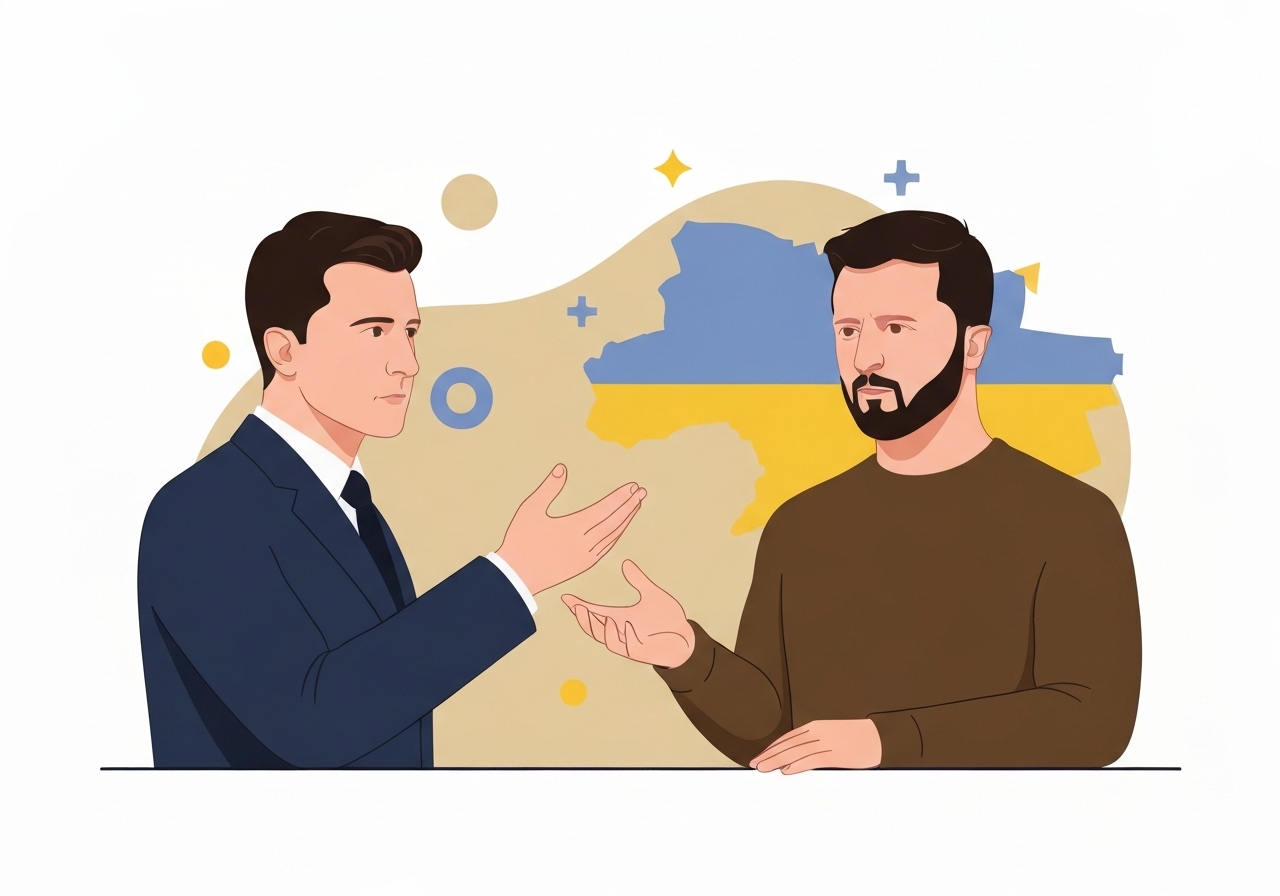
On December 8, 2025, in London, UK Prime Minister Keir Starmer will host Ukrainian President Volodymyr Zelenskiy alongside French President Emmanuel Macron and German Chancellor Friedrich Merz. The early‑afternoon meeting at Downing Street aims to steer US‑led negotiations toward a settlement designed to protect Ukraine from future Russian aggression. British officials frame the gathering as a bid to consolidate European support and shape the next phase of diplomatic talks. Simultaneously, UK Foreign Secretary Yvette Cooper is traveling to Washington to meet US Secretary of State Marco Rubio and other officials, underscoring a transatlantic push for a durable agreement.
Key Takeaways
- Meeting date and place: December 8, 2025, early afternoon at Downing Street in London, hosted by Prime Minister Keir Starmer.
- Attendance: Ukrainian President Volodymyr Zelenskiy, French President Emmanuel Macron and German Chancellor Friedrich Merz are confirmed participants.
- Main objective: To influence US‑led peace negotiations toward terms that reduce the risk of future Russian aggression against Ukraine.
- Parallel diplomacy: UK Foreign Secretary Yvette Cooper will visit Washington to meet Secretary of State Marco Rubio and US officials to coordinate positions.
- Diplomatic framing: UK officials describe the meeting as an effort to align key European partners and strengthen leverage in talks led by the United States.
- Timing: The summit occurs amid ongoing front‑line conflict and intensive international negotiations that have unfolded since Russia’s 2022 invasion.
Background
Since Russia’s full‑scale invasion of Ukraine in February 2022, Western capitals have pursued a mix of military support, sanctions, and diplomacy to assist Kyiv and deter further Russian advances. Negotiations involving the United States and European partners have intermittently sought a political settlement while maintaining military and economic pressure on Moscow. The UK, France and Germany have frequently coordinated policy, though they sometimes differ on sequencing of concessions and security guarantees.
Keir Starmer’s government has framed Britain as a close ally of Kyiv and a convening power for diplomatic initiatives. President Macron has in past months engaged in shuttle diplomacy between Kyiv and Moscow‑adjacent actors, while Chancellor Merz has emphasized both Ukraine’s sovereignty and the need for sustainable European security arrangements. Those differing emphases shape the posture each leader brings to Downing Street.
Main Event
The London meeting brings together leaders at a point described by officials as potentially decisive for the next phase of talks. Agenda items reportedly include mechanisms for long‑term security guarantees for Ukraine, steps to prevent renewed large‑scale aggression, and coordination of Western aid and sanctions pressure. The gathering is expected to be compact and focused, with follow‑up working sessions among foreign ministers and advisers.
Downing Street will host an early‑afternoon bilateral and multilateral sequence of discussions; format details released by UK officials emphasize coordination with the United States, which is leading the broader negotiation track. French and German participation signals an effort to present a unified European front on both security guarantees and economic reconstruction planning. The presence of Zelenskiy aims to ensure Kyiv’s priorities remain central to any joint position emerging from the talks.
Concurrently, Foreign Secretary Yvette Cooper’s trip to Washington to meet Secretary of State Marco Rubio and senior US officials is intended to harmonize messaging with the US negotiating team. Officials say that transatlantic alignment is a key objective before any formal proposals are tabled at wider diplomatic fora. How the leaders reconcile differing national priorities—on timelines, enforcement mechanisms and possible territorial questions—will shape the talks’ momentum.
Analysis & Implications
Diplomatically, the meeting is an attempt to crystallize a European position that can bolster US leverage in the ongoing negotiations. A unified Western posture could strengthen Kyiv’s hand by tightening coordination on sanctions, security assistance and legal or institutional guarantees. Conversely, visible divisions among major European powers could be exploited by opponents of a negotiated outcome, reducing pressure on Moscow to comply with any agreement.
Politically, the summit gives Starmer an opportunity to demonstrate Britain’s role as a convenor and influencer in European security matters, even as the UK operates outside EU structures. For Zelenskiy, securing explicit commitments or clearer timelines for enforceable guarantees would be a diplomatic win, reinforcing domestic political support for any concessions required by a negotiated settlement. Macron and Merz will weigh domestic constraints—public opinion, parliamentary politics and defence priorities—when shaping what they can credibly promise.
Economically, alignment among the UK, France, Germany and the US affects reconstruction funding, energy supply coordination and sanctions enforcement. Agreement on financing and oversight mechanisms could accelerate post‑conflict recovery plans, whereas disagreement could slow investment and prolong uncertainty. International markets and defence planning will monitor whether the meeting produces concrete, fundable commitments or primarily diplomatic language.
Comparison & Data
| Participant | Role | Main Objective |
|---|---|---|
| Keir Starmer | Host (UK Prime Minister) | Convene leaders to align European position |
| Volodymyr Zelenskiy | President of Ukraine | Secure guarantees to deter future aggression |
| Emmanuel Macron | President of France | Shape European security and diplomatic route |
| Friedrich Merz | Chancellor of Germany | Coordinate security and reconstruction planning |
The table above maps attendees to immediate objectives drawn from official briefings and media reporting. While compact, the meeting is intended to generate clearer joint language to feed into the larger US‑led negotiation track. The short format suggests leaders expect ministers and technical teams to work through implementation details after the summit.
Reactions & Quotes
Officials and analysts offered cautious appraisals ahead of the meeting, emphasizing unity while warning of hard trade‑offs. Below are representative paraphrases reported in media coverage and briefings, with context provided.
“This is a moment to align European partners behind measures that will prevent a return to large‑scale assault.”
UK official (paraphrased, media briefing)
The UK official made the remark in the context of describing Downing Street’s goal to coordinate with Washington and European capitals. The comment frames the meeting as a defensive strategy focused on deterrence and long‑term security arrangements rather than immediate territorial concessions.
“Ukraine’s leadership will press for clear, enforceable guarantees as part of any durable settlement.”
Ukrainian official (paraphrased, media reporting)
That paraphrase reflects Kyiv’s stated emphasis on binding security guarantees and continued Western aid. Observers note the distinction between political assurances and mechanisms that can be monitored and enforced, which remains a core negotiation challenge.
Unconfirmed
- No public confirmation yet on whether the meeting will produce a specific timetable for security guarantees or legally binding enforcement mechanisms.
- It remains unclear whether territorial arrangements or withdrawal schedules, if any, will be discussed in detail at the leaders’ meeting.
- Details of any coordinated sanctions‑trigger mechanisms or reconstruction funding packages have not been released and are subject to further negotiation.
Bottom Line
The London summit on December 8, 2025, is positioned as a concerted push by the UK and key European partners to influence US‑led negotiations over Ukraine’s future security. Success depends less on headlines and more on whether leaders can translate agreed positions into enforceable mechanisms that deter future aggression and reassure Kyiv.
Observers should watch follow‑up communiqués and ministerial sessions for specifics on verification, funding and legal guarantees. The meeting’s immediate value will be measured by how clearly it narrows differences among Western partners and feeds concrete options into the broader negotiation track.
Sources
- Bloomberg — media report summarizing announced meetings and diplomatic context.