
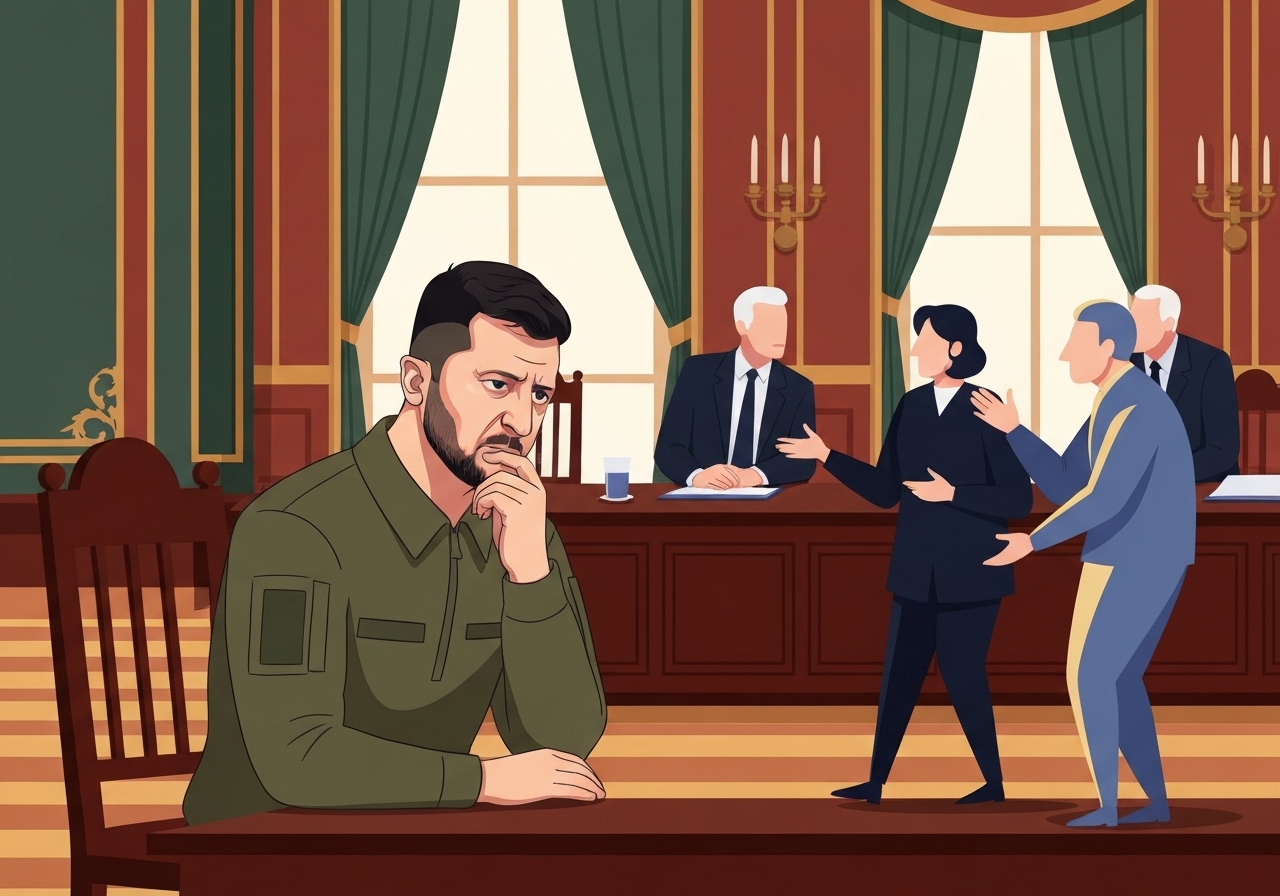
Lead: President Volodymyr Zelensky traveled to London on Dec. 8, 2025, to meet Britain’s Prime Minister Keir Starmer, France’s President Emmanuel Macron and Germany’s Chancellor Friedrich Merz. The closed-door summit at 10 Downing Street aims to shore up military assistance and strengthen Zelensky’s negotiating leverage as peace talks with Russia have stalled. European leaders say they want to ensure Ukraine can continue to resist Russian advances while seeking a diplomatic path forward. The meeting focuses on security packages, air defense and long-term funding rather than an immediate settlement.
Key Takeaways
- Meeting date and venue: Dec. 8, 2025, at 10 Downing Street in London with Starmer, Macron and Merz in attendance.
- Primary objective: bolster Ukraine’s military resilience with emphasis on air defense and long-term funding commitments.
- Diplomatic aim: strengthen Zelensky’s bargaining position amid divergent views on concessions to Russia.
- Duration of conflict: nearly four years of war between Ukraine and Russia as of Dec. 2025.
- Russian demands: European leaders described some of President Vladimir V. Putin’s positions—such as control over parts of the Donbas—as unacceptable.
- Tone: leaders framed support for Ukraine as crucial to prevent collapse, while acknowledging a peace deal is not imminent.
Background
The war between Russia and Ukraine began in early 2022 and had entered its fourth year by late 2025, producing deep military, humanitarian and diplomatic strains across Europe. Western capitals have supplied significant military aid to Kyiv, but delivery, interoperability and the types of systems prioritized—air defenses, artillery, precision munitions—remain contested. European leaders have for months debated whether to press harder for negotiation frameworks or double down on military pressure intended to alter battlefield calculations.
Domestically in Europe, public opinion is mixed: governments balance voter fatigue and defense budgets against concerns about wider regional security and the precedent of territorial revision through force. Kyiv has sought both immediate matériel and credible long-term commitments that would sustain defense spending and reconstruction planning. Russia’s stated negotiating conditions, including control over eastern areas like the Donbas, have been an obstacle to any immediate agreement acceptable to Kyiv and its Western backers.
Main Event
The London session was convened as a closed-door trilateral among the three European leaders and President Zelensky, with the stated priority of coordinating support rather than announcing a final diplomatic formula. Officials said the conversation centered on near-term security assistance: air defenses, ammunition stockpiles, logistics and funding streams to keep Ukraine’s military operational through the winter and beyond. Participants framed the meeting as reinforcing unity among key European capitals and as a signal to Kyiv’s negotiating counterparts that support will continue.
French and German officials reportedly emphasized the need to balance military support with parallel diplomatic engagement, arguing that a longer-term political vision must accompany battlefield assistance. British hosts underscored continued weapons deliveries and training programs while exploring mechanisms for pooled financing and expedited procurement. Zelensky stressed that military resilience must come first to preserve Ukraine’s leverage at any future negotiating table.
European leaders publicly reiterated that while a near-term peace settlement seemed unlikely, their goal was to prevent Ukrainian collapse and maintain pressure on Russian demands deemed unacceptable. The meeting did not produce an immediate, detailed package of new commitments publicly; participants characterized the session as a coordination and strategy meeting to shape subsequent bilateral and multilateral pledges.
Analysis & Implications
In the short term, the London meeting serves multiple purposes: it aims to reassure Kyiv, deter further Russian offensives by signaling continued Western unity, and buy time for governments to prepare larger support packages. If leaders follow through with additional air defenses and sustained funding, Ukraine’s ability to hold current lines and contest contested areas could improve. However, the pace and scale of actual deliveries will be the decisive factor in turning assurances into battlefield impact.
Politically, the summit attempts to reconcile divergent European approaches—some favor stronger military pressure while others emphasize diplomatic avenues that might include concessions. This balancing act complicates the formulation of a single negotiating posture toward Moscow, making it harder to present a unified set of demands or offers at any peace table. For Zelensky, the summit’s value is partly reputational: bolstered external backing strengthens his domestic and international hand in talks.
Economically and institutionally, committing to long-term support poses fiscal and procurement challenges for European governments already facing budgetary constraints and competing domestic priorities. Coordinated financing mechanisms—pooled funds, multi-year aid packages, European-led procurement—could mitigate some friction but require political consensus that may be difficult to sustain. Internationally, continued strong Western backing could deter escalatory moves by Russia but also risks prolonging conflict if diplomatic pathways remain unclear.
Comparison & Data
| Item | Noted Fact (as of Dec. 8, 2025) |
|---|---|
| Conflict duration | Nearly four years |
| Meeting date | Dec. 8, 2025 |
| Attending leaders | Keir Starmer, Emmanuel Macron, Friedrich Merz, Volodymyr Zelensky |
| Primary focus | Air defense, resilience, long-term funding |
Context: the table summarizes the meeting’s logistical facts and stated priorities. It does not list specific monetary figures or weapons types beyond categories, because participants described broad priorities rather than enumerating new pledges publicly during the London session.
Reactions & Quotes
Officials framed the meeting as vital to maintaining Ukraine’s capacity to fight while keeping diplomatic channels open. Below are two representative statements released around the summit, shown with brief context.
“Ukraine is not on the brink of collapse. While we may not be able to immediately reach a peace agreement with Russia, it is essential that we give Ukraine all the support it needs.”
Statement from the office of President Emmanuel Macron (official statement)
Context: Macron’s office emphasized continued assistance and the need to preserve Ukraine’s defensive capabilities, signaling European reluctance to accept territorial concessions that would leave Kyiv in a vulnerable position.
“First and foremost, security issues, support for our resilience, and support packages for our defense. First and foremost, air defense and long-term funding for Ukraine.”
President Volodymyr Zelensky (speech)
Context: Zelensky used public remarks ahead of the London visit to stress that military support—particularly air defenses and reliable financing—must be the meeting’s priority to maintain leverage in any future negotiations.
Unconfirmed
- No public, verifiable breakdown of new or pledged funding amounts emerged from the Dec. 8 meeting; specific package totals remain unannounced.
- It is unconfirmed whether the leaders agreed on a single, unified negotiating position to present to Moscow at an upcoming peace forum.
- Reports on concrete timelines for additional weapons deliveries and procurement mechanisms were not confirmed by official, published lists at the time of the meeting.
Bottom Line
The London summit on Dec. 8, 2025, was primarily a coordination meeting designed to reinforce Ukraine’s military resilience and to shore up President Zelensky’s negotiating position. While leaders publicly pledged continued support in broad terms, the absence of detailed, immediate commitments means the meeting’s practical impact will depend on follow-through—timely deliveries of air defense systems and sustained funding streams.
Looking ahead, the summit may strengthen Kyiv’s short-term posture and buy diplomatic space, but it does not resolve the core disagreement over territorial demands that has stalled talks. Observers should watch for concrete, time-bound pledges and the creation of pooled financing or procurement channels as the clearest indicators that European backing will translate into sustained operational advantage for Ukraine.
Sources
- The New York Times — (Media: major news organization reporting on the London meeting)