
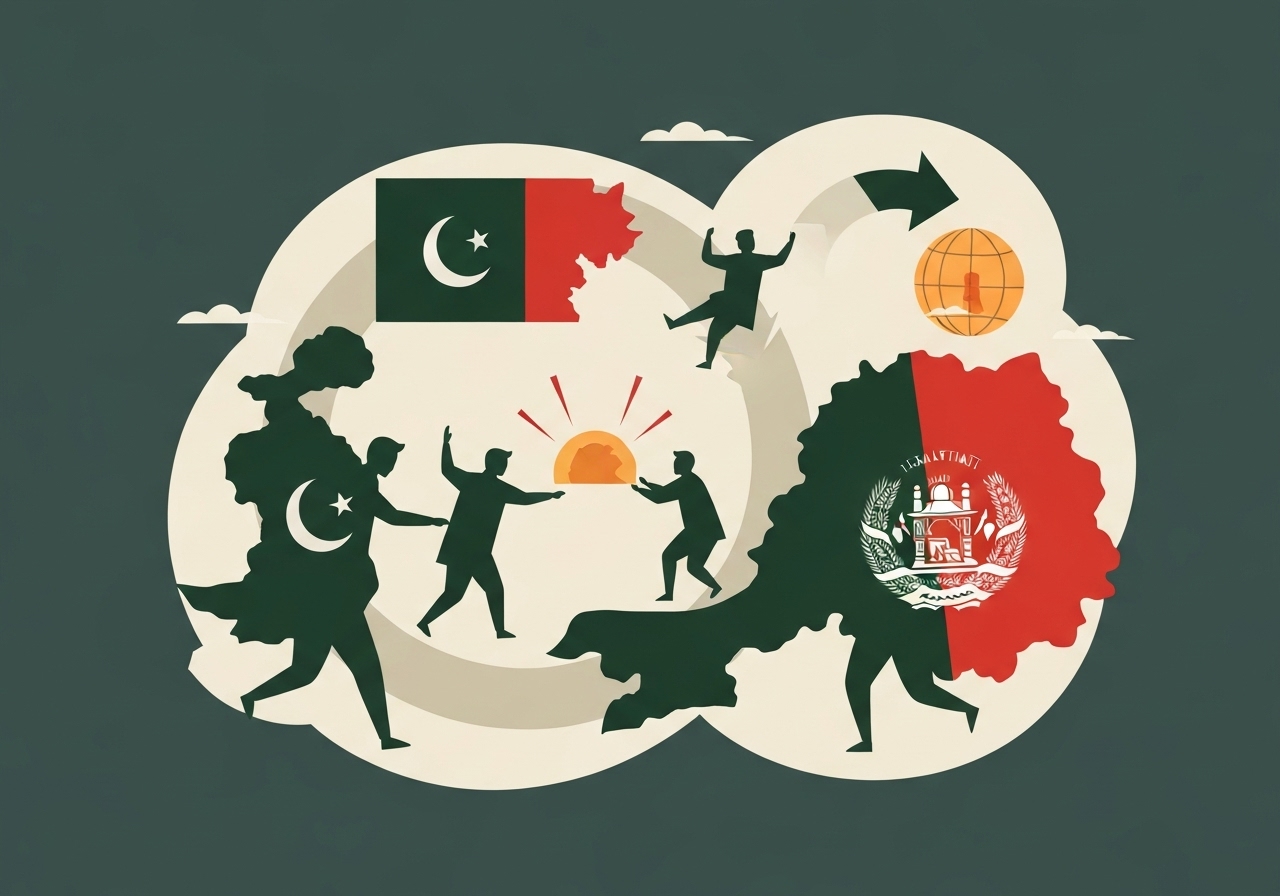
Lead: Since early October 2025, Pakistan and Afghanistan have escalated a cross-border dispute into a near-complete halt of bilateral trade, centering on frontier markets and the busiest border crossing near Peshawar. The suspension followed deadly clashes and Pakistan’s public assertion that militants launch attacks from Afghan territory; Islamabad says restrictions are meant to pressure the Taliban administration. The stoppage has halted flows of coal, cement, fruit and medicines and left aid consignments stranded at Pakistani ports. The consequence: livelihoods across both countries have been disrupted and markets that once bustled with Afghan traders have thinned dramatically.
Key Takeaways
- Trade suspension: Islamabad has effectively cut cross-border commercial traffic for nearly two months as of Dec. 9, 2025, after a series of deadly border clashes.
- Scale of commerce: Bilateral trade totaled roughly $2 billion in the prior year; trucks carrying coal, cement, pomegranates, cotton and medicines have not crossed in weeks.
- Market impact: One major Peshawar market reports business down by about 50 percent and Afghan shopkeepers reluctant to operate publicly.
- Humanitarian strain: Aid deliveries bound for Afghanistan are piling up at Pakistani ports, compounding earlier aid cuts of hundreds of millions of dollars and recent disaster shocks.
- Population effect: Pakistan’s consumer market of some 250 million people and land access to the Indian market make Islamabad’s corridors strategically vital to Afghanistan’s economy.
- Displacement context: Afghanistan’s economy is already strained after two deadly earthquakes and the forced return of over 2.5 million Afghans from neighboring countries.
Background
Cross-border commerce between Pakistan and Afghanistan has long been a mix of formal customs traffic and dense informal flows through frontier towns. Historically, border crossings near Peshawar supported regional supply chains for construction materials, agricultural exports and everyday household goods, while providing income for traders and transporters on both sides.
Political relations have been fragile for decades, shaped by security incidents, insurgent activity and competing strategic priorities. Pakistani authorities say militants linked to attacks on Pakistani soil take refuge across the Afghan border; Kabul’s rulers deny direct responsibility for every incident and point to limited capacity to police remote borderlands.
Main Event
In early October 2025, a sequence of cross-border shootings and raids culminated in several fatalities, prompting Islamabad to announce a suspension of most commercial crossings. The government framed the move as punitive and coercive, aiming to compel the Taliban administration to crack down on armed groups operating near the frontier.
At Peshawar’s large Afghan market, owners report a steep drop in customers and transaction volumes. Large sections of the bazaar that once hosted thousands of Afghan-owned stalls are noticeably quieter; some traders have closed shops or reduced hours, citing safety fears and sharply lower demand.
Goods already in transit have accumulated at Pakistani ports and depots. Business networks that handled fruit exports, construction inputs like cement and coal, and medical supplies report logistical bottlenecks and rising storage costs. For many Afghan importers, Pakistan’s land routes and seaports are the most cost-effective access to global markets.
The economic pain is not evenly distributed: small-scale traders, seasonal farm laborers and cross-border transport workers face immediate cash-flow losses, while larger firms with alternative routes can absorb short-term shocks. Nevertheless, officials and market participants warn that prolonged disruption would push broader supply chains into crisis.
Analysis & Implications
Economically, Pakistan’s choke on trade risks deepening an already acute downturn in Afghanistan. With last year’s bilateral trade at about $2 billion, even a few months of stoppage erodes export revenues, labor incomes and market liquidity in border regions that rely on cross-border flows.
Politically, Islamabad’s move signals leverage: by restricting access to its 250-million-person market and transit corridors, Pakistan is using economic pressure to extract security concessions. That tactic can force short-term compliance but also risks hardening Afghan resistance, especially if civilian hardship mounts.
Humanitarian implications are immediate. Aid consignments delayed at Pakistani ports mean slower delivery of medicines and emergency goods into Afghanistan, where recent earthquakes and earlier aid reductions have already strained coping capacity. Health and food-security outcomes could worsen if staple supplies and medical shipments remain delayed.
Regionally, the standoff may accelerate diversification of Afghan trade routes: overland links through Central Asia, increased reliance on Iran’s ports, or informal smuggling networks could expand. Those shifts carry higher costs and longer transit times, further depressing Afghan purchasing power and complicating reconstruction efforts.
Comparison & Data
| Indicator | Recent Value |
|---|---|
| Bilateral trade (last year) | $2 billion |
| Duration of major stoppage | Nearly two months (as of Dec. 9, 2025) |
| Pakistan population (market size) | ~250 million |
| Returned Afghans from neighbors (recent) | >2.5 million |
The table above highlights the scale of the economic relationship and the immediate disruption. The $2 billion figure underscores how much cross-border trade matters relative to Afghanistan’s fragile economy; even temporary blockages reverberate through supply chains and household incomes. Comparing the stoppage to the size of Pakistan’s internal market shows why Islamabad’s corridors are strategic leverage. The flow of people — more than 2.5 million recent returns — adds demographic pressure on services and job markets in the region.
Reactions & Quotes
Local traders and shoppers expressed fear and frustration at market conditions; some described closing hours early for safety and financial reasons.
“Afghans are afraid of going outside,”
Hameed Ullah Ayaz, Afghan bakery owner in Peshawar
The Pakistani government has publicly framed the trade measures as a necessary response to cross-border attacks and said restrictions will remain until security conditions improve. Humanitarian agencies warn that stalled shipments threaten relief operations already weakened by earlier funding cuts.
“We have seen aid consignments accumulate at ports, delaying critical medical and shelter supplies to vulnerable communities,”
Humanitarian coordination official (aid agency)
Unconfirmed
- Precise duration of the suspension beyond the reported two months: official timelines for reopening have not been published publicly.
- Specific claims that particular militant groups are operating from defined Afghan villages remain under investigation and not independently verified in all reported cases.
- The full monetary value of stranded aid and commercial cargo at Pakistani ports has not been independently tallied and may be higher than preliminary industry estimates.
Bottom Line
The Pakistan–Afghanistan trade stoppage is simultaneously a security response and an economic lever; it has immediate human costs and broader implications for regional commerce. Businesses in frontier markets, seasonal workers and aid-dependent communities face the most acute short-term impacts, while the Afghan economy risks deeper contraction if trades routes remain closed.
Policy choices in coming weeks — whether Islamabad maintains pressure, Kabul secures border control, or international actors mediate logistical corridors — will determine whether the dispute resolves quickly or shifts into a prolonged economic rupture. For now, blocked trucks, quieter bazaars and delayed aid consignments underscore how a security crisis can rapidly become a humanitarian and economic emergency.
Sources
- The New York Times (media report) — original reporting on market conditions and trade suspension.