
Lead
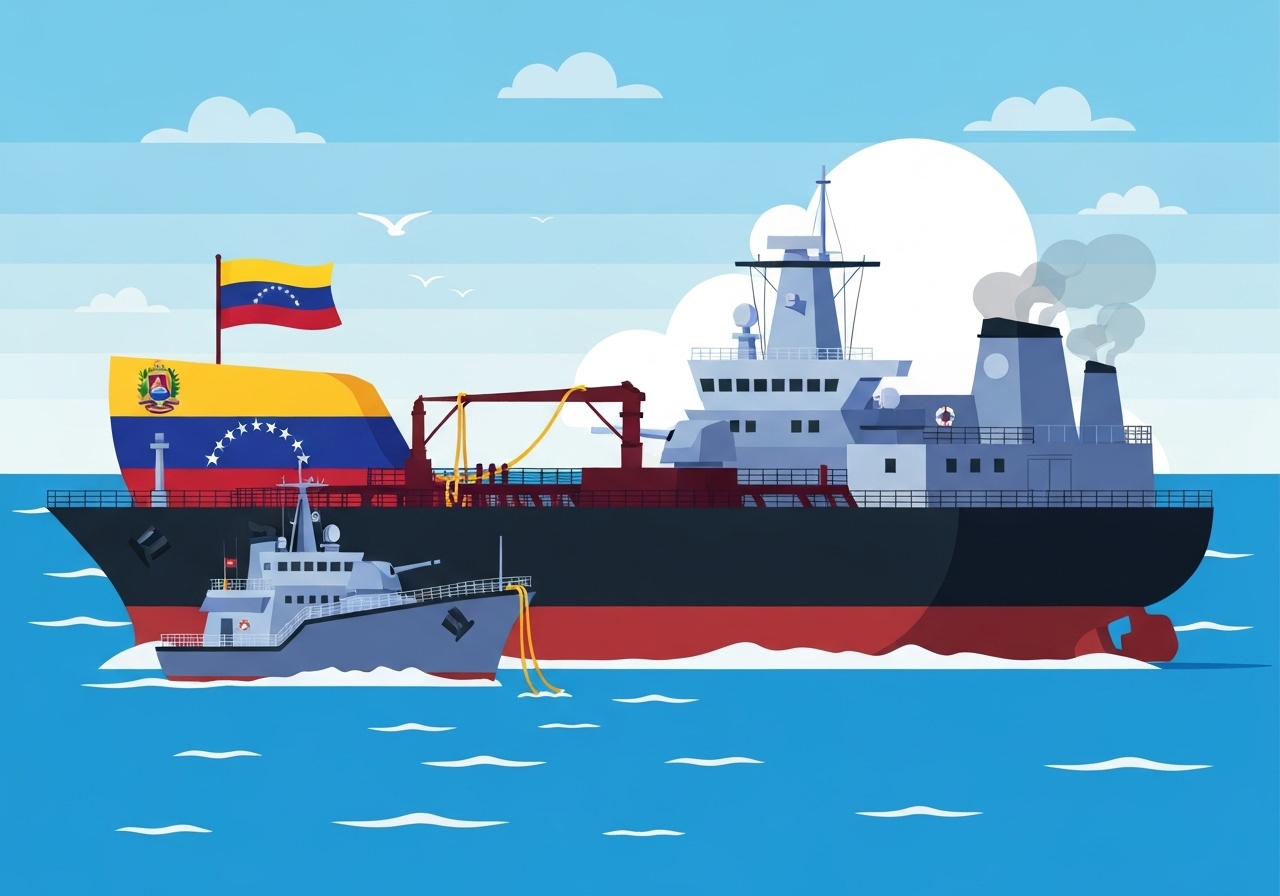
On December 10, 2025, President Donald Trump announced that the United States had seized a very large crude carrier (VLCC) off the coast of Venezuela, saying the action was taken for “very good reason.” Sources told ABC News the U.S. Coast Guard carried out the operation and that the vessel had been bound for Cuba. Trump said photographs and further information would be released later and suggested the oil aboard would likely remain in U.S. custody. The announcement marks a rare, overt interdiction of a tanker amid an extended U.S. pressure campaign on the Maduro government.
Key Takeaways
- Seizure date and announcement: President Trump publicly disclosed the seizure on December 10, 2025, during a White House roundtable.
- Vessel type and capacity: The ship is identified as a VLCC (Very Large Crude Carrier), which ABC News noted can carry roughly up to around 2 million barrels of oil.
- Operational actor: Two sources told ABC News that the U.S. Coast Guard conducted the seizure off Venezuela’s coast.
- Intended destination: Sources reported the tanker had been bound for Cuba prior to interception.
- Disposition of cargo: The president indicated the U.S. would likely retain the oil, though formal legal steps were not detailed at the time.
- Policy significance: This represents an escalation in U.S. actions affecting Venezuelan oil flows, which have been the regime’s principal revenue source.
Background
Venezuela holds the world’s largest proven oil reserves and relies heavily on hydrocarbon exports for state revenue and foreign exchange. Since 2019 the United States has applied sanctions and other measures intended to pressure President Nicolás Maduro’s government; however, overt interdiction of oil shipments has not been a frequent public component of that campaign. The Maduro administration has combined domestic controls, route adjustments and partnerships—often with third countries—to keep crude exports flowing despite constraints.
Maritime traffic in the Caribbean and adjacent Atlantic approaches is closely monitored by coastal states and international navies; seizures at sea typically involve a mix of intelligence, legal justification, and operational coordination. Tanker classes vary widely by size and range: VLCCs are among the largest commercial crude carriers and can traverse long routes, making them strategically significant when laden with Venezuelan crude. Ownership structures for such vessels can be opaque, complicating attribution and post-seizure legal proceedings.
Main Event
The president announced the seizure at a White House event, saying, “It’s been a very interesting day,” and describing the ship as a “large tanker, very large, largest one ever seized, actually.” He declined to provide operational details when pressed, saying only that there were “very good reasons” for the action and that photos would be released later. ABC News reported, citing two sources, that the U.S. Coast Guard carried out the operation and that the tanker was identified as a VLCC bound for Cuba.
Sourcing in the initial report was limited to two anonymous sources speaking to ABC News; no public statement from the U.S. Coast Guard or the Department of Defense was linked in that report at the time of publication. The president suggested the oil might remain under U.S. control, but he did not specify whether that would occur through seizure, forfeiture, or other legal mechanism. He also declined to name the vessel’s owner when asked.
On-scene details—such as the exact coordinates of the interception, whether there was any resistance, and the nationality of the crew—were not disclosed in the initial announcement or in the ABC News account. The seizure appears to have been conducted in international or contested waters off Venezuela’s coast, a location that raises both operational and legal questions regarding jurisdiction and subsequent disposition of cargo and vessel.
Analysis & Implications
Legally, maritime seizures of commercial vessels typically rest on either enforcement of sanctions, allegations of illicit trafficking, or direct orders under national emergency powers; each pathway carries different evidentiary and procedural demands. If the U.S. acts under sanctions authorities, it will need to demonstrate that the vessel or its cargo violated specific embargo or designation rules—an effort that can become a prolonged legal contention in U.S. courts or international fora.
Diplomatically, the move risks heightening tensions with Venezuela and with states that receive Venezuelan crude, notably Cuba, which was identified as the tanker’s reported destination. Caracas is likely to condemn the action and could pursue reciprocal measures or appeals to international institutions. The seizure also sets a precedent that could alter how other states and commercial operators navigate Venezuelan exports.
Economically, while the seizure of a single VLCC will not by itself dramatically shift global oil prices, the political signal can affect traders’ risk assessments for shipments from the region and insurance costs for routes near Venezuela. For the U.S. domestic political scene, the episode provides the administration with a tangible enforcement narrative but also exposes it to scrutiny over legal justification and potential geopolitical fallout.
Comparison & Data
| Tanker Type | Approx. Capacity (barrels) |
|---|---|
| VLCC (Very Large Crude Carrier) | ~2,000,000 (per ABC News estimate) |
| Suezmax | ~1,000,000 (approx.) |
| Aframax | ~600,000 (approx.) |
The table highlights why a seized VLCC is notable: its cargo volume makes it a high-value target both financially and politically. The president’s description of the vessel as among the largest seized underscores that scale. Analysts will watch whether the U.S. now enacts more frequent interdictions or prefers targeted legal actions against ownership and chartering entities.
Reactions & Quotes
President Trump’s public comments framed the action as significant while withholding operational specifics.
“It’s been a very interesting day…we’ve just seized a tanker on the coast of Venezuela.”
President Donald Trump
ABC News sources provided key logistical details about the vessel and its destination.
“The oil tanker that was seized is referred to as a VLCC…the vessel was bound for Cuba,”
ABC News (two sources)
Unconfirmed
- Ownership of the VLCC: the vessel owner and manager were not publicly identified in the initial report and remain unconfirmed.
- Full legal basis for the seizure: the specific authority or statute cited by U.S. agencies for the interdiction was not disclosed at the time of reporting.
- Disposition plan for the oil: while the president indicated the U.S. would “likely keep” the oil, formal procedures or court actions to effect that outcome were not detailed.
- Operational specifics: exact coordinates, whether there was onboard resistance, and crew nationality have not been independently verified.
Bottom Line
The December 10, 2025 seizure of a VLCC off Venezuela, as announced by President Trump, marks a clear escalation in how the United States is applying pressure to Venezuelan oil flows. The operation’s scale—targeting a very large crude carrier reportedly bound for Cuba—raises immediate legal, diplomatic and commercial questions that will shape the next phase of the dispute.
Watch for formal statements from the U.S. Coast Guard, the Department of Justice or the White House that lay out the legal rationale, plus responses from Caracas and Havana that could indicate whether the incident leads to tit-for-tat measures. Markets and shipping insurers will also be monitoring follow-up actions, which could influence routing and costs for vessels operating near Venezuela.