
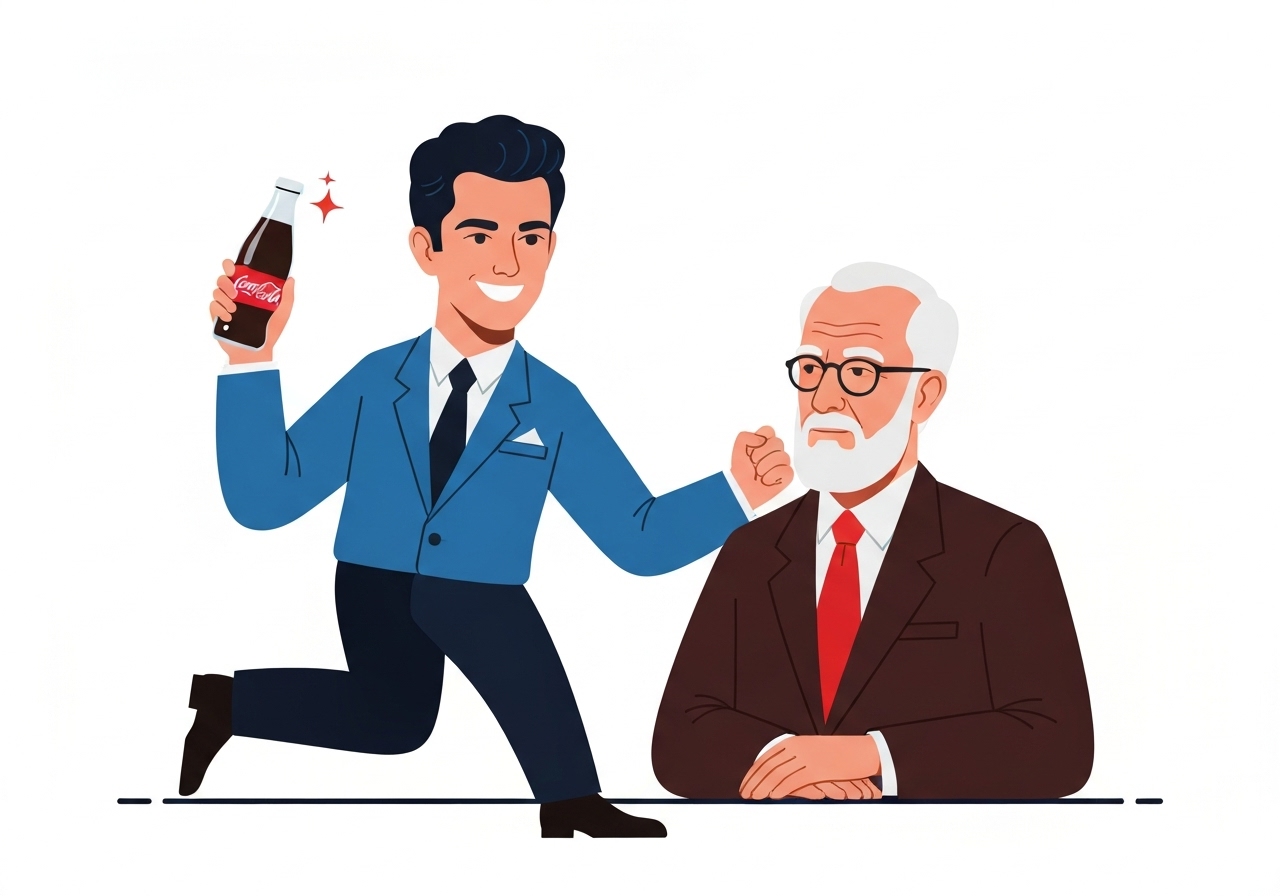
Henrique Braun, currently Chief Operating Officer at The Coca‑Cola Company, will succeed James Quincey as CEO effective March 31, 2026, the company announced. Quincey, 60, who has led Coca‑Cola since 2017, will remain with the firm as executive chairman and Braun will be nominated to the board of directors. Braun, 57, joined Coca‑Cola in 1996 and became COO earlier in the year; the company said his mandate will emphasize new growth opportunities, closer alignment with consumer needs and stronger technology capability. The leadership change comes as Coca‑Cola and rivals address softer demand in some beverage categories while premium brands continue to outperform core sodas.
- Henrique Braun (age 57) will become CEO effective March 31, 2026; James Quincey (age 60) shifts to executive chairman and Braun will be nominated to the board.
- Both Braun and Quincey joined Coca‑Cola in 1996; Quincey has been CEO since 2017 and led the refranchising of Coke’s bottling system.
- In Coca‑Cola’s latest third quarter, global unit case volume rose 1% after a prior decline, reflecting mixed consumer demand across regions and categories.
- Premium brands such as Smartwater and Fairlife have shown stronger growth than the traditional soda portfolio in recent quarters, influencing strategy toward premiumization.
- Coca‑Cola’s shares are up roughly 13% year‑to‑date while PepsiCo shares are down about 1%; Coca‑Cola’s market capitalization tops $300 billion versus roughly $200 billion for PepsiCo.
- Coca‑Cola retains a strong out‑of‑home business (restaurants, theaters) that has helped it outperform some rivals during Quincey’s tenure.
- Management says Braun will prioritize technology investments and consumer‑facing innovations to better fill unmet needs and find new pockets of growth globally.
Background
James Quincey took the helm at Coca‑Cola in 2017 and steered a multi‑year restructuring that included refranchising significant portions of the company’s bottling operations. That strategy reduced capital intensity on the concentrate business, sharpened focus on brand and route‑to‑market execution, and left Coca‑Cola positioned to invest in brand-building and product innovation. During the Covid‑19 pandemic, Quincey navigated major demand shocks and adjusted the company’s mix between at‑home and out‑of‑home channels.
Over the past several quarters Coca‑Cola has faced uneven consumption trends: lower‑income consumers have pulled back on some purchases while wealthier segments have continued to buy premium, higher‑margin items. The company has reacted with smaller, lower‑priced SKUs and promotions in price‑sensitive markets while pushing premium offerings such as Smartwater and Fairlife. Competitive dynamics with PepsiCo remain central; Coca‑Cola’s soda portfolio has maintained the No.1 U.S. soda position, and Sprite recently moved ahead of Pepsi to claim the No.3 spot in the U.S. market.
Main Event
On Wednesday Coca‑Cola formally announced that Henrique Braun will take over as CEO on March 31, 2026, and the company will nominate him to its board. The transition is framed as a continuity move: Braun and Quincey have parallel long tenures at the company, giving Braun institutional knowledge and operational experience. Coca‑Cola said Braun’s initial priorities will include identifying fresh growth avenues worldwide, sharpening product and channel fit for consumers, and upgrading technology across the business.
Quincey will remain with the company as executive chairman, a role that the board says will allow him to focus on long‑term strategy and corporate governance while supporting a smooth leadership handover. The company emphasized that the board nomination for Braun follows corporate governance protocols and will proceed through the usual approval channels. Investors reacted calmly in after‑hours trading, with shares broadly unchanged following the announcement.
Braun’s career at Coca‑Cola spans nearly three decades and a variety of operating roles; he joined the company in 1996, the same year Quincey arrived, and was promoted to COO earlier this year. Executives framed the appointment as preparing the company for a next phase that balances margin recovery, portfolio premiumization and expansion in faster‑growing markets. Management highlighted the need to combine commercial execution with digital and supply‑chain investments to boost responsiveness and cost efficiency.
Analysis & Implications
The naming of Braun signals a preference for operational continuity rather than a radical strategic pivot. Given Braun’s long tenure and recent role as COO, markets can expect a management approach that emphasizes execution—optimizing the bottling network, accelerating premium brands, and expanding in higher‑growth geographies. That continuity can reassure shareholders worried about abrupt strategy shifts while preserving institutional knowledge tied to the refranchising work completed under Quincey.
At the same time, the appointment reflects the industry imperative to confront softer demand for some carbonated soft drinks. Coca‑Cola’s recent Q3 unit case volume increase of 1%—after a prior decline—shows the recovery is uneven and reliant on product mix rather than volume across the board. Braun’s stated focus on technology and consumer insights suggests management will push data‑driven pricing and localized innovations to recover share among price‑sensitive segments.
Strategically, the company faces a tradeoff between protecting core soda volume and capturing higher margins from premium brands. Coca‑Cola’s stronger out‑of‑home presence and brand strength give it structural advantages, but competitors continue to test new products and bundles. Braun will need to balance investment in innovation (higher short‑term cost) with tightening cost control to deliver the kinds of margin improvements investors expect.
Comparison & Data
| Metric | Coca‑Cola | PepsiCo (approx.) |
|---|---|---|
| Q3 global unit case volume | +1% | — |
| Year‑to‑date share price change | +~13% | −~1% |
| Market capitalization | > $300 billion | ~ $200 billion |
| US soda rankings | Coke #1; Sprite #3 | Pepsi slipped to #4 |
The table shows Coca‑Cola’s recent volume and market‑value advantages against PepsiCo and highlights the company’s stronger performance in out‑of‑home channels. While the raw numbers favor Coca‑Cola in market capitalization and year‑to‑date share performance, volume growth is modest and relies on mix shifts toward premium lines. That context explains management’s dual emphasis on price/pack architecture adjustments for value‑sensitive consumers and investment in premium, higher‑margin SKUs for affluent segments.
Reactions & Quotes
“We believe Henrique is well positioned to lead the company’s next chapter, focusing on growth, consumer relevance and technology,” the company said in its announcement.
The Coca‑Cola Company (press release)
“This is a succession that prioritizes operational continuity and incremental strategy execution rather than dramatic change,” commented an industry analyst following the news.
Industry analyst (market commentary)
“I will support Henrique and help ensure a smooth transition in my new role as executive chairman,” James Quincey said about the leadership change.
James Quincey (company statement)
Unconfirmed
- The exact timing and outcome of Braun’s formal nomination to the board remain subject to standard governance approvals and shareholder processes.
- Details on Braun’s specific tactical plans—such as targeted cost cuts, precise technology initiatives, or new product rollouts—have not been fully disclosed.
- How quickly any change in leadership will translate into measurable improvements in core soda volumes or margin performance is uncertain and depends on execution and consumer response.
Bottom Line
Coca‑Cola’s appointment of Henrique Braun as CEO effective March 31, 2026 is designed to preserve strategic continuity while signaling a renewed operational focus on growth, premiumization and technology. The move keeps an experienced insider at the helm and retains James Quincey in an oversight role, which should smooth the transition and maintain investor confidence. Near term, the key watch items are how Braun balances value‑oriented pack/pricing moves with investments in higher‑margin brands and whether operational tweaks can revive volume growth beyond mix improvement.
Investors and industry observers should track upcoming quarterly volumes, margin trends and any concrete technology or commercial programs Braun announces. Because the business remains large and diversified, outcomes will be shaped by execution across many markets and channels; the leadership change reduces strategic uncertainty but does not eliminate the operational challenges ahead.