
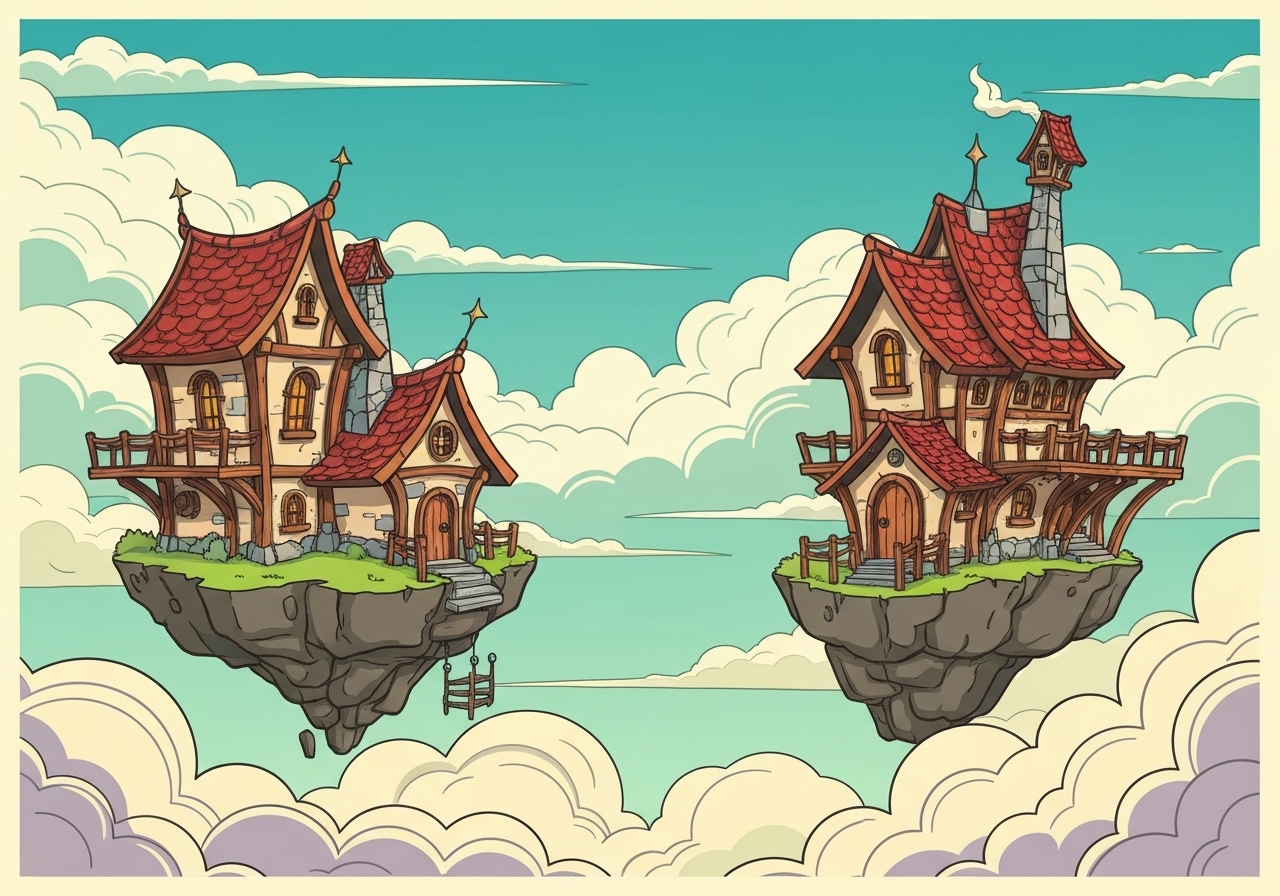
Lead: In December 2025 Blizzard acknowledged and formalized a player-discovered way to make houses float in World of Warcraft, saying it had turned the glitch into an optional UI state after players rapidly adopted the unintended effect. Community Manager Randy “Kaivax” Jordan posted on the official forums that the development team moved “quickly” to enable a floating-house UI following the community response, while noting that house undersides were never modeled or textured. Blizzard also offered practical workarounds for access and camera issues that can arise when player housing sits unusually high.
Key Takeaways
- Blizzard formally enabled a floating-house UI in December 2025 after players widely embraced a previously unintended glitch.
- Randy “Kaivax” Jordan confirmed the team acted “quickly” to create the option and posted guidance on official forums.
- Developers warned that the undersides of player houses “aren’t modeled or textured,” so visual artifacts may appear if exposed.
- Players with very high-floating houses may encounter camera and door-targeting problems; Blizzard suggested building ramps, jump puzzles, or mount landing spots as workarounds.
- The change is framed as a community-driven accommodation rather than a full design reversal; Blizzard limited the fix to a UI toggle rather than extensive remodelling.
- The move continues a pattern of emergent mechanics—like Street Fighter II combos or Doom rocket jumps—becoming embraced by communities and later acknowledged by creators.
Background
Player housing in World of Warcraft has long been a mostly cosmetic feature that lets users customize dwellings with furniture and terrain placement. Modding, placement edge-cases and physics interactions occasionally produce unexpected results; most remain localized bugs, while a few gain traction because they enable novel play or spectacle. In this instance, a placement glitch let certain buildings appear to float above the ground, catching players’ attention through screenshots and videos shared across community channels.
Historically, game developers have taken mixed approaches to emergent, unintended mechanics: some bugs are patched immediately for balance or security reasons, others are tolerated or adopted when they enrich play. Blizzard’s decision to expose a UI option formalizing the floating-house state follows that pragmatic tradition, balancing technical limitations—such as geometry that was never modeled for inverted views—with community enthusiasm. The company framed the change as a user-facing toggle rather than a full redesign of building models.
Main Event
In a December 2025 forum post, Community Manager Randy “Kaivax” Jordan outlined the company’s response. He said developers observed an “almost immediate” community embrace of the glitch and responded by enabling a floating-house UI setting to preserve the effect in a supported way. That approach avoids removing the behavior outright while acknowledging it was not originally intended by designers.
Kaivax also warned that the undersides of houses were not created to be seen: the geometry and textures for those faces were never finalized, which can produce visible seams or blank surfaces when a structure is elevated. To address player concerns, Blizzard advised owners to hide exposed undersides behind other scenery or decorations when possible.
Practical issues emerged for players whose houses sit particularly high above the ground. Some reported difficulty positioning the in-game camera to click doors or interact with entry triggers. Blizzard suggested simple in-world fixes—constructing a ramp, building a jump puzzle, or creating a mount landing spot—to restore reliable access without further engine changes.
Analysis & Implications
Blizzard’s choice to make a UI toggle for an emergent glitch illustrates a broader design trade-off: whether to eliminate unusual behavior that can surprise and delight players, or to embrace it and accept aesthetic or technical imperfections. By exposing a supported option rather than retrofitting every house model, the company reduces engineering costs and preserves community-created content and spectacle.
Technically, the decision highlights limits in asset pipelines. Many 3D game environments optimize by omitting geometry and textures for faces that normal camera positions never reveal. Once those faces become visible—through player exploits or camera manipulation—developers face a choice between reauthoring assets (costly across many items) or warning players about visual shortcomings.
The move also carries precedent and marketing value. Allowing the floating effect officially transforms a bug into a community-endorsed aesthetic, which can strengthen player attachment and encourage creative uses. However, it sets a soft precedent for accommodating other emergent behaviors, raising questions about where designers draw the line between intentional features and tolerated glitches.
Comparison & Data
| Feature | Year First Noted | Nature | Developer Response |
|---|---|---|---|
| Street Fighter II combos | 1991 | Unplanned input timing allowing extended attacks | Later embraced as core mechanic |
| Doom rocket jump | 1993 | Exploit of weapon recoil for increased mobility | Accepted as emergent technique |
| WoW floating houses | 2025 | Placement/camera glitch elevating structures | Exposed via UI toggle; undersides not re-modeled |
The table places the new floating-house decision in a lineage of emergent, player-driven mechanics that became part of a title’s culture. Unlike competitive-balance cases where exploits can undermine fairness, cosmetic or movement-based emergent features are often tolerated or embraced because they add creativity without breaking core systems. Blizzard’s solution mirrors past industry practice: acknowledge, contain engineering cost, and let the community decide how to use it.
Reactions & Quotes
“We quickly got to work on enabling the floating house UI after seeing the community almost immediately embrace the glitch,”
Randy “Kaivax” Jordan, Community Manager (Blizzard forums)
“The undersides of houses were never intended to be visible and aren’t modeled or textured,”
Randy “Kaivax” Jordan, Community Manager (Blizzard forums)
Community response on social platforms and forum threads mixed amusement with practical tips: many players celebrated the spectacle and posted screenshots, while others focused on pragmatic fixes for camera and access issues. Modders and housing enthusiasts are already experimenting with decorative covers and ramp designs to mask exposed undersides.
Unconfirmed
- Whether Blizzard will later remodel house undersides rather than relying on player workarounds is not confirmed by the forum post.
- Any plans to extend the floating-house UI to other placeable objects or to add official aesthetics for undersides have not been announced.
- There is no confirmed evidence that the floating houses cause server instability or wider gameplay exploits beyond camera and visual issues.
Bottom Line
Blizzard’s decision to formalize the floating-house glitch as a supported UI option is a pragmatic recognition of player behavior: communities often repurpose bugs into features, and developers sometimes follow. The company balanced engineering cost and visual limitations by warning players that undersides lack full modeling rather than undertaking a broad asset rework.
For players, the result is new creative opportunity with caveats: spectacular elevated houses are now officially possible, but owners must account for visual imperfections and access mechanics. For developers, the episode is a reminder that emergent design can be valuable but may require policy decisions about which surprises to preserve and which to fix.
Sources
- Ars Technica — Journalism: report on Blizzard’s forum announcement.
- Blizzard Entertainment forums — Official forum (company community posts and staff responses).