
Lead
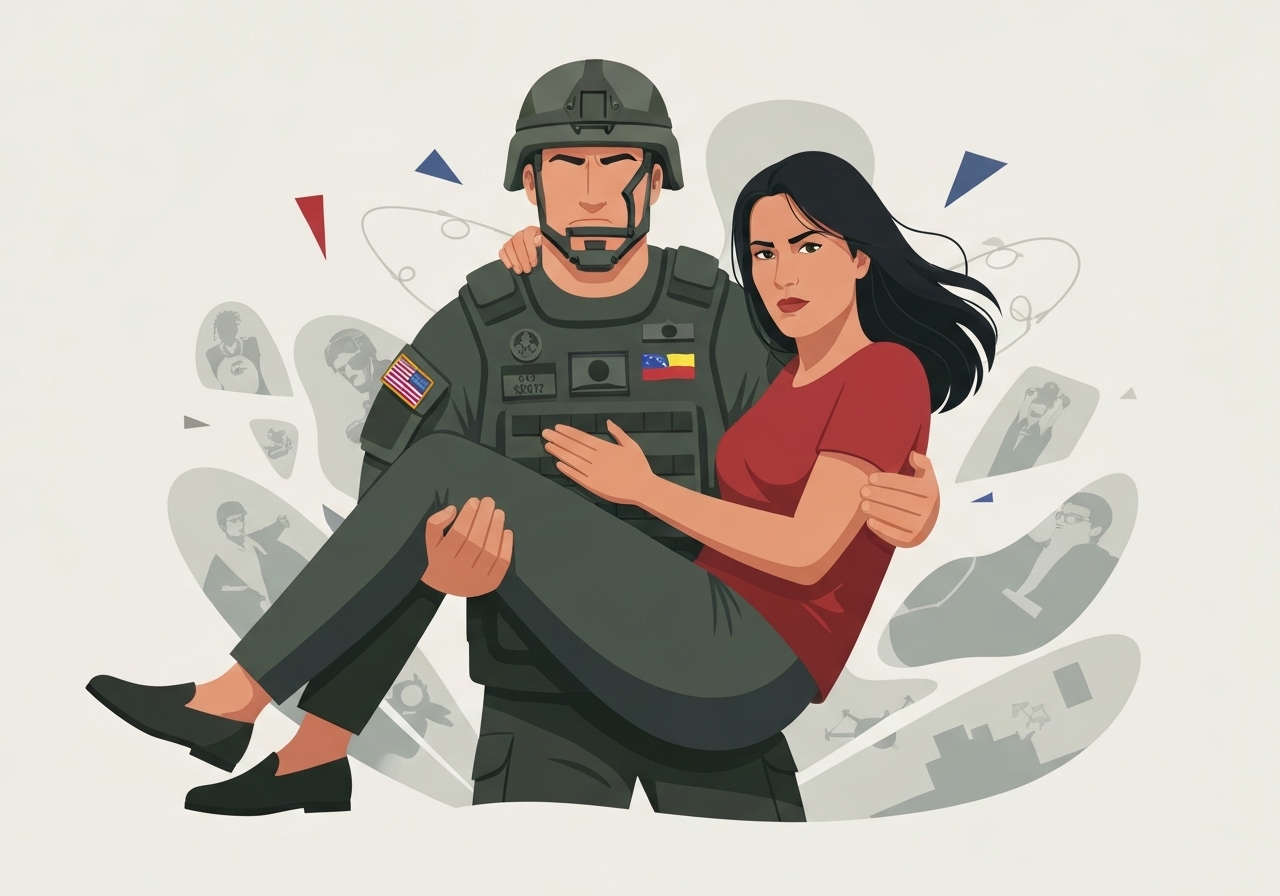
María Corina Machado left Venezuela in a covert nighttime sea crossing, according to Bryan Stern, a US special forces veteran who says he led the extraction. Stern told CBS the voyage was a long, wet and “scary” 13–14 hour trip by boat under no lights, after Machado had been in hiding since August 2024 fearing persecution. The operation, which Stern says began on a Tuesday and involved roughly two dozen people on his team, delivered Machado to an undisclosed air route that took her to Norway following the Nobel peace prize ceremony. Machado later confirmed Stern’s group, Grey Bull Rescue Foundation, played a role; key operational details, financiers and some claims remain unverified.
Key Takeaways
- Machado left Venezuela after hiding since August 2024, citing fears of persecution by President Nicolás Maduro.
- Bryan Stern, head of Grey Bull Rescue Foundation and a US special forces veteran, described a 13–14 hour nocturnal sea crossing with no lights and high waves.
- Stern said about two dozen people were directly involved in the maritime leg of the extraction.
- The mission was planned days in advance; Stern told CBS it began on a Tuesday and the interview ran on a Thursday.
- Stern said financing came from “a few generous donors” and that no US government funds were used; he also described “unofficial” coordination with US military elements to reduce exposure to potential airstrikes.
- The Wall Street Journal reported Machado used a wig and disguise to slip from a Caracas suburb; Stern declined to detail the land phase of the operation.
- Machado appeared in Norway following the Nobel ceremony and has said she had US support to leave; she has announced plans to return to Venezuela, though timing and method are unclear.
Background
María Corina Machado is one of Venezuela’s most prominent opposition figures, long critical of President Nicolás Maduro’s government. Since August 2024 she has reportedly stayed in hiding, saying she feared arrest or persecution amid a persistent crackdown on opposition leaders. Venezuelan political tensions have escalated in recent years, with international actors repeatedly condemning rights abuses and domestic actors accusing the government of narrowing political space.
Non-state extraction operations such as the one Stern describes are rare but not unprecedented in contexts where political opponents face arrest or violence. Private rescue groups led by former military personnel sometimes operate where diplomatic channels are constrained, raising questions about legality, oversight and potential diplomatic consequences. Grey Bull Rescue Foundation, the nonprofit Stern leads, characterizes itself as an organization focused on getting people out of dangerous situations; Stern has stressed the group does not conduct return operations.
Main Event
Stern told CBS he rendezvoused with Machado at sea after she slipped out of her Caracas-area hideout wearing a disguise, an account that aligns with reporting by the Wall Street Journal. The maritime leg, he said, lasted roughly 13–14 hours and took place at night with little moonlight and no navigational lights to reduce detection. Stern described rough, choppy conditions that soaked everyone aboard and also made the boat harder to detect by radar, a factor the team used to their advantage.
According to Stern, the operation was conceived about four days before the maritime departure; his team then escorted Machado to an undisclosed point where she boarded a plane bound for Norway after the Nobel peace prize ceremony. Stern declined to provide specifics about the land movements that led to the sea rendezvous, citing operational security and his organization’s ongoing work. He said around two dozen people on his team had direct roles in the extraction.
On funding, Stern told CBS the mission was financed by private donors and denied any US government financial contribution. He did say his group “unofficially collaborated” with US military personnel on positioning and planning matters, which he framed as a safety measure to avoid being targeted by airstrikes. Machado herself has said she had US support to leave Venezuela, though she did not detail whether that support was logistical, diplomatic or financial.
Analysis & Implications
The operation, as described, raises immediate diplomatic and security questions. If non-state actors extract high-profile political figures from Venezuela, Caracas may accuse foreign governments or private actors of intervention, potentially hardening rhetoric and prompting retaliatory measures. Even when operations are privately funded, the appearance of foreign involvement can complicate bilateral relations and international diplomacy.
For the Venezuelan opposition, Machado’s escape and visibility abroad carry both symbolic and practical consequences. Symbolically, her emergence in Norway after the Nobel ceremony is a political win that amplifies her profile internationally. Practically, her absence from the domestic scene could weaken opposition coordination inside Venezuela, while her stated desire to return—despite Stern’s view that she should not go back—could expose her to renewed risk and may force allies to weigh protective measures.
Legally and ethically, clandestine extractions exist in a gray zone. They can be lifesaving for individuals at imminent risk, but they also bypass formal asylum and diplomatic channels, raising accountability questions. The involvement of private donors and former special forces personnel highlights the growing role of non-state actors in high-stakes political conflicts, a trend that can outpace legal frameworks and oversight mechanisms.
Comparison & Data
| Attribute | This Operation (Dec 2025) | Typical Clandestine Maritime Exfiltration (approx.) |
|---|---|---|
| Maritime duration | 13–14 hours | 4–18 hours (varies by distance) |
| Team size | ~24 people directly involved | 5–30 people |
| Visibility | No lights, low moon, high waves | Low visibility preferred |
| Funding | Private donors (unnamed) | Private donors, NGOs, sometimes state backers |
The table above compares publicly stated features of this operation with general characteristics of clandestine maritime extractions. Exact numbers for other operations are case-specific; the table is intended to provide context rather than definitive measurement.
Reactions & Quotes
“It was dangerous. It was scary,”
Bryan Stern, Grey Bull Rescue Foundation (CBS interview)
Context: Stern used the phrase to convey the hazardous sea conditions and operational risk during the nighttime crossing, emphasizing both physical danger and the need for stealth.
“She was very happy. She was very excited. She was very tired,”
Bryan Stern (CBS interview)
Context: Stern described Machado’s state immediately after the crossing, noting relief and exhaustion following the lengthy, wet journey.
“I had US support to leave Venezuela,”
María Corina Machado (public statement)
Context: Machado has characterized her exit as involving US support; Stern distinguishes between private donor funding and direct US government financial contributions, and he described only unofficial coordination with US military actors.
Unconfirmed
- The identities and nationalities of the private donors who funded the operation have not been confirmed publicly.
- The precise nature and scope of the “unofficial” coordination with US military personnel remain unclear and unverified.
- Details of the land phase that moved Machado from her hideout to the maritime rendezvous have not been publicly corroborated.
- The exact route and security arrangements for any planned return to Venezuela have not been disclosed.
Bottom Line
The public account of María Corina Machado’s escape, as narrated by Bryan Stern and reported by multiple outlets, describes a hazardous clandestine sea crossing that achieved its immediate objective: getting Machado out of Venezuela and to Norway. Stern frames the mission as privately funded and professionally executed by a team of roughly two dozen people; Machado and other reporting have offered complementary details about disguises and the initial departure from Caracas-area hiding.
Yet key questions remain: who financed the operation, the degree of any state involvement or tacit approval, and the legal implications of private extractions in a polarized geopolitical environment. Machado’s announced intention to return to Venezuela poses a further dilemma: a high-profile homecoming could energize her supporters but also expose her to detention or violence. Observers should watch for diplomatic statements from Caracas and foreign capitals, any official investigations into the operation, and developments around Machado’s planned movements.
Sources
- The Guardian — (international news reporting)
- CBS News — (broadcast interview with Bryan Stern; U.S. news outlet)
- The Wall Street Journal — (reporting on disguise and land movement; international financial/press outlet)
- The Nobel Prize (committee) — (official event information)