
Lead
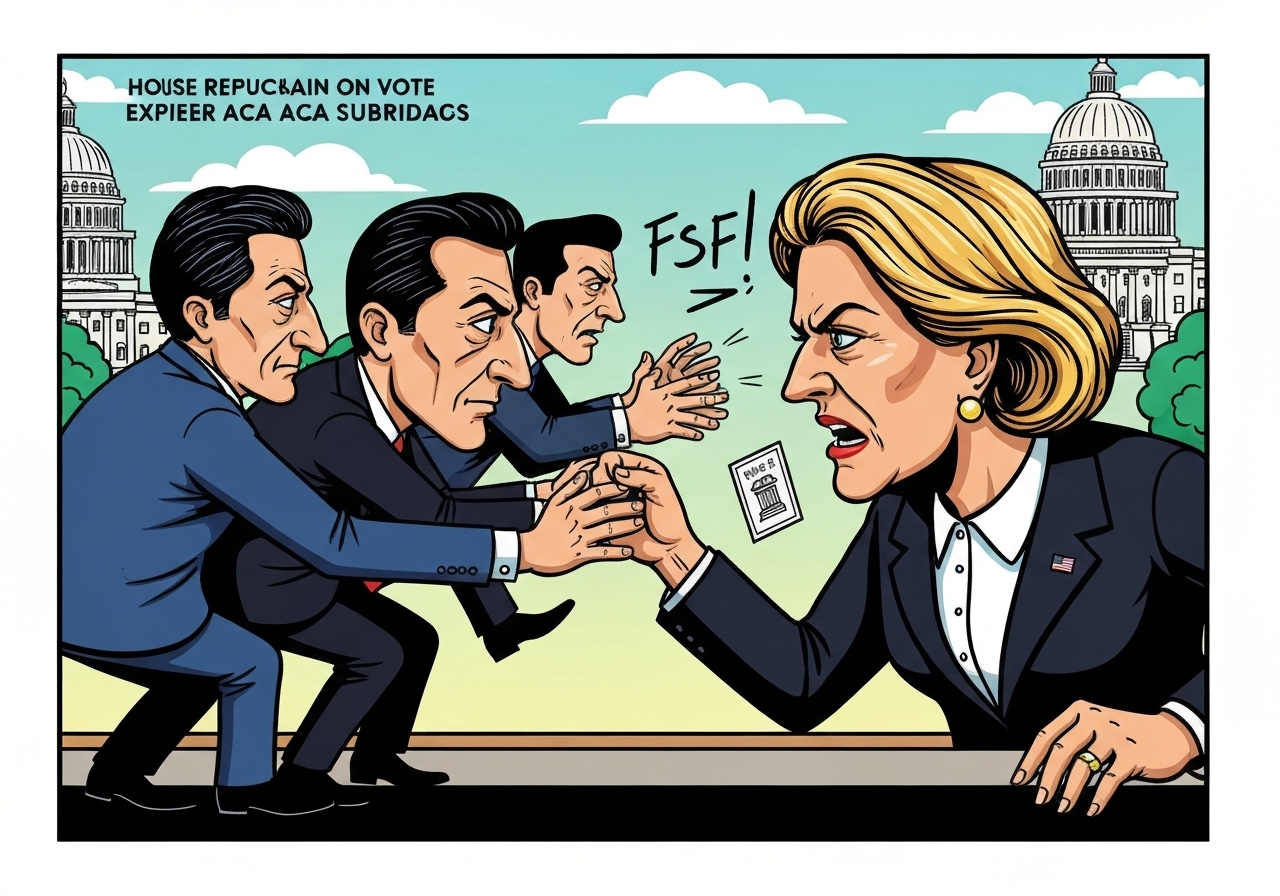
A growing group of House Republicans has joined bipartisan discharge petitions trying to force a floor vote to extend enhanced Affordable Care Act (ACA) subsidies that are set to expire at the end of the month. The move — led by members from swing districts and coordinated with Democrats — seeks to bypass GOP leadership as Speaker Mike Johnson readies a separate health package for next week. If successful, the petitions would trigger a House vote; the petitions currently count a modest number of Republican signatories but need 218 signatures to proceed. The dispute raises the prospect of higher premiums for more than 20 million Americans if Congress does not act.
Key Takeaways
- As of Thursday, 11 House Republicans had signed bipartisan discharge petitions aimed at extending and reforming enhanced ACA subsidies.
- The enhanced subsidies are scheduled to expire at the end of the month, potentially affecting health premiums for over 20 million Americans.
- Discharge petitions require 218 signatures to force a House vote; it is unclear whether enough Democrats and Republicans will coalesce to reach that threshold.
- House Minority Leader Hakeem Jeffries leads a Democratic petition proposing a three-year extension of the subsidies.
- Republican Rep. Brian Fitzpatrick filed a separate two-year extension petition that would include income caps and pharmacy benefit manager (PBM) regulation.
- Speaker Mike Johnson has signaled a different health care package will be unveiled, with options reportedly including HSAs, cost-sharing reductions and PBM changes.
- Some Republicans backing the petitions are from competitive districts and warn of electoral consequences if subsidies lapse.
- In the Senate, competing Democratic and Republican proposals to blunt premium spikes failed to advance on Thursday, leaving no immediate upper-chamber fix.
Background
The enhanced ACA premium subsidies were expanded in recent years and have reduced out-of-pocket costs for millions of marketplace enrollees. Those temporary enhancements were scheduled to end, creating a deadline-driven pressure point in Congress: without action, many enrollees face noticeably higher premiums beginning with the next plan year. The subsidies have become a politically charged issue because they provide visible relief to households while carrying budgetary implications for federal spending.
Discharge petitions are a rarely used procedural tool that allow rank-and-file members to bring legislation to the floor over leadership objections if they collect a majority of signatures. In the current House, that threshold is 218 members; because the GOP holds the majority, forcing a vote typically requires cross-party cooperation or a sizable faction of the majority party to defy leadership. The petitions in this episode are bipartisan, reflecting both policy and electoral calculations among moderates and Democrats.
Main Event
Behind closed doors this week, Speaker Johnson and senior GOP leaders presented House Republicans with several options to address health care costs, according to multiple sources. The menu reportedly included expanded Health Savings Accounts (HSAs), targeted cost-sharing reduction ideas and reforms to pharmacy benefit managers. Johnson said a bill will “probably” be unveiled over the weekend ahead of a planned vote next week, and he has framed the GOP effort as a broader plan to lower premiums for all insured Americans.
Still, a bloc of mainly moderate Republicans pressed a different path: filing or signing onto discharge petitions that would extend the enhanced ACA subsidies while attaching reforms. Representative Brian Fitzpatrick (R-PA) filed a petition proposing a two-year extension with income caps and PBM oversight. Representative Josh Gottheimer (D-NJ) put forward a similar bipartisan petition, and Minority Leader Hakeem Jeffries leads a separate Democratic petition proposing a three-year extension.
As of the latest count, roughly a dozen Republicans had added their names to one or both petitions. Supporters include members from swing districts who argue that failing to extend the subsidies would cause immediate harm to constituents. Opponents — including Speaker Johnson — argue the GOP package under development will achieve broader, sustainable premium reductions without short-term extensions targeted to a subset of enrollees.
The procedural hurdle is steep: if the petitions do not reach 218 signatures, leadership can keep the matter off the floor. Meanwhile, the Senate’s inability on Thursday to advance competing proposals leaves no immediate alternative at the upper chamber level to avert premium increases if the House does not act.
Analysis & Implications
Politically, the dispute places vulnerable Republicans in a difficult position. Members from swing districts risk voter backlash if premiums rise materially in their districts, and some Republicans who signed the petitions cited electoral concerns, arguing that inaction would become a potent campaign issue in the next cycle. For leadership, tolerating defections could set a precedent that undermines centralized agenda control in the House.
Policy-wise, an extension of enhanced subsidies is a blunt but immediate mechanism to prevent premium spikes for marketplace enrollees. Proposals to reform PBMs or expand HSAs reflect longer-term priorities for Republican health policy but would not necessarily deliver immediate premium relief for affected enrollees. The contrast highlights a tension between short-term stabilization and structural reform.
Legislatively, success for the discharge petitions depends on numbers and timing. Even if the petitions reach 218 signatures, opponents could pursue amendments or procedural maneuvers that complicate passage. If the petitions fail, the political fallout could amplify pressure on leadership to fold some form of extension into its package or to broker a compromise with Democrats.
Economically, the immediate risk is measurable: insurers will price next year’s plans based on the expectation of federal assistance. If enhanced subsidies lapse, insurers may file higher premiums to compensate, increasing costs for over 20 million Americans who rely on marketplace subsidies. The exact magnitude of premium increases will vary by state and plan, but the policy deadline compresses the timeframe for lawmakers and carriers to respond.
Comparison & Data
| Metric | Current status / proposal |
|---|---|
| Enhanced ACA subsidies | Set to expire end of month |
| People affected | More than 20 million marketplace enrollees |
| Discharge petition threshold | 218 signatures required |
| Republican signatories (as of Thursday) | 11 Republicans on the petitions |
| Democratic petition duration | 3-year extension proposed by Democrats |
| Fitzpatrick proposal | 2-year extension with income caps and PBM rules |
The table summarizes the immediate facts shaping the dispute. The numbers show why the timeline and signature count are decisive: the expiry date compresses options and elevates the importance of each lawmaker’s decision. Policymakers weighing long-term reforms must also reckon with the near-term insurance-market dynamics that determine consumer premiums.
Reactions & Quotes
“You’re going to see a package come together that will be on the floor next week that will actually reduce premiums for 100% of Americans who are on health insurance,”
Speaker Mike Johnson (R-La.), news conference
Johnson framed the GOP package as a universal approach to premium reduction, rejecting targeted extensions as insufficient. His remarks reflect leadership’s preference for a comprehensive policy alternative rather than a time-limited subsidy extension.
“If Congress fails to act, all our constituents are going to be paying a lot more for their premiums and that’s unacceptable,”
Rep. Don Bacon (R-Neb.), hallway comment
Rep. Bacon emphasized the electoral and constituent consequences of inaction, underscoring why some Republicans from competitive districts are willing to split with leadership.
Unconfirmed
- Whether Speaker Johnson’s forthcoming package definitively excludes an extension of the enhanced subsidies remains unconfirmed until the bill text is released.
- It is not yet confirmed whether enough Democrats and defecting Republicans will sign to reach the 218 signature threshold.
- The precise scale of premium increases if subsidies lapse—by state or plan—has not been published and will depend on insurer filings and regulators’ responses.
Bottom Line
The next week will be pivotal: a small group of Republicans has put leadership on notice by backing discharge petitions that could force a House vote to extend expiring ACA subsidies affecting more than 20 million people. The petitions face a high procedural bar, and their success depends on both the final signature tally and how quickly leaders move to unveil and advance an alternative package.
For voters and markets, the immediate risk is a spike in premiums if Congress does not act before the end-of-month deadline. Politically, the dispute exposes fractures within the GOP between members prioritizing constituent relief and leaders seeking a broader reform agenda; that tension will shape negotiations and campaign narratives in the months ahead.
Sources
- ABC News — reporting and quotations (media)
- U.S. House History — Discharge Petition explanation (official institutional guidance)