
Lead
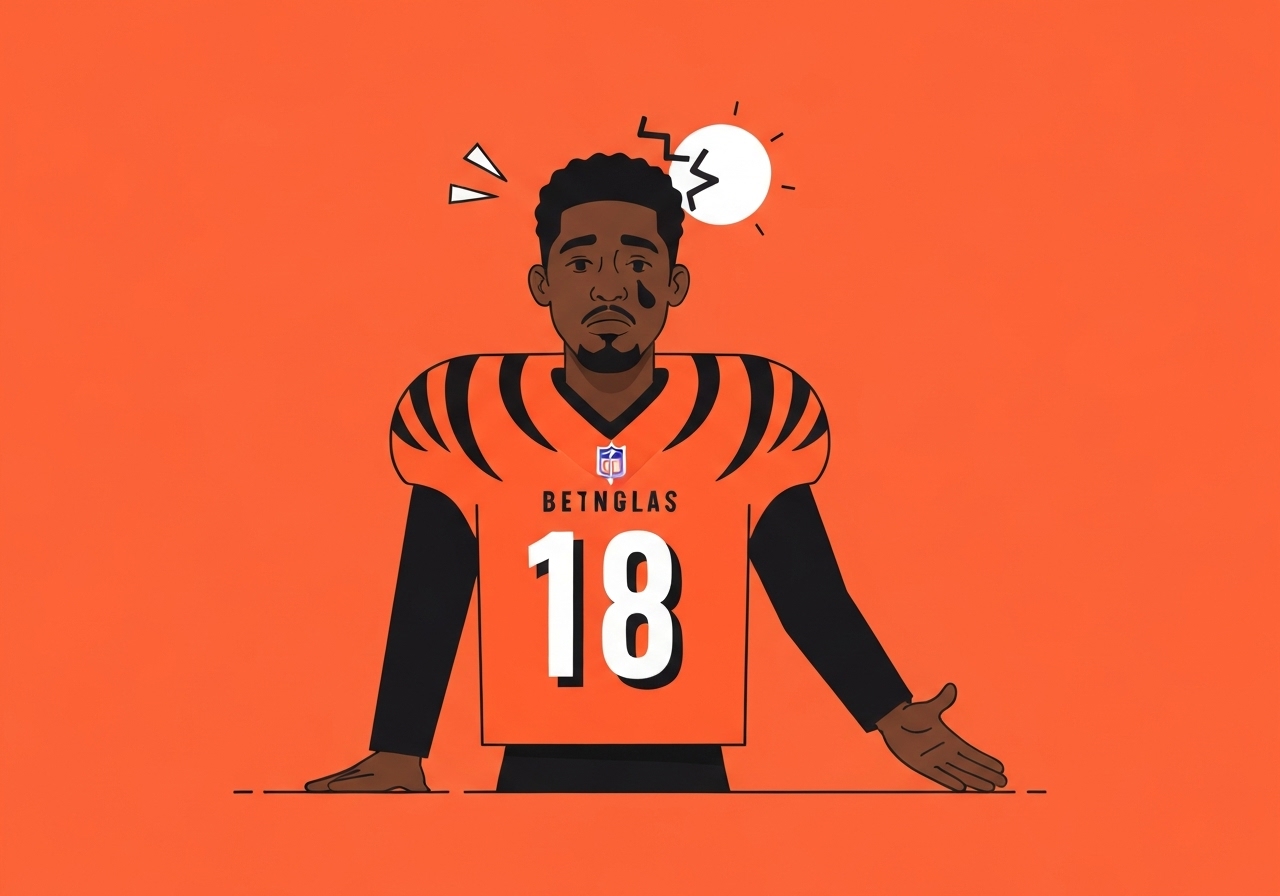
Wide receiver Tee Higgins will not play for the Cincinnati Bengals on Sunday against the Baltimore Ravens after re-entering the NFL concussion protocol, the team announced Dec. 12, 2025. This marks the second game Higgins has missed this season under concussion-related restrictions; he also sat out the teams’ Thanksgiving meeting, a 32-14 Bengals win in Baltimore. Higgins had been limited early in the week’s practices and did not appear during the session open to media on Friday morning. The absence reshuffles Cincinnati’s receiver depth entering a key AFC matchup.
Key Takeaways
- Tee Higgins is ruled out for Sunday versus Baltimore after returning to the concussion protocol on Dec. 12, 2025; it is his second missed game of the season for concussion reasons.
- Higgins previously missed the first Bengals–Ravens meeting on Thanksgiving Day, a 32-14 Cincinnati victory in Baltimore.
- The sequence began Nov. 23 against New England when Higgins was carted off following a hard fall; he missed the next meeting with Baltimore four days later.
- On Dec. 7 vs. Buffalo Higgins recorded six catches for 92 yards and two touchdowns in a 39-34 loss but later reported concussion-like symptoms and was placed back in protocol.
- Backup Mitch Tinsley will likely see an expanded role; in the earlier Baltimore game he played 67% of offensive snaps and had two catches on nine targets.
- Rookie defensive end Shemar Stewart remains on injured reserve recovering from a torn ligament in his left knee; the team opened a practice window but listed him as doubtful for Baltimore.
Background
Tee Higgins has been a primary vertical threat since entering the league, lining up opposite All-Pro Ja’Marr Chase. The Bengals’ offense relies on spacing and contested catches; losing Higgins affects both matchup planning and the play-calling mix. Higgins’ recent injury history began with a hard fall Nov. 23 in Foxborough that required him to be carted off, an incident that triggered greater caution under the NFL’s concussion protocols.
The NFL’s concussion management process mandates stepwise clearance, symptom monitoring and independent spot checks; players can be removed from the protocol if symptoms recur. Cincinnati has managed multiple short-term absences this season, and the front office has shown a willingness to prioritize long-term health over short-term availability. Special teams and low-risk passing concepts often absorb snap reductions for injured receivers while backups gain more routes in game plans.
Main Event
The Bengals announced Dec. 12 that Higgins would not suit up against Baltimore after he was limited in early-week practices and absent from the portion of Friday’s practice open to media. Team officials said Higgins did not clear the final steps of the concussion protocol, prompting the decision to hold him out of the game. That formal ruling follows a pattern this month in which Higgins experienced delayed symptoms after a game clearance on Dec. 7.
Higgins’ most recent in-game sequence came at Highmark Stadium against the Bills, where he exited slowly after a play but initially passed a concussion check and returned to the contest. He finished that game with six catches for 92 yards and two touchdowns, including one after the midgame check. Later that night and into Monday he reported symptoms that led medical staff to move him back into the protocol.
With Higgins unavailable, Mitch Tinsley — who played 67% of the offensive snaps in the first Baltimore game the receiver missed — is the immediate depth candidate to see more snaps. Cincinnati’s receiving rotation behind Ja’Marr Chase includes veteran Andrei Iosivas and other rotational pieces who will be tasked with holding down intermediate and boundary routes. The coaching staff must weigh game-planning adjustments that reduce single-high coverage exposure without Higgins’ contested-catch ability.
Analysis & Implications
Short term, Higgins’ absence decreases Cincinnati’s contested-catching and deep-threat inject into downfield pacing. Opposing coordinators can afford to compress coverage windows, directing more resources toward Ja’Marr Chase and the run game. That alteration could modestly reduce explosive-play opportunities; the Bengals will likely emphasize quick timing throws and run-pass combinations to offset lost downfield snaps.
For Mitch Tinsley, this is an opportunity and a test. In the first Ravens game he trusted on 67% of snaps, Tinsley ran many of the intermediate and boundary routes Higgins would normally draw. If Tinsley sustains cleaner separation and reliable hands, Cincinnati can preserve much of its route-tree continuity. However, sustained pressure from Baltimore’s front seven could force quicker decisions and expose inexperience in critical third‑down moments.
At the roster and season level, repeated concussion entries complicate Higgins’ mid- and long-term availability. The team must balance playoff timing against medical clearance benchmarks; further symptom recurrence could push any potential return into the postseason window. Meanwhile, the squad’s depth chart will be monitored closely for snap distribution changes, and the coaching staff may call more two‑tight end sets or scripted short-area throws to stabilize offensive efficiency.
Comparison & Data
| Game / Player | Snaps or Targets | Catches | Yards | TDs |
|---|---|---|---|---|
| Dec. 7 vs Bills — Tee Higgins | — | 6 | 92 | 2 |
| Earlier Ravens meeting — Mitch Tinsley | 67% offensive snaps | 2 | — | 0 |
The table highlights the contrast between Higgins’ high-impact performance versus Buffalo and Tinsley’s snap-heavy role in the earlier Baltimore meeting. The Bengals’ coaching staff will evaluate target distribution and route assignments to replicate Higgins’ field-stretching influence with available personnel.
Reactions & Quotes
Players and staff framed the decision as precautionary and situational. From Higgins’ Dec. 7 postgame comment, he emphasized team commitment while acknowledging the physical toll of play.
“I’m a team-first guy, you know what I mean. My team needed me. I felt like they did, so I went out there and played.”
Tee Higgins, Bengals wide receiver (postgame comment)
Backup receiver Mitch Tinsley spoke about readiness and opportunity, noting his desire to help if called upon. His quote reflects a measured approach to stepping into increased offensive responsibility.
“For sure I would love to get more opportunities against them. Some of the opportunities didn’t go my way last time. But whatever opportunities I get… it’s just about being in the moment and executing.”
Mitch Tinsley, Bengals receiver
Unconfirmed
- Exact timeline for Tee Higgins’ full clearance and expected game availability beyond the upcoming Sunday is not publicly confirmed.
- Extent to which Higgins’ symptoms will affect the remainder of the regular season or potential postseason availability remains unknown.
- Shemar Stewart’s precise recovery timetable and target return date after left-knee ligament surgery is not confirmed; team labeled him doubtful for Baltimore.
Bottom Line
Ruling Tee Higgins out for Sunday’s game is a medically cautious move that alters Cincinnati’s offensive profile against Baltimore. The Bengals lose a contested-catch, deep-route weapon, which will force schematic adjustments and place more responsibility on Ja’Marr Chase and secondary receivers such as Mitch Tinsley and Andrei Iosivas.
How well backups execute and how offensive play-calling adapts will shape the game’s early-down efficiency and third-down conversion outlook. For Higgins, recurrent concussion protocol entries mean the franchise will likely continue to prioritize his long-term health over short-term availability; fans and analysts should watch official medical updates for any timetable changes.