
Lead
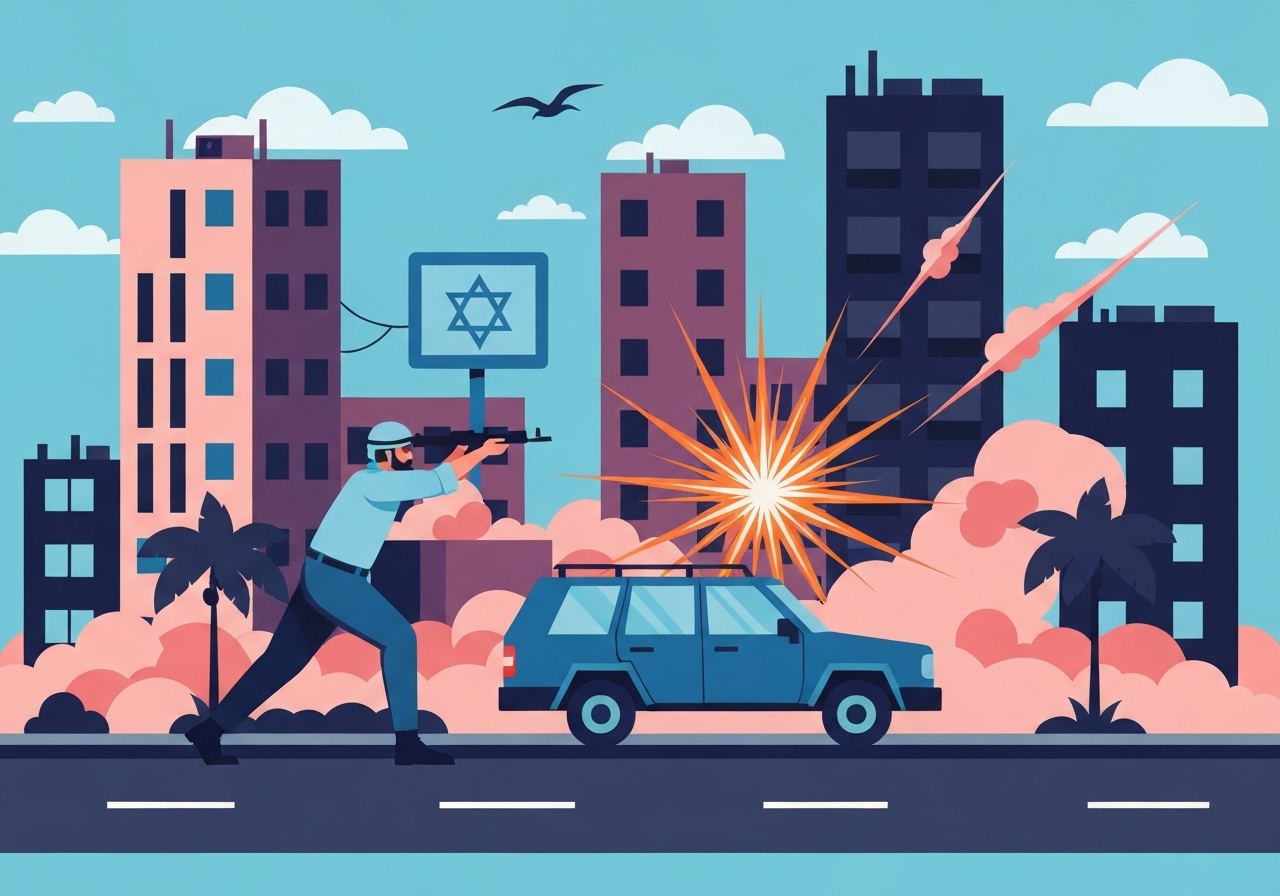
Israeli forces said on Saturday they struck a vehicle in Gaza City that killed a senior Hamas commander, in an attack that Palestinian emergency services reported also killed three other people and wounded bystanders. The Israeli military described the target as a “key Hamas terrorist” while Hamas-linked civil defence sources named four fatalities. The strike occurred on the Palestinian-controlled side of the so-called Yellow Line that divides much of the Gaza Strip after the October ceasefire. Independent verification inside Gaza is limited because international reporters remain restricted from operating freely within the territory.
Key Takeaways
- Israel says it struck and killed a senior Hamas commander in Gaza City on Saturday; the military called the person a “key Hamas terrorist.”
- Hamas-run Civil Defence spokesman Mahmoud Basal told the BBC that four people died in the blast and several passers-by were injured.
- Local sources and regional reporting identified the likely target as Raed Saad, a senior Qassam Brigades commander and member of a five-person military council formed since the October ceasefire.
- Saad has been sought by Israeli forces for decades and survived at least one high-profile attempt in March 2024, when an Israeli raid reportedly missed him by minutes.
- The strike took place on the Palestinian-controlled side of the Yellow Line; Israeli forces control areas to the east of that line.
- Contextual figures cited: about 1,200 people were killed in the 7 October 2023 attacks on southern Israel and more than 250 people were taken hostage; Gaza health authorities report over 70,000 Palestinian deaths since then.
- Diplomatic debate is shifting toward the next phase of a US 20-point plan that includes disarmament of Hamas and governance changes for Gaza; a high-level meeting on the plan is slated for 29 December.
Background
The Gaza Strip has been tense since the 7 October 2023 Hamas-led attacks on southern Israel, in which around 1,200 Israelis were killed and more than 250 people taken hostage. The ensuing military campaign and cycles of violence have left deep humanitarian and security problems across the enclave, with Hamas and Israel exchanging strikes and operations. A fragile, US-led ceasefire took effect on 10 October; since then, a notional division — often referred to as the Yellow Line — has separated Palestinian-controlled westward areas from sectors where Israeli forces operate to the east.
Raed Saad is widely described in regional reporting as one of the most prominent Qassam Brigades commanders and is reported to have led units during the 7 October operations. Israeli authorities have repeatedly attempted to capture or kill him for many years; a March 2024 Israeli operation in Gaza City reportedly narrowly failed to do so. Since the ceasefire, Hamas is believed to have established a smaller, five-person military council intended to coordinate armed elements; Saad is said to be a member of that body according to local sources.
Main Event
According to the Israeli military statement, forces struck a vehicle in Gaza City on Saturday and killed a senior Hamas figure. Palestinian emergency services run by Hamas reported multiple fatalities at the scene and said passers-by were wounded by the blast; the Civil Defence spokesman named four deaths. The attack took place on the side of the Yellow Line that remains under Palestinian administrative control, a location that complicates on-the-ground verification and raises questions about rules of engagement and cross-line operations.
Local sources and regional reporting have suggested the strike may have targeted Raed Saad, though Israeli officials did not publicly name the individual in the initial military notice. Saad has been a long-standing Israeli target and is described as a senior leader within the Qassam Brigades; earlier Israeli operations, including the March 2024 raid in Gaza City, reportedly sought him specifically. Because independent reporting from inside Gaza is restricted, available accounts rely on statements from the Israeli military and Palestinian-run emergency services, each of which has its own institutional perspective and incentives.
Casualty reports are inconsistent across sources: Hamas-linked agencies provide regular tallies of Palestinian deaths and injuries, while Israeli officials focus on security justifications and target profiles. The strike comes amid renewed diplomatic momentum around a US-proposed 20-point plan — a framework that includes hostage return, disarmament of Hamas, and significant governance changes in Gaza — and ahead of a planned meeting between former US President Donald Trump and Israeli Prime Minister Benjamin Netanyahu on 29 December to discuss the plan.
Analysis & Implications
The reported killing of a senior commander would be tactically significant for Israel if confirmed, removing an experienced operational leader with a history of directing units. For Hamas, the loss of a senior commander could prompt reorganisation of its armed structures and spur retaliatory attacks or adjustments to defensive posture. In urban and densely populated environments like Gaza City, targeted strikes carry heightened risk of civilian harm and wider escalation, which in turn affects international diplomatic calculations and humanitarian conditions.
Strategically, such strikes intersect with the larger political effort surrounding the 20-point plan, which aims to disarm Hamas and overhaul Gaza governance. Removal of senior field commanders may be interpreted by proponents of the plan as advancing disarmament goals, but it also risks hardening positions among Palestinians and complicating any transition that requires local buy-in. Within Israel, views are divided; some see decapitation strikes as necessary to degrade Hamas capabilities, while critics warn that short-term tactical gains can produce long-term instability.
Regionally, further militant losses or reprisals could influence dynamics with neighbouring actors and international mediators. The ambiguity over operations across the Yellow Line increases the danger of miscalculation between Israeli forces and Palestinian entities in Gaza. International humanitarian organisations routinely express concerns when urban strikes occur, citing elevated civilian casualty risks and impediments to aid delivery — factors that may shape diplomatic pressure following this incident.
Comparison & Data
| Event/Metric | Reported Figure |
|---|---|
| Deaths in 7 Oct 2023 attacks (Israeli claim) | ~1,200 |
| People taken hostage on 7 Oct 2023 | More than 250 (all returned except remains of Ran Gvili, 24) |
| Reported Palestinian deaths since Oct (Gaza health ministry) | More than 70,000 |
| Planned diplomatic meeting on US plan | 29 December (Trump and Netanyahu) |
This table compiles the principal figures cited in public statements and reporting; numbers originate from Israeli official counts and Gaza’s Hamas-run health ministry. Each source uses its own methodology and may include differing scopes (combatants vs civilians, direct vs indirect deaths). Analysts caution against treating these figures as directly comparable without accounting for reporting differences, timeframes, and verification constraints inside Gaza.
Reactions & Quotes
The Israeli military released a short statement asserting it had struck a “key Hamas terrorist” in Gaza City, framing the operation as part of ongoing efforts to degrade militant leadership. The statement did not name the individual in initial public briefings, a common practice in fast-moving operations.
“Struck a key Hamas terrorist in Gaza City,” the Israeli military said in its statement.
Israeli military (official statement)
Palestinian emergency services and the Hamas-run Civil Defence provided casualty figures and on-the-ground descriptions, noting fatalities and wounded civilians. Their reporting stressed the human cost of the blast and identified multiple victims by number, but independent access to corroborate those accounts remains limited.
“Four people were killed in the strike and multiple passers-by were injured,” Mahmoud Basal, spokesman for Hamas-run Civil Defence, told reporters.
Mahmoud Basal (Hamas-run Civil Defence)
International actors and analysts are monitoring whether the action alters momentum around the US 20-point plan, which ties security measures to governance reforms in Gaza. Diplomats have repeatedly warned that military operations that cause civilian harm can complicate political prospects for a stable transition.
“Operations that increase civilian suffering will make a political transition more difficult to achieve,” said an independent regional analyst who studies Gaza conflict dynamics.
Independent regional analyst (expert commentary)
Unconfirmed
- Attribution of the strike specifically to Raed Saad is reported by local sources but has not been independently verified by international reporters inside Gaza.
- Exact casualty counts remain uncertain; figures provided by Hamas-run civil defence and Gaza health authorities are reported but not independently corroborated.
- Operational details from the Israeli side (methods, precise timing, and intended target identity) have not been fully disclosed in public statements.
Bottom Line
If confirmed, the reported killing of a senior Qassam commander would represent a notable tactical success for Israel against a long-sought figure and could disrupt Hamas field command temporarily. However, the strategic consequences are ambiguous: such strikes can provoke retaliation, complicate humanitarian access, and make diplomatic settlement efforts more fraught, especially as international attention focuses on the proposed US 20-point plan.
Given the restricted reporting environment inside Gaza and the divergent narratives from involved parties, independent verification is essential before treating all claims as settled fact. Observers should watch for follow-up announcements from the Israeli military, Gaza medical authorities, and third-party monitors — and for any changes in militant activity or diplomatic posture ahead of the 29 December meeting between political leaders discussing the plan.
Sources
- BBC News (international news reporting; source of primary reporting and quoted statements)