
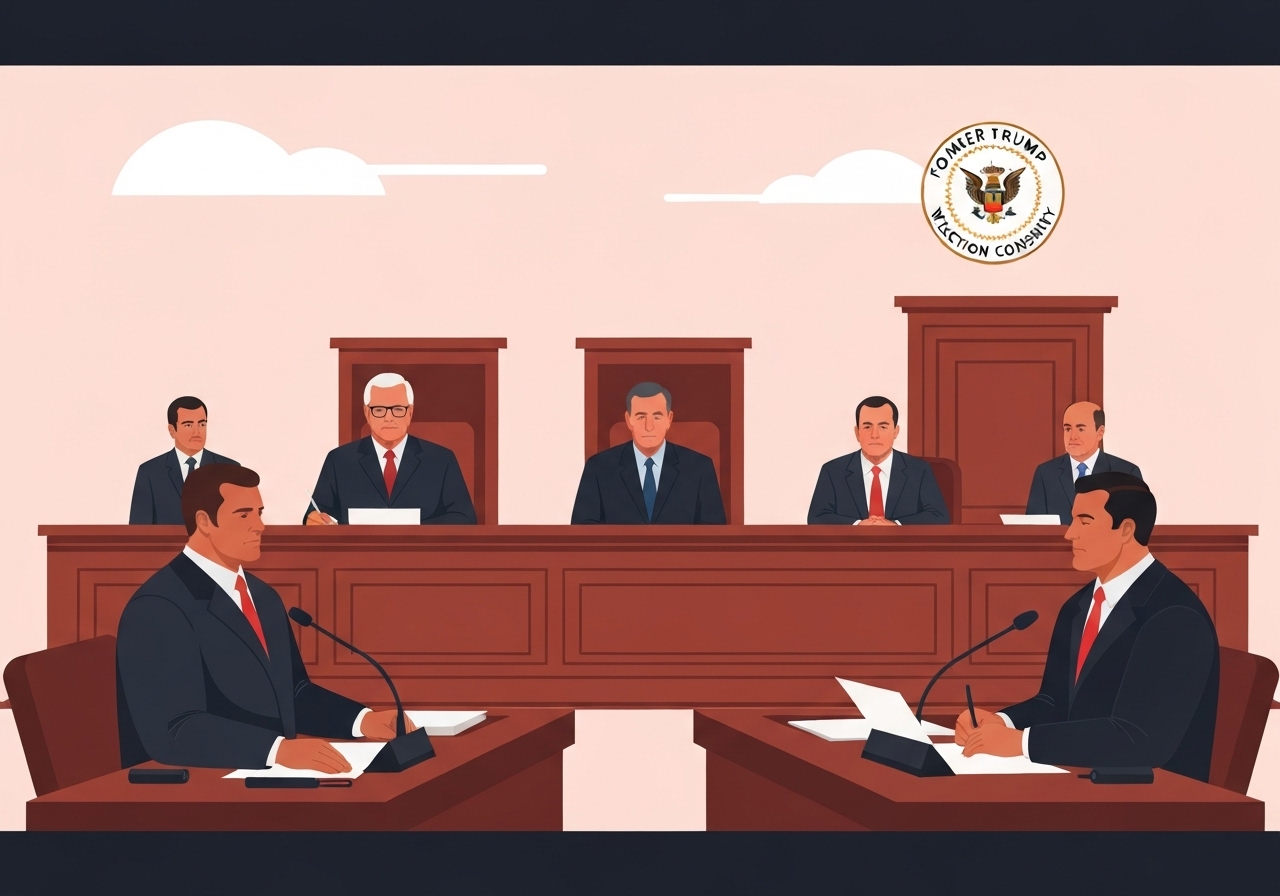
Lead: On Dec. 15, 2025, three former aides to Donald Trump — attorneys Jim Troupis and Kenneth Chesebro and campaign aide Mike Roman — appeared in Dane County, Wisconsin, for a preliminary hearing on felony forgery allegations tied to a 2020 fake-elector scheme. The state case, filed by the Wisconsin Department of Justice in 2024, charges each defendant with 11 felonies and has survived earlier motions to dismiss. Judge John Hyland presided and denied a request to recuse or delay the hearing after contested claims about the authorship of a prior order. The proceeding occurs even as related legal efforts in other battleground states have seen uneven results.
Key Takeaways
- The hearing took place Dec. 15, 2025, in Dane County Circuit Court before Judge John Hyland.
- The Wisconsin DOJ, led by Attorney General Josh Kaul, filed the charges in 2024 alleging the trio misled 10 Republican electors about how their signatures would be used.
- Prosecutors say a majority of those electors told investigators they did not expect their signed certificates to be presented to Congress absent a court ruling.
- Defense efforts to dismiss the case and to transfer or delay the hearing were rejected; a recent motion alleged judicial bias and questioned who authored an earlier order.
- Federal scrutiny of the broader scheme previously identified Wisconsin as an origin point; a federal special prosecutor later declined to bring conspiracy charges against Trump in a separate action.
- No criminal charges have been filed against the 10 Wisconsin electors; however, several parties, including electors and two defendants, settled a civil suit seeking damages.
Background
The Wisconsin forgery case stems from documents produced after the 2020 presidential election in which a slate of 10 Republican electors submitted certificates asserting that Donald Trump had won the state. State prosecutors say advisers to the campaign prepared and presented those certificates under misleading pretenses. Federal and state investigations into post-election activities have run in parallel, producing different outcomes in multiple jurisdictions.
In 2024 the Wisconsin Department of Justice, under Democratic Attorney General Josh Kaul, formally charged three Trump associates with felony forgery. The indictment alleges those associates lied to the electors about the intended use of the certificates, claiming they were precautionary documents to preserve legal options rather than paperwork that could be sent to Congress as proof of a Trump victory.
Nationally, efforts to challenge the 2020 results produced a patchwork of prosecutions and dismissals. Some battleground states pursued criminal referrals or charges; others, including federal prosecutors in separate inquiries, declined to indict on broader conspiracy claims. That uneven legal landscape has shaped both strategy and public perception around these matters.
Main Event
At Monday’s preliminary hearing, Judge Hyland reviewed whether probable cause exists to bind the three defendants over for trial. The defendants have consistently argued their conduct was lawful political or legal advocacy; prosecutors counter that the defendants knowingly misrepresented facts to the electors, amounting to forgery and fraud. The judge declined defense requests to disqualify himself or move the case after accusations that a retired judge wrote an earlier order—an allegation the court found unsupported.
Jim Troupis, who previously served a one-year term as a judge in the same county, led a joint defense motion alleging bias by local judges and questioned the provenance of a written court order issued in August. Troupis and the other defendants sought recusal and transfer; Judge Hyland said he and a staff attorney authored the order and denied the motion for lack of evidence.
Prosecutors presented a narrative grounded in witness statements from a majority of the 10 Republican electors, who reportedly said they believed signing was conditional on a favorable court ruling. The complaint quotes electors saying they did not consent to their signatures being presented to Congress as proof Trump had won without judicial action.
The hearing also highlighted that Wisconsin remains the only state to press criminal charges against the advisers and campaign aide for this specific scheme. Other jurisdictions have pursued different approaches: some cases faltered, one federal special prosecutor declined charges against Trump in a separate probe, and related litigation has produced plea deals and settlements elsewhere.
Analysis & Implications
Legally, the Wisconsin case tests the boundary between aggressive post-election legal strategy and criminal conduct. If prosecutors can show the defendants knowingly used false pretenses to obtain elector signatures and then intended to transmit those signatures to federal authorities, the elements of forgery and fraud become more plausible. Conviction could establish a sharper legal precedent about the limits of post-election maneuvers by campaigns and their advisers.
Politically, the proceeding matters because it involves high-profile figures tied to a former president who remains a dominant force in Republican politics. A prosecution and potential trial will be scrutinized for fairness and could energize partisan narratives on both sides — defenders portraying prosecution as political, while proponents argue accountability for schemes that sought to alter election outcomes.
At the institutional level, the case underscores the different standards and resource priorities between state and federal prosecutors. Federal authorities in related probes have weighed broader conspiracy theories and the practical challenge of proving intent, while state prosecutors in Wisconsin focused narrowly on alleged false statements and forgery tied to specific documents and witnesses.
Looking ahead, a determination to bind the defendants over for trial would set a timetable for further pretrial litigation, discovery and potential plea negotiations. Conversely, dismissal at later stages — or acquittal — would leave lingering questions about how to deter similar conduct without chilling legitimate legal advocacy.
Comparison & Data
| Jurisdiction | 2020 Action | Current Legal Status (as of Dec. 15, 2025) |
|---|---|---|
| Wisconsin | 10 GOP electors signed alternate certificates | State forgery charges against 3 advisers; preliminary hearing held |
| Georgia | Alternate slates and related actions | Various prosecutions; some cases stalled or narrowed |
| Nevada | Alternate elector certificates | Ongoing investigations/cases (active) |
The table shows how responses varied by state: Wisconsin advanced criminal counts against campaign advisers, Georgia saw multiple strands of litigation with mixed outcomes, and Nevada still has active legal proceedings. The variance reflects differences in evidence, charging decisions by local prosecutors, and strategic choices by defense teams.
Reactions & Quotes
State and national reactions were immediate and polarized. Supporters of prosecution say the charges are a necessary enforcement of election law; critics argue they represent partisan targeting. Below are representative statements placed in context.
“The court reviewed the motion and found no evidence of the claimed authorship or bias; proceedings will continue on schedule.”
Judge John Hyland (court ruling context)
Judge Hyland’s statement — delivered from the bench in denying recusal — framed the court’s view that procedural attacks lacked supporting evidence and would not delay the preliminary hearing.
“Those charged maintain their actions were lawful efforts to preserve legal options following a contested election.”
Defense filings/attorney statements (defense position)
Defense counsel have consistently described the conduct as legal and protective of client rights, arguing the electors were asked to sign conditional documents as part of legitimate litigation strategy.
“Wisconsin’s charges reflect a focus on whether advisers misled electors about how documents would be used; the allegations merit careful adjudication.”
Wisconsin Department of Justice (prosecutor perspective)
The DOJ framed its indictment around alleged deceptions to the electors and emphasized the need for the judicial process to evaluate the claims based on facts and witness testimony.
Unconfirmed
- Allegations that a retired judge authored an August order: the court rejected this claim and no independent evidence has been produced to substantiate it.
- The extent to which each elector understood the full eventual use of their signed certificate: investigators reported majority statements but individual recollections vary and remain subject to cross-examination.
- Whether federal investigators considered charging the same defendants on identical state-level forgery claims: federal and state decision-making processes differ and are not fully public.
Bottom Line
The Wisconsin hearing on Dec. 15, 2025, kept in place a state-level forgery case against three former Trump campaign aides and signaled that prosecutors will continue pursuing alleged misrepresentations to electors in that state. The proceeding did not resolve guilt or innocence but clarified that judges will require concrete evidence before dismissing charges or recusing themselves.
The case carries implications beyond the defendants: it will help define how courts draw lines between aggressive election litigation and criminal deception, and it may influence prosecutors and campaigns in future post-election scenarios. Observers should watch subsequent rulings on probable cause, discovery disclosures and any plea negotiations for signs of how the case will ultimately be resolved.
Sources
- PBS NewsHour (media report summarizing court proceedings and filings)
- Wisconsin Department of Justice (official state law enforcement agency homepage with case announcements and press materials)