
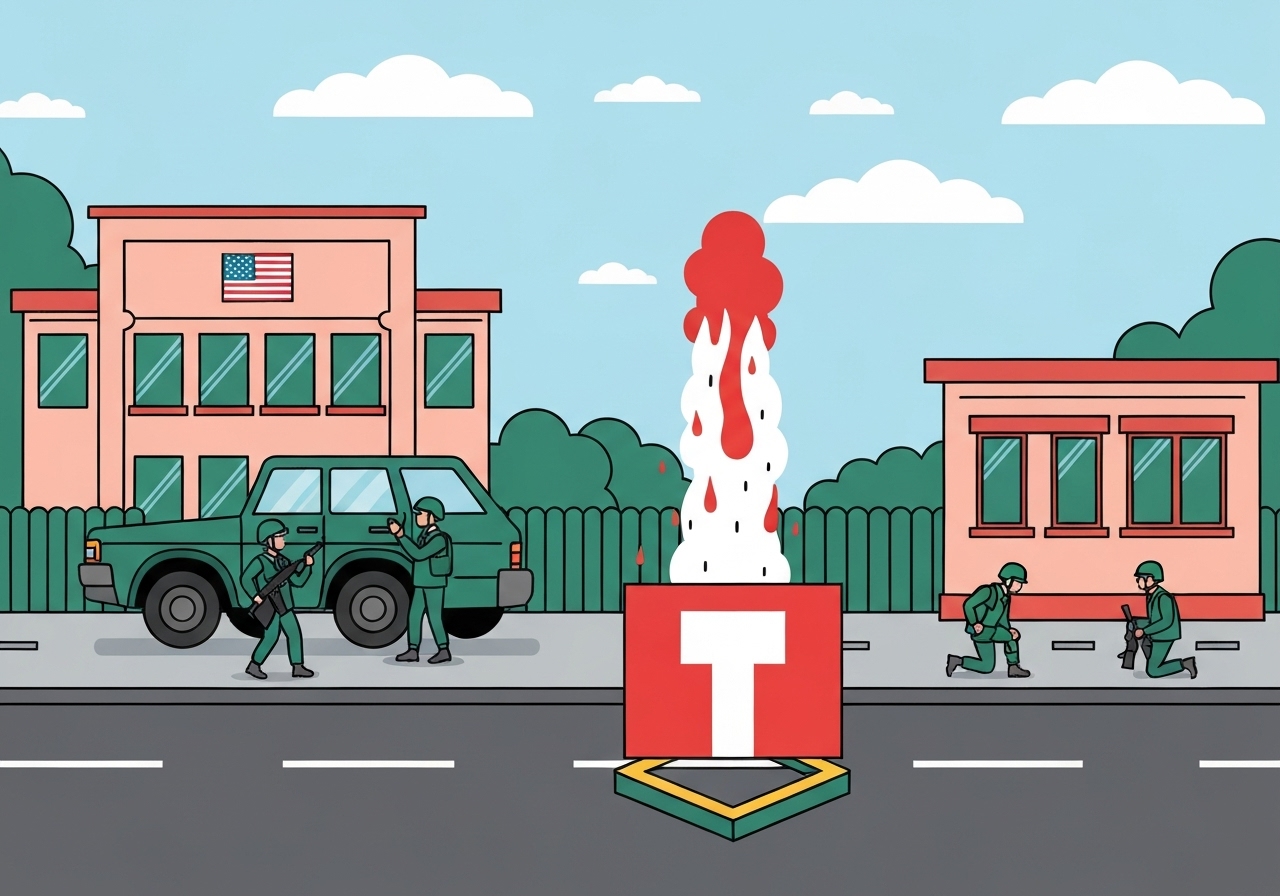
Lead: On December 15, 2025, in a White House Oval Office ceremony, President Donald Trump signed an executive order declaring street fentanyl a “weapon of mass destruction,” tying the drug’s manufacture and distribution to national security threats and border lawlessness. The move follows an expanding U.S. strategy that includes military strikes on suspected drug-running vessels and the formal labeling of cartels as terrorist organizations. Experts and public-health officials immediately disputed key factual claims in the announcement, including casualty figures cited by the president, and warned the designation is unlikely to reduce overdose deaths. The order, and accompanying rhetoric, mark a clear escalation in the militarization of U.S. drug policy with diplomatic and legal implications across the hemisphere.
Key Takeaways
- President Trump signed the executive order on December 15, 2025, in the Oval Office, formally labeling street fentanyl a weapon of mass destruction and tying distribution to national security risks.
- Trump claimed “two to three hundred thousand” fentanyl deaths annually; the CDC reports roughly 48,000 fentanyl-involved deaths last year, a 27% decrease from the year before.
- The administration has supported at least 22 military strikes on suspected drug boats in the Caribbean and eastern Pacific this year, an NPR analysis found, with more than 80 fatalities linked to those attacks.
- Provisional CDC data show about 76,000 U.S. drug overdose deaths in a recent 12-month period; cocaine accounted for roughly 22,000 U.S. deaths in 2024, per provisional CDC numbers.
- Only one documented international incident exists of fentanyl being delivered as an airborne weapon (Russia, 2002), and experts say large-scale weaponization of fentanyl is technically challenging.
- Prominent analysts from Brookings, Cato and other institutions argue the WMD designation and maritime strikes are unlikely to reduce U.S. overdose deaths and risk unintended consequences, including production shifts toward more lethal synthetics.
Background
The United States has confronted a decades-long rise in opioid-related harms that transformed in recent years as illicitly manufactured synthetic opioids, particularly fentanyl, became dominant contributors to overdose mortality. Public-health responses emphasized treatment expansion, naloxone distribution and harm-reduction measures while law enforcement targeted supply networks. Political pressure to show decisive action has pushed successive administrations to experiment with harder-line measures, including cross-border cooperation, asset seizures and new legal designations.
Since returning to office, President Trump and senior aides have elevated counter-narcotics policy in national security planning, framing certain trafficking groups as threats comparable to foreign terrorist organizations. That shift has coincided with a surge in military-style interdiction actions at sea and an increase in diplomatic pressure on regional partners. At the same time, the administration has issued high-profile pardons and commutations for several figures connected to narcotics prosecutions, a pattern that critics say undermines a consistent deterrent message.
Main Event
During the December 15 ceremony, the executive order text said the manufacture and distribution of fentanyl, largely carried out by organized criminal networks, threatens U.S. national security and fuels hemispheric lawlessness. President Trump framed the designation as a tool to mobilize a broader array of federal resources against traffickers and justify an expanded use of lethal force against maritime targets linked to smuggling. He characterized fentanyl-related family losses as comparable to wartime casualties and repeated a numerical claim that experts immediately questioned.
The administration has already authorized operations at sea and supported strikes on vessels suspected of trafficking illicit drugs. Officials argue the new designation clarifies the legal and operational rationale for employing military assets and for treating some cartel elements as foreign terrorist organizations. White House spokespeople insisted the moves are intended to save American lives and disrupt supply lines feeding U.S. street markets.
Opponents — including public-health researchers and trafficking specialists — say the policy conflates public-health and national-security problems and risks misdirecting scarce resources. They emphasize that fentanyl deaths in the U.S. primarily reflect addiction dynamics and domestic consumption patterns rather than a successful campaign by cartels to weaponize the substance. Those experts also warn that maritime strikes target routes more commonly associated with cocaine rather than fentanyl precursors and finished products.
Analysis & Implications
The WMD designation is largely symbolic but could have tangible operational effects by encouraging more aggressive interdiction and by lowering inhibitions against lethal force in international operations. However, legal limits and international-law obligations constrain use of force, and the practical ability to trace a given overdose to a specific foreign actor is limited. Military assets are poorly suited to address the downstream drivers of overdose risk such as addiction treatment access, poverty, and domestic supply chains.
Labeling fentanyl a weapon of mass destruction risks reframing a public-health crisis as a theater for kinetic action, with attendant costs. Analysts caution that increased pressure on certain trafficking routes can spur criminal networks to adapt by shifting production locations, changing smuggling modalities, or emphasizing synthetic drugs that are easier to produce in smaller facilities. That adaptive behavior could accelerate diffusion of even deadlier analogues, complicating harm-reduction efforts.
Diplomatically, the move may pressure regional governments to cooperate on interdiction, as Brookings analysts acknowledge, but it also risks backlash from countries that view militarized interventions or extraterritorial uses of force as an infringement on sovereignty. The order may deepen distrust in nations where U.S. strikes have caused civilian casualties, hampering long-term cooperation on interdiction, judicial reform, and public health responses that experts identify as central to reducing mortality.
Comparison & Data
| Claim / Measure | Number Cited | Best-available Data |
|---|---|---|
| President Trump’s fentanyl death claim | 200,000–300,000 per year | CDC: ~48,000 fentanyl-involved deaths last year (27% drop year-over-year) |
| Overall U.S. overdose deaths | — | CDC provisional: ~76,000 deaths in a recent 12-month period |
| U.S. maritime strikes this year | — | NPR analysis: at least 22 attacks; more than 80 dead |
| Cocaine deaths (2024 provisional) | — | CDC provisional: ~22,000 deaths |
The table contrasts public claims made by senior officials with available public-health and investigative data. Fentanyl-involved deaths are large and tragic but fall far short of the headline numerical range cited by the president. The geographic and logistical patterns of fentanyl production and distribution differ from those of cocaine, reducing the likely efficacy of maritime interdiction focused on Caribbean routes.
Reactions & Quotes
“Killing a drug mule has minimal effect on the flow of drugs, or the systems of criminal organizations.”
Vanda Felbab-Brown, Brookings Institution (expert on trafficking and addiction)
“I don’t know how you can equate smugglers meeting market demand and selling something illegal to someone who wants to buy it as an act of war.”
Jeffrey Singer, physician and drug-policy analyst, Cato Institute
“The President is right — any boat bringing deadly poison to our shores has the potential to kill 25,000 Americans or more.”
Anna Kelly, White House spokeswoman
These statements capture the policy divide: administration officials emphasize threat and deterrence; many analysts emphasize technical limits of interdiction and the primacy of domestic public-health interventions. Independent researchers point to mismatches between where fentanyl-related harms originate and where the administration is concentrating military pressure.
Unconfirmed
- The administration’s claim that each struck vessel would prevent 25,000 U.S. deaths is unverified and lacks transparent methodology.
- Assertions that cartels are deliberately weaponizing fentanyl at scale to inflict mass-casualty attacks remain unsupported by public evidence.
- Links between specific maritime strikes and measurable reductions in U.S. overdose deaths are not yet demonstrated in independent analyses.
Bottom Line
President Trump’s December 15 executive order formalizes a rhetorical and operational shift toward seeing illicit fentanyl through a national-security lens and escalates use of military tools in the drug fight. While the move may enable more robust interdiction efforts and political leverage with regional governments, available public-health data and expert analysis suggest it is unlikely, by itself, to reduce U.S. overdose deaths.
Policymakers face a trade-off: military and law-enforcement pressure can disrupt certain trafficking networks but will not substitute for expanded treatment, prevention, and harm-reduction programs that address demand and save lives. Observers should watch whether the administration pairs the WMD designation with measurable investments in public health, transparent metrics for interdiction effectiveness, and clear legal guardrails to limit unintended diplomatic and civilian harms.
Sources
- NPR (media analysis of strikes, reporting on December 15, 2025 ceremony)
- Centers for Disease Control and Prevention (official provisional overdose and fentanyl-involved mortality data)
- Brookings Institution (think tank analysis on trafficking and policy implications)
- Cato Institute (commentary from drug-policy scholars)
- National Defense University / Center for the Study of Weapons of Mass Destruction (2019 report on designating drug compounds as WMD — academic/military analysis)