
Lead
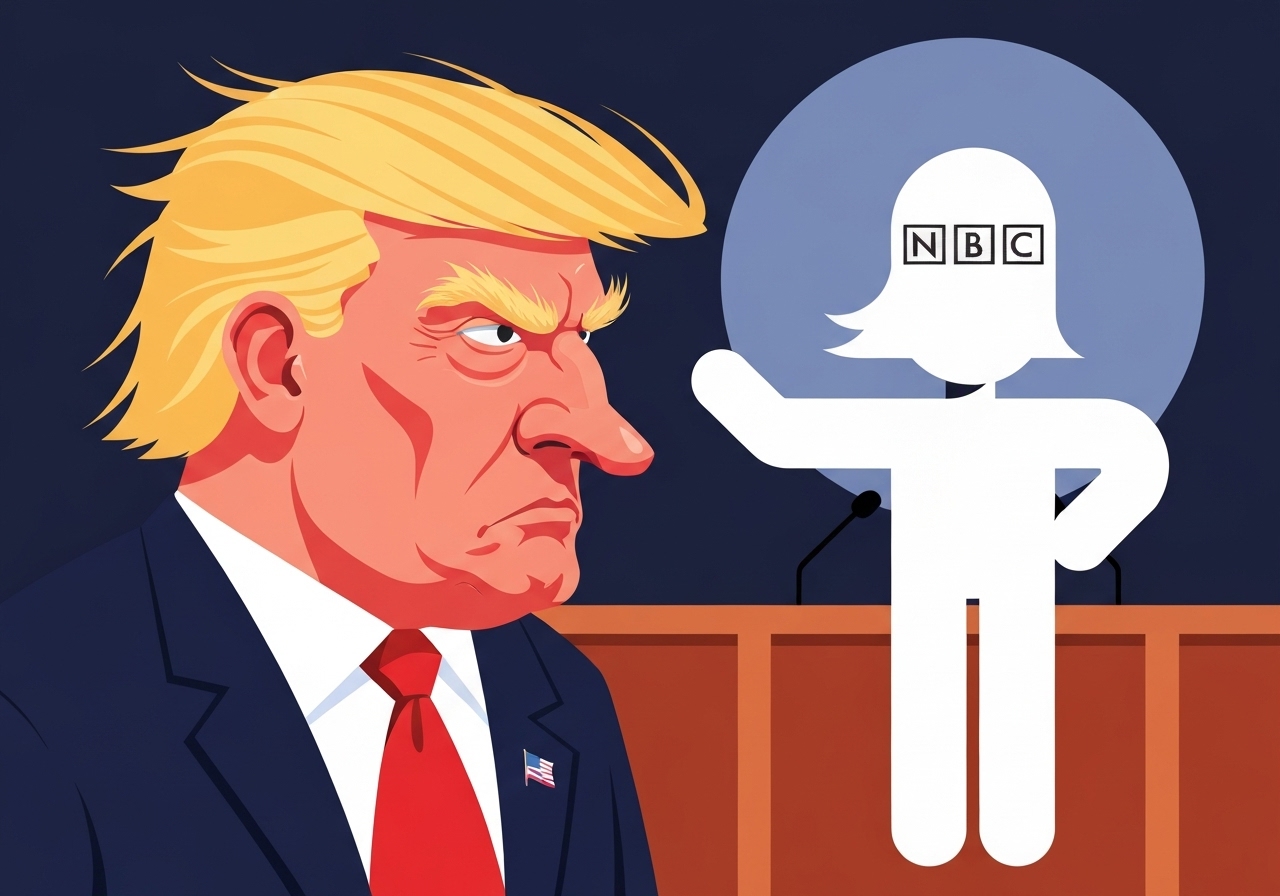
President Donald Trump filed a defamation lawsuit against the British Broadcasting Corporation in Miami federal court on Dec. 15, 2025, seeking at least $5 billion in damages. The complaint says a Panorama documentary aired one week before the 2024 U.S. election edited his remarks to create a false call for violence. The suit follows internal and public controversy at the BBC that led to senior departures and an apology from the broadcaster. Trump framed the filing as part of a wider effort to hold media organizations accountable for what he calls deceptive editing.
Key Takeaways
- Trump filed the suit in Miami federal court on Dec. 15, 2025, seeking a minimum of $5 billion in compensatory and punitive damages.
- The complaint centers on a Panorama film titled “Trump: A Second Chance,” aired one week before the Nov. 5, 2024, U.S. election and alleged to contain deceptive edits.
- The suit alleges a spliced sequence made it appear Trump said a contiguous sentence including “I’ll be there with you” and “And we fight,” which his filing says were spoken about 55 minutes apart.
- BBC Chair Samir Shah apologized for an “error of judgment,” and Director General Tim Davie and BBC News head Deborah Turness resigned after the controversy (photo of Broadcasting House dated Nov. 11, 2025).
- The BBC apologized publicly on Nov. 13, 2025, and pledged not to re-broadcast the documentary; the corporation said it disagrees that a defamation claim is warranted.
- CNBC reported and requested comment from the BBC; the network’s report is the principal publicly available account of the filing as of Dec. 16, 2025.
- Trump has a recent history of high-value defamation suits against media outlets, including filings against The New York Times ($15 billion, Sept. 2025) and CBS ($20 billion in Oct. 2024, later settled by parent companies).
Background
The Panorama documentary at the center of the lawsuit aired shortly before the 2024 presidential election and focused on Mr. Trump’s post-2020 conduct. According to the complaint, producers edited clips in a way that, the suit says, manufactured an apparent immediate call to violence during Mr. Trump’s Jan. 6, 2021, speech. Editing and montage have been long-standing flashpoints between major newsrooms and the figures they cover; producers say sequencing and context are part of craft while critics say montage can distort meaning.
In the weeks after the documentary’s broadcast, internal objections were reported inside the BBC, and senior management acknowledged an editorial error. On Nov. 13, 2025, the BBC issued an apology and pledged not to show the program again; shortly before that, Tim Davie and Deborah Turness resigned, and Chair Samir Shah described the edit as an “error of judgment.” Those moves intensified public scrutiny and amplified calls for accountability at national broadcasters.
Legally, defamation claims by public figures in the United States face a higher bar: plaintiffs must show false statements were made with actual malice, meaning knowledge of falsity or reckless disregard for the truth. Trump’s legal team frames the PBS documentary as part of a pattern of misleading edits, while BBC and independent media-ethics defenders see the dispute as both journalistic failure and a test of legal limits on reporting and editorial responsibility.
Main Event
The civil complaint filed in the U.S. District Court for the Southern District of Florida states the Panorama program “Trump: A Second Chance” presented edited footage that created a false impression that Mr. Trump had sequentially told supporters, “We’re going to walk down to the Capitol and I’ll be there with you. And we fight. We fight like hell…” The suit asserts that those words were not spoken in that order or as a single contiguous sentence.
Trump’s lawyers point to timing: the filing says the clause containing “And we fight” occurred nearly 55 minutes after the clause with “I’ll be there with you,” and that the Panorama edit joined them to imply an incitement. The complaint labels the segment “false, defamatory, deceptive, disparaging, inflammatory, and malicious” and alleges the BBC ignored internal concerns before airing.
The suit also accuses the BBC of acting with the intent to “interfere in and influence” the 2024 election to Trump’s detriment, a serious allegation that converts an editorial dispute into a purportedly political interference claim. The BBC has acknowledged the error in editing but maintains it does not accept the legal basis for defamation. CNBC requested comment from the broadcaster following the filing; the BBC has issued prior statements apologizing for the edit.
Publicly, Mr. Trump told reporters at the White House earlier on the day the complaint was filed that he would sue, saying the broadcaster had “put words in my mouth.” His filing joins a sequence of high-profile suits he has pursued against major media outlets in recent months and years, many seeking multibillion-dollar awards.
Analysis & Implications
Legally, a U.S. court will assess whether the BBC’s conduct meets the actual-malice standard established in New York Times Co. v. Sullivan. For a British broadcaster to be sued in a U.S. federal court, plaintiffs must show not only falsity and harm but also that the defendant’s editorial choices rose to the level of knowing falsehood or reckless disregard. That is a demanding test for public-figure plaintiffs and could make the case difficult to win on the merits.
Strategically, high damages demands—here at least $5 billion—serve multiple purposes: they signal seriousness, raise the reputational and financial stakes for defendants, and can influence settlement dynamics. But courts routinely reduce or dismiss inflated damage claims if plaintiffs cannot substantiate actual harm tied to the alleged defamation, or if jurisdictional and choice-of-law defenses prevail.
For the BBC, the dispute creates governance and editorial risk. The resignations and public apology reflect internal acknowledgement of a lapse, but legal exposure in the U.S. would be novel for the corporation at this scale. The broadcaster must balance a legal defense with ongoing efforts to restore public trust and demonstrate editorial safeguards to domestic and international audiences.
Politically, the case sharpens tensions over media accountability, perceptions of bias, and the international reach of U.S. litigants. If the suit proceeds, it will likely prompt careful discovery into editorial processes, communications among producers, and internal BBC deliberations—an intrusive legal inquiry that could further erode public confidence in affected newsrooms regardless of the final judicial outcome.
Comparison & Data
| Case | Filed | Claimed Damages | Outcome / Status |
|---|---|---|---|
| BBC / Panorama | Dec. 15, 2025 | $5 billion | Filed, pending |
| The New York Times | Sept. 2025 | $15 billion | Filed, pending |
| CBS / 60 Minutes | Oct. 2024 | $20 billion (original) | Parent settled for $16 million (July) |
| ABC / George Stephanopoulos | Dec. 2024 | Settlement $15 million | Settled |
These figures show a pattern: recent high-value suits by the same plaintiff often end in much smaller settlements or remain pending for lengthy litigation. Courts evaluate damages against provable reputational or economic harm and the strength of constitutional protections for speech about public figures.
Reactions & Quotes
“In a little while, you’ll be seeing I’m suing the BBC for putting words in my mouth. Literally, they put words in my mouth.”
President Donald Trump, comment to reporters
Trump made this statement at the White House shortly before the lawsuit was filed, framing the litigation as a response to an alleged reputational injury caused by the broadcast.
“While the BBC sincerely regrets the manner in which the video clip was edited, we strongly disagree there is a basis for a defamation claim.”
BBC statement (Nov. 13, 2025)
The BBC’s public statement acknowledged an editorial failing while rejecting the legal premise of the defamation suit; that dual posture leaves the corporation open to reputational criticism even as it contests liability.
Unconfirmed
- The suit alleges BBC ignored internal concerns before broadcasting; that internal process timeline is claimed by the plaintiff and not independently verified here.
- The complaint frames the Panorama program as part of a “longstanding pattern” of manipulation; whether that constitutes a demonstrable, litigation-ready pattern has not been independently adjudicated.
Bottom Line
The Trump v. BBC filing escalates a contentious dispute about a high-profile election-era documentary and its editorial choices. The $5 billion claim amplifies stakes but does not by itself determine liability; U.S. defamation law’s actual-malice standard will be central to the court’s assessment.
Beyond the courtroom, the episode pressures broadcasters to strengthen editorial safeguards and transparency around editing decisions. For the BBC, reputational repair and procedural reform will be as important as any legal defense, while for Mr. Trump the litigation continues a broader strategy of using civil suits to contest media coverage.