
Lead
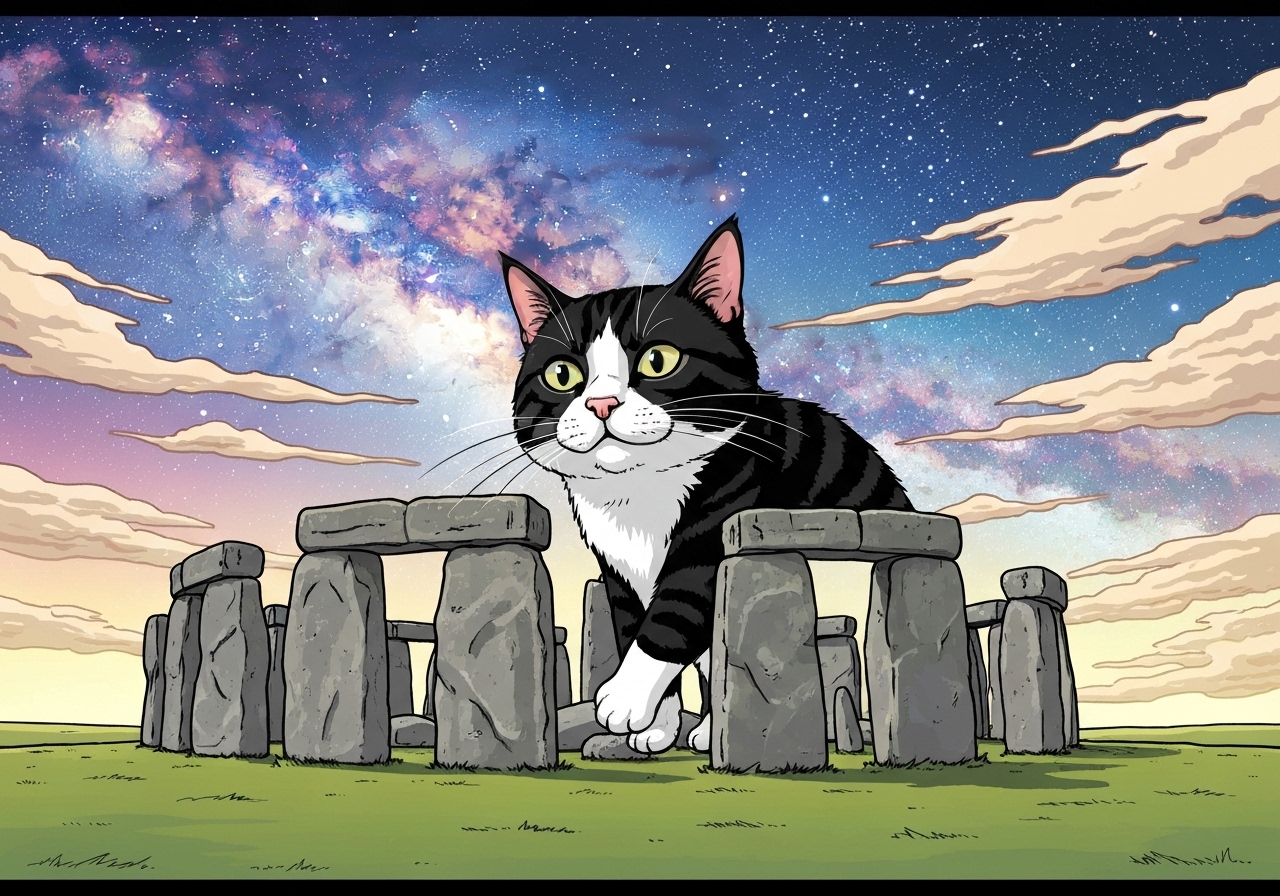
On Dec. 22, 2025, as thousands gathered at Stonehenge in Wiltshire to mark the winter solstice, a black cat nicknamed Moon became the most talked-about attendee. Per a viral clip, Moon sat atop one of the monument’s large sarsen stones and calmly watched the crowd celebrate the shortest day of the year. Organizers later said about 8,500 people attended the event, and the cat’s appearance drew widespread online attention. The animal’s owners — speaking via an intermediary to Storyful — described Moon as a long‑traveling companion with medical needs who nevertheless showed no fear amid the crowd.
Key Takeaways
- Event date: Dec. 22, 2025; winter solstice observances occurred at Stonehenge in Wiltshire, England.
- Attendance: English Heritage reported roughly 8,500 visitors at the site for the solstice celebration.
- Viral moment: A viral video shows a black cat, called Moon, perched on a Stonehenge stone while crowds gathered below.
- Owner account: An Instagram user told Storyful Moon travels in a van with her owners and has epilepsy and an underdeveloped brain hemisphere.
- Official reaction: Stonehenge/English Heritage thanked attendees and staff in a Facebook post, calling the gathering a “beautiful celebration.”
- Animal welfare note: Owners say Moon lacks a typical fear response; that characterization comes from the owners’ description rather than independent medical reporting.
Background
The winter solstice — the year’s shortest day — has drawn people to Stonehenge for decades. The site is managed by English Heritage and remains a focal point for both organized ceremonies and informal gatherings by visitors, pagans, and tourists. As a UNESCO World Heritage site, Stonehenge is protected and regulated to balance public access with conservation of the ancient stones and landscape. Public events at the monument generally attract thousands, particularly on solstice dates, when the orientation of the stones acquires symbolic meaning for many attendees.
Animals occasionally appear at public heritage events, but their presence at high‑profile sites raises practical questions about visitor safety, site protection, and animal welfare. English Heritage and local authorities coordinate stewarding and crowd management at busy times, but impromptu moments — such as a cat scaling a standing stone — can complicate those plans. In this instance, the incident was peaceful and short lived: the animal remained perched and then moved on without disrupting the event.
Main Event
Thousands arrived early on Dec. 22 to mark the solstice; as the crowd assembled, a black cat climbed onto one of the larger stones and sat in full view. Attendees filmed the scene on their phones, and clips circulated quickly across social platforms. The most widely shared video showed the cat calmly surveying the crowd from its high vantage point, drawing smiles and applause from onlookers.
Key details about the animal emerged after the video spread. An Instagram user, through Storyful, identified the cat as Moon and said she travels with owners in a van. The owner’s account included health information — that Moon has epilepsy and one underdeveloped brain hemisphere — and said those conditions contribute to her lack of flight response. Those personal details were relayed by the Instagram user to Storyful and then cited by news outlets reporting the clip.
English Heritage posted on Facebook after the event, thanking everyone who attended and praising staff, volunteers and partners for managing the solstice gathering. Their public statement emphasized that despite cold conditions, the morning was a successful celebration. Organizers tallied around 8,500 visitors for the solstice morning, a figure used in subsequent media coverage.
Analysis & Implications
Short, unexpected human‑interest moments like Moon’s appearance often amplify attention to heritage sites in ways official communications cannot. The viral clip generated broader public interest in the solstice event and Stonehenge itself, demonstrating how grassroots social media moments can function as de facto publicity for historic sites. That attention can translate into increased footfall at future events, raising both fundraising and conservation implications for site managers.
There are also animal‑welfare and site‑management considerations. While this incident was benign, unplanned animal entry onto monuments carries potential risks: animals could be injured, disturb sensitive areas, or prompt reactive behavior in visitors. English Heritage and stewards may review crowd and perimeter controls for high‑density events to reduce chances of similar occurrences while balancing public access and spontaneous cultural expression.
From a communications perspective, the episode highlights the speed at which secondhand accounts travel: owner statements relayed via social platforms and intermediaries like Storyful became part of the public narrative. That flow can spread useful context but also complicate verification of medical or ownership claims. Heritage organizations and journalists must therefore balance rapid reporting with clear labeling of what has been independently confirmed.
Comparison & Data
| Event | Reported attendance |
|---|---|
| Stonehenge winter solstice, Dec. 22, 2025 | ~8,500 |
The publicly reported figure for this year’s solstice is approximately 8,500 attendees. Publicly available, comparable attendance figures for other years are not provided here; crowd sizes typically vary year to year depending on access arrangements, weather and publicity. The single figure above is the confirmed statistic cited by organizers and used by news outlets covering the event.
Reactions & Quotes
“A big thank you to everyone who joined us this morning and to our brilliant staff, volunteers, and partners. It was a beautiful celebration, and despite the cold, we all enjoyed a wonderful winter solstice.”
Stonehenge / English Heritage (Facebook post)
“Her owners said that she’s been on the road with them in their travel van her whole life. She has epilepsy and an underdeveloped brain hemisphere, so she has no fight or flight and is scared of nothing and loves life!”
Instagram user (via Storyful)
Unconfirmed
- The medical details about Moon (epilepsy and underdeveloped hemisphere) are reported by the owners via an Instagram user and Storyful but lack independent veterinary verification in public reporting.
- Accounts that Moon has traveled her whole life in a van are based on owner testimony relayed through social media; independent documentation of the animal’s history has not been cited publicly.
- No public figures for video view counts or social‑media reach were available from primary platforms at the time of reporting; claims of “viral” status reflect widespread sharing across outlets rather than a single verified metric.
Bottom Line
A small, unexpected moment — a cat elegantly perched on a Stonehenge stone — turned a routine public observance into a widely shared human‑interest story on Dec. 22, 2025. The clip amplified attention to the solstice and to Stonehenge, where officials recorded about 8,500 attendees for the morning celebration. Owner accounts added a personal dimension, describing Moon as a nomadic companion with medical conditions that influence her behavior; those claims are meaningful but not independently verified here.
For heritage managers, the episode underscores the dual challenge of facilitating public ceremonies while protecting the site and ensuring safety for people and animals. For the public and journalists, it reinforces the need to distinguish firsthand, verified facts from appealing but secondhand anecdotes circulating online. Moon’s brief spotlight will likely remain a memorable footnote to the 2025 solstice — a reminder that even ancient places can produce spontaneous, contemporary stories.
Sources
- USA TODAY (news report summarizing event and interviews)
- Storyful (news agency, intermediary for Instagram user comments)
- English Heritage (Facebook) (official/manager post thanking attendees and staff)
- English Heritage — Stonehenge (official site information on the monument)