
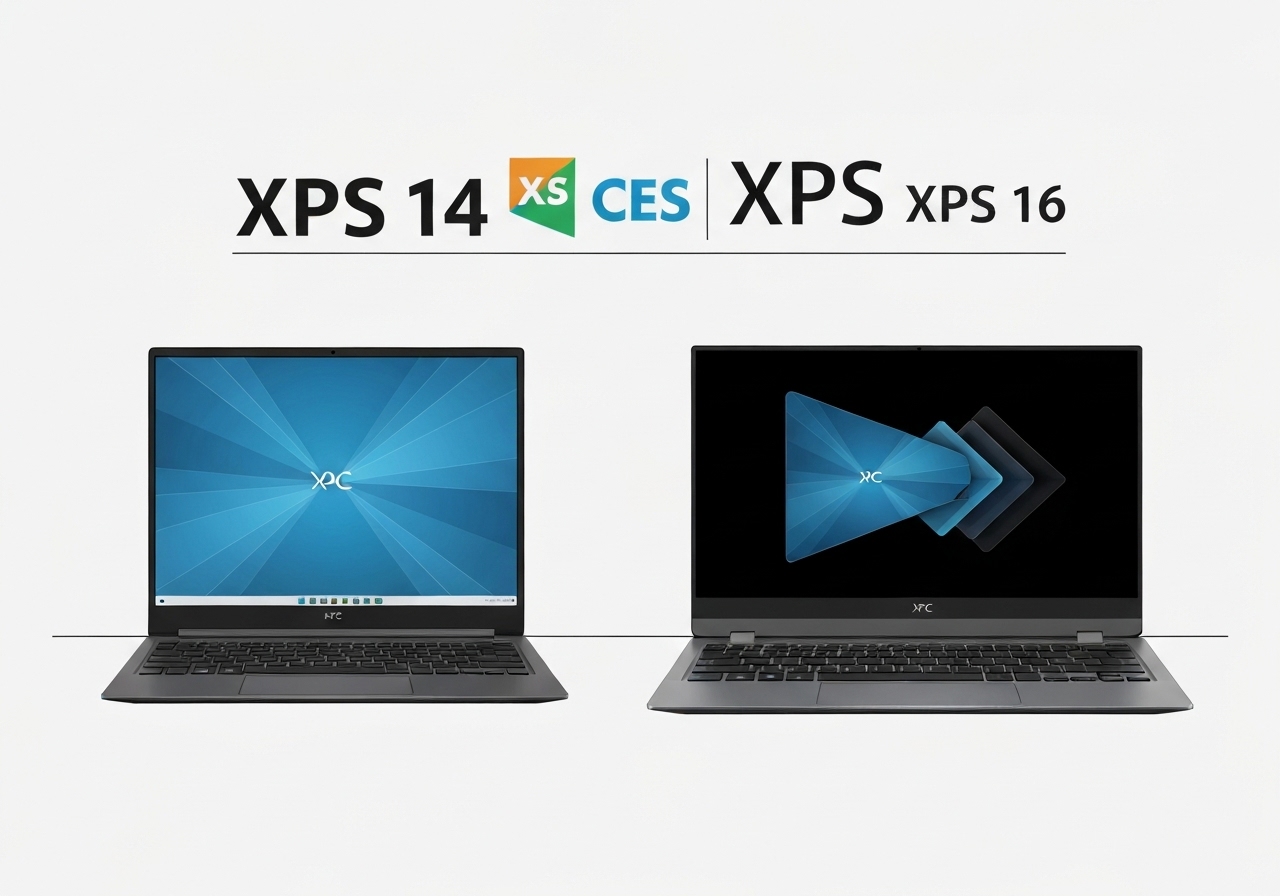
Lead: At CES 2026 in early January, Dell revived the XPS brand and unveiled two new models, the XPS 14 and XPS 16, aiming to reclaim the line’s performance-focused identity. The machines emphasize thinner aluminum construction, dedicated function keys, etched trackpad boundaries, and Intel’s new Panther Lake Core Ultra Series 3 processors. Dell confirmed select configurations go on sale January 6, with broader options arriving in February; launch prices start at $2,049 for the XPS 14 and $2,199.99 for the XPS 16. The company also said an Ubuntu 24.04 option for the XPS 14 will arrive later in 2026.
Key Takeaways
- Dell officially reinstated the XPS brand at CES 2026 and unveiled the XPS 14 and XPS 16 laptop models.
- Launch availability: select configurations on January 6; wider configurations in February; XPS 14 starts at $2,049 and XPS 16 at $2,199.99.
- Design highlights include all‑aluminum bodies, physical function-key rows, glass-etched trackpad borders, and two initial color options (graphite now, shimmer later).
- Base hardware: 1920×1200 IPS displays, 16GB LPDDR5X, 512GB SSD, and Intel Core Ultra 5 325; optional tandem OLEDs (2880×1800 for 14″, 3200×2000 for 16″).
- Port and battery specs: three USB-C / Thunderbolt 4 ports, 70Wh battery cells, speakers rated at 10W, and variable refresh from 1Hz to 120Hz to preserve power.
- Weights: as light as 3.0 lb (1.36 kg) for the 14″ and 3.65 lb (1.65 kg) for the 16″ models; no discrete GPU options at launch.
- Dell previewed a separate XPS 13 for later in 2026, promising sub‑13mm thickness and a return to a chiclet keyboard to lower costs.
Background
For decades the XPS name signaled Dell’s top-tier consumer and prosumer laptops, pitched as Windows equivalents to Apple’s MacBook Pro. Nearly a year before CES 2026, Dell moved away from the XPS label in favor of generic Premium/Plus/Pro/Pro Max tier names, a shift that drew criticism from long-time XPS buyers and reviewers. The original XPS identity carried expectations around premium materials, compact engineering and a balance of performance and portability—standards many buyers use when choosing high-end Windows laptops.
Those expectations set the stage for Dell’s course correction. The company’s PC division has faced mixed reviews for design choices and inconsistent messaging, and the decision to restore XPS indicates a strategic effort to re-establish clarity and emotional appeal in the product lineup. Stakeholders include enterprise and individual customers who value build quality and battery life, Intel (as CPU supplier), and the broader Windows laptop market where Apple’s MacBooks remain a strong alternative.
Main Event
Dell’s XPS 14 and XPS 16 emphasize thinness and refined details. Both machines use an all‑aluminum chassis, a restored physical function key row, and a latticeless keyboard design that remains controversial but has returned from the earlier generation. A subtle etched border now marks the edges of the haptic trackpad, addressing a long-standing usability complaint about detecting trackpad limits by feel alone.
Under the hood the new models ship with Intel’s Panther Lake Core Ultra Series 3 processors, with the base configuration using the Core Ultra 5 325. Memory and storage at launch include 16GB of LPDDR5X and a 512GB SSD, while higher‑end options and the Core Ultra X9 388H are slated to appear later. Dell offers two display pipelines: a base 1920×1200 IPS panel and brighter tandem OLED panels—2880×1800 on the 14″ and 3200×2000 on the 16″—that shave millimeters and ounces compared with prior generations.
Battery life and efficiency were emphasized: both models include 70Wh cells and variable refresh displays that can scale from 120Hz down to 1Hz, even on the base IPS panels, to conserve power when viewing static content. Dell also highlighted three USB-C / Thunderbolt 4 ports and 10W speaker modules. Notably, neither size offers discrete graphics at launch, positioning these XPS models as thin, battery-focused workhorses rather than gaming rigs.
Availability is staggered: select configurations are available January 6, with entry-level and additional higher‑spec options rolling out in February. Colors begin with a graphite finish, while a champagne-like “shimmer” finish will follow later in 2026. Dell separately teased an XPS 13 coming later in the year, promising a sub‑13mm profile and a return to a chiclet-style keyboard intended to reduce costs and lower the starting price point.
Analysis & Implications
Brand restoration is as much strategic as it is stylistic. Bringing the XPS name back helps Dell reconnect with buyers who associate XPS with a particular mix of premium materials and Windows-first engineering. That symbolic move—backing names with visible design fixes like physical function keys and trackpad etching—targets critics who cited a drift from the line’s original strengths after last year’s rebranding.
On hardware, Dell’s emphasis on thinness, OLED options and aggressive power profiles signals a push to compete directly with Apple’s MacBook Air and MacBook Pro lines on portability and screen quality. The absence of discrete GPUs keeps the XPS 14 and 16 squarely in the productivity and creator space rather than in content‑creation or gaming segments that demand high-end dedicated graphics. This trade-off supports longer battery life and lighter weight but may limit appeal for users who need heavy GPU horsepower.
Pricing and configuration strategy will be key to uptake. With launch prices north of $2,000, Dell must justify the premium through battery life, screen quality, and build materials. The company’s stated plan to offer a lower-cost XPS 13 with a chiclet keyboard suggests a two‑tier approach: flagship aesthetic and materials for those who pay more, and a more price-sensitive XPS option later in the year.
Intel’s Panther Lake CPUs and the promise of later X9 SKUs mean performance headroom will expand over time, but early buyers should expect balanced CPU performance optimized for thin-and-light thermals rather than sustained high-power workloads. For enterprise buyers, the return of a clearer brand and predictable design language could simplify procurement decisions, while consumer reviews will likely focus on battery life, thermal control, and whether the high starting price delivers visible value.
Comparison & Data
| Model | Display (base / optional) | Weight | Battery | Starting Price |
|---|---|---|---|---|
| XPS 14 | 1920×1200 IPS / 2880×1800 OLED | ≈3.0 lb / 1.36 kg | 70Wh | $2,049 |
| XPS 16 | 1920×1200 IPS / 3200×2000 OLED | ≈3.65 lb / 1.65 kg | 70Wh | $2,199.99 |
The table highlights the two models’ trade-offs: closely matched battery capacity with different display and weight targets. Both models use variable refresh rates down to 1Hz and initial LPDDR5X memory and 512GB SSDs, emphasizing power efficiency and responsiveness. The lack of discrete GPUs differentiates these XPS machines from thicker workstation-class laptops and sets buyer expectations around the intended workloads.
Reactions & Quotes
Dell’s leadership framed the return as course correction. At a December preview, COO Jeff Clarke addressed media attendees and acknowledged the company had drifted from its established direction for PCs, promising to “get back on course” with the XPS refresh and renewed focus on core design priorities.
“We’ve been a bit off‑course in our PC business. We’re going to get back on course and get back to our roots.”
Jeff Clarke, Dell COO (public remarks at Dell preview)
Dell’s design chief explained choices around keyboards and cost. The company said the forthcoming XPS 13 will adopt a chiclet-style keyboard primarily for cost efficiency and to enable a lower entry price for that model.
“A chiclet‑style keyboard is more cost efficient to execute,”
Justin Lyles, Head of Design, Dell (statement to press)
Early reviewer impressions focused on build quality and practical fixes. Journalists who saw pre-release units noted that the etched trackpad rim and physical function keys address usability complaints from prior XPS models while praising the thinner aluminum construction and improved screen options.
Unconfirmed
- Exact brightness and battery runtimes for the optional OLED panels have not been independently measured and remain manufacturer claims until third‑party reviews.
- Timing and exact pricing for higher-end CPU options such as the Core Ultra X9 388H are listed as coming later and are not yet firm.
- The Ubuntu 24.04 configuration timing is described as “later this year” by Dell; a specific release date and regional availability are unconfirmed.
Bottom Line
Dell’s reintroduction of the XPS name is a clear attempt to recapture a familiar identity and to reassure buyers who value premium design and practical functionality. The XPS 14 and XPS 16 bring visible, addressable refinements—function keys, trackpad etching, thinner OLED options—and prioritize battery life over discrete GPU performance.
Early impressions suggest a credible return to form for the XPS line, but success will depend on how the models perform in real-world battery and thermal testing, and whether later configurations deliver meaningful performance upgrades at competitive prices. The teased XPS 13 with a chiclet keyboard signals Dell’s intent to broaden appeal with a lower‑cost entry point later in 2026.