
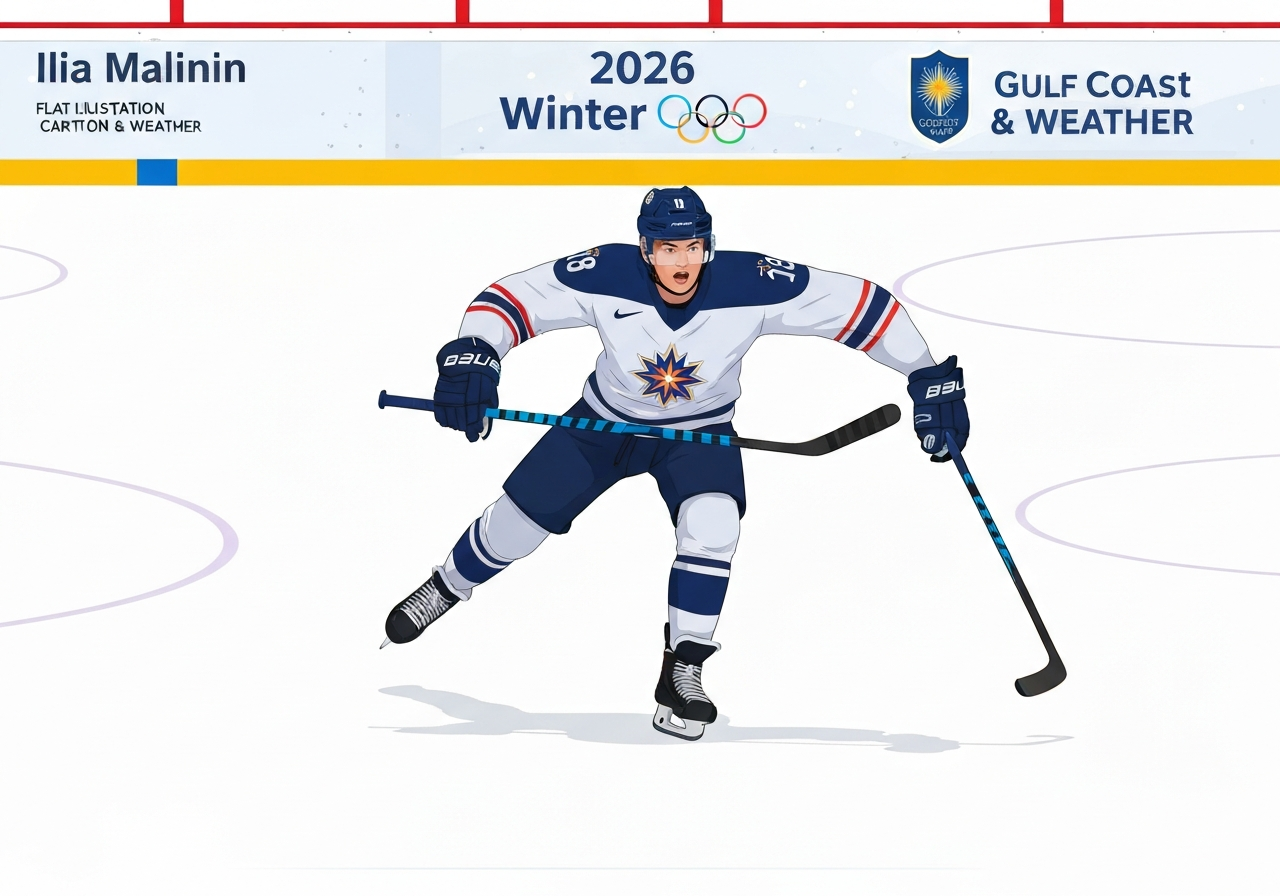
Lead: Friday at the 2026 Milan Cortina Winter Olympics produced a packed slate of competition and narrative shifts, led by two-time world champion Ilia Malinin and a surging U.S. women’s hockey team. Malinin, the American “Quad God,” entered the weekend as the favorite after leading the short program on Tuesday with a score of 108.16 but did not finish on the free-skate podium. The U.S. women’s hockey side, captained by Hilary Knight, advanced past Italy and into the semifinals after a 6-0 quarterfinal, continuing a 20-1 preliminary run. Across Italy, seven medal events delivered breakthrough golds, milestone ties and national firsts.
Key Takeaways
- Ilia Malinin led the men’s short program with 108.16 on Tuesday but ultimately did not place on the free-skate podium after Friday’s final segment.
- Team USA women’s hockey outscored opponents 20-1 in four preliminary games and beat Italy 6-0 in the quarterfinal to reach the semifinals; captain Hilary Knight is tied at 32 all-time Team USA points.
- Japan’s Yuto Totsuka won men’s snowboard halfpipe gold, ahead of Australia’s Scotty James and Japan’s Ryusei Yamada (bronze).
- Nineteen-year-old Metodej Jilek won Olympic speed skating 10,000m gold, becoming the first Czech man and the second teenage boy to win that event.
- Quentin Fillon Maillet captured biathlon 10km sprint gold — his fourth Olympic gold medal — showcasing shooting precision and fast skiing.
- Australia’s Josie Baff took the nation’s first Olympic women’s snowboard cross medal with gold; Czech Eva Adamczykova and Italy’s Michela Moioli completed the podium.
- Norway’s Johannes Høsflot Klæbo won the men’s 10km free, earning his eighth Olympic gold and tying the Winter Games record for most gold medals.
Background
Ilia Malinin emerged over the last Olympic cycle as a leading figure in men’s figure skating because of his consistent execution of high-difficulty jumps, including multiple quadruple Axel attempts in international competition. His short-program lead with 108.16 on Tuesday positioned him as the favorite heading into the free skate, but pressure and the free program’s margin for error have previously upended expectations at major championships.
U.S. women’s hockey arrived in Milan Cortina with a strong roster and high expectations after recent dominant international results. Captain Hilary Knight’s veteran presence has been central; she entered Friday tied with former teammate Jenny Potter at 32 all-time Team USA points. The Americans’ preliminary goal differential (20-1) established them among the tournament favorites.
The 2026 schedule concentrated several marquee finals on Friday — from the endurance tests of cross-country and speed skating to technical and judged events like figure skating and halfpipe. That mix created a single day’s worth of shifting headlines, from historic national milestones to upset victories and individual personal moments on and off the ice.
Main Event
Figure skating’s men’s competition saw Ilia Malinin’s short-program top score (108.16) set the table for an anticipated free skate showdown. Despite the initial lead and high expectations, the free skate did not yield a podium finish for Malinin. He later described his emotional response to the result and reflected on the mental demands of elite competition; his performance became one of the day’s central narratives.
In women’s ice hockey, Team USA controlled the quarterfinal versus Italy. The Americans scored six goals from five different players in a 6-0 victory, advancing to the semifinals. The shutout extended the team’s strong tournament form and left Hilary Knight poised to surpass Jenny Potter’s Team USA points total if she adds to her 32 points in remaining games.
The snowboard halfpipe final produced a Japanese one-two with Yuto Totsuka claiming gold and Ryusei Yamada taking bronze; Australia’s Scotty James finished between them for silver. The event was notable for heavy conditions and tight scoring, with Totsuka delivering a standout run to secure top honors.
On the endurance and precision side of the program, Metodej Jilek, 19, won the 10,000m speed skating race in his Olympic debut — a rare teenage victory and a first for Czech men in the event. In biathlon, Quentin Fillon Maillet won the 10km sprint, adding a fourth Olympic gold to his career total through accurate shooting and aggressive ski pacing.
Analysis & Implications
Malinin’s trajectory underscores the growing technical ceiling in men’s figure skating: quad jumps and risk-taking now define gold-medal windows, but they increase volatility. A short-program lead is influential but not decisive; the free skate’s longer format magnifies errors and tests athletes’ consistency under Olympic pressure. For Malinin, this result will prompt tactical decisions about content, mental preparation and how to balance ambition with consistency.
Team USA women’s hockey appears to have reasserted international dominance through depth of scoring and defensive control. The 6-0 quarterfinal and 20-1 tournament margin reflect both offensive breadth and goaltending reliability. If Knight can add to her point total, she may set a new Team USA record — a milestone that would further cement her legacy but depends on performance in the medal rounds.
Jilek’s gold at 19 signals a generational pivot in long-distance speed skating; teenage winners are rare in 10,000m Olympic history, so this result could inspire renewed investment in Czech long-track development. Likewise, Maillet’s fourth gold cements his status as a biathlon all-time performer and gives France continued momentum in the sport ahead of World Cup seasons.
The variety of national firsts and ties — from Australia’s first women’s SBX gold to Klæbo’s record-tying eighth Olympic gold — highlights the dual nature of these Games: established stars extending legacies while new nations and young athletes seize breakthrough moments. That mixture is likely to influence funding priorities, sponsorship interest, and national program strategies post-Games.
Comparison & Data
| Event (Fri) | Gold | Nation | Notable |
|---|---|---|---|
| Men’s snowboard halfpipe | Yuto Totsuka | Japan | Topped Scotty James; heavy final conditions |
| Men’s 10km (cross-country) | Johannes Høsflot Klæbo | Norway | Tied record with eighth Olympic gold |
| Speed skating 10,000m | Metodej Jilek | Czech Republic | 19-year-old, first Czech man to win |
| Biathlon 10km sprint | Quentin Fillon Maillet | France | Fourth Olympic gold |
| Women’s snowboard cross (SBX) | Josie Baff | Australia | Australia’s first women’s SBX Olympic medal (gold) |
These results show a mix of expected outcomes (established champions extending records) and surprise breakthroughs (young or first-time national winners). The table omits events where no confirmed medalist was supplied in reporting, preserving factual accuracy.
Reactions & Quotes
“Maybe I was too confident.”
Ilia Malinin
“I have no words.”
Ilia Malinin
Team officials and commentators reacted to the U.S. women’s 6-0 quarterfinal win by emphasizing depth and defensive structure rather than individual scoring. Analysts noted Jilek’s youthful pacing strategy and Maillet’s combination of clean shooting and aggressive skiing as textbook approaches for the 10km events. Curling and mixed-team stories prompted attention to athletes balancing careers and Olympic sport, with reporters highlighting human-interest angles alongside results.
Unconfirmed
- Details on the men’s skeleton medalists for Friday were not provided in the summary and remain unconfirmed here.
- Hilary Knight breaking the all-time Team USA points record is possible but unconfirmed until she adds points in remaining games.
- Specific judges’ scoring breakdowns and technical-element calls for Malinin’s free skate require official protocols and were not available in the cited reporting.
Bottom Line
Friday at Milan Cortina combined expected headline outcomes with memorable breakthroughs: established stars such as Quentin Fillon Maillet and Johannes Høsflot Klæbo consolidated legacies while young athletes like Metodej Jilek delivered historic firsts. Ilia Malinin’s short-program lead and subsequent free-skate disappointment underscore how technical ambition and Olympic pressure can produce mixed results.
For Team USA, the women’s hockey performance reinforced tournament favoritism but left narrative threads — like Hilary Knight’s potential record and the team’s adaptability in medal-round pressure — to be resolved in the semifinal and medal games. Across sports, national programs will weigh these results when planning for World Cup seasons and the next Olympic cycle.
Sources
- Gulf Coast News and Weather — media report with event highlights and quotes (news)
- Olympics.com — official IOC results and schedules (official)
- International Skating Union (ISU) — athlete bios and technical rules (governing body)