
Lead
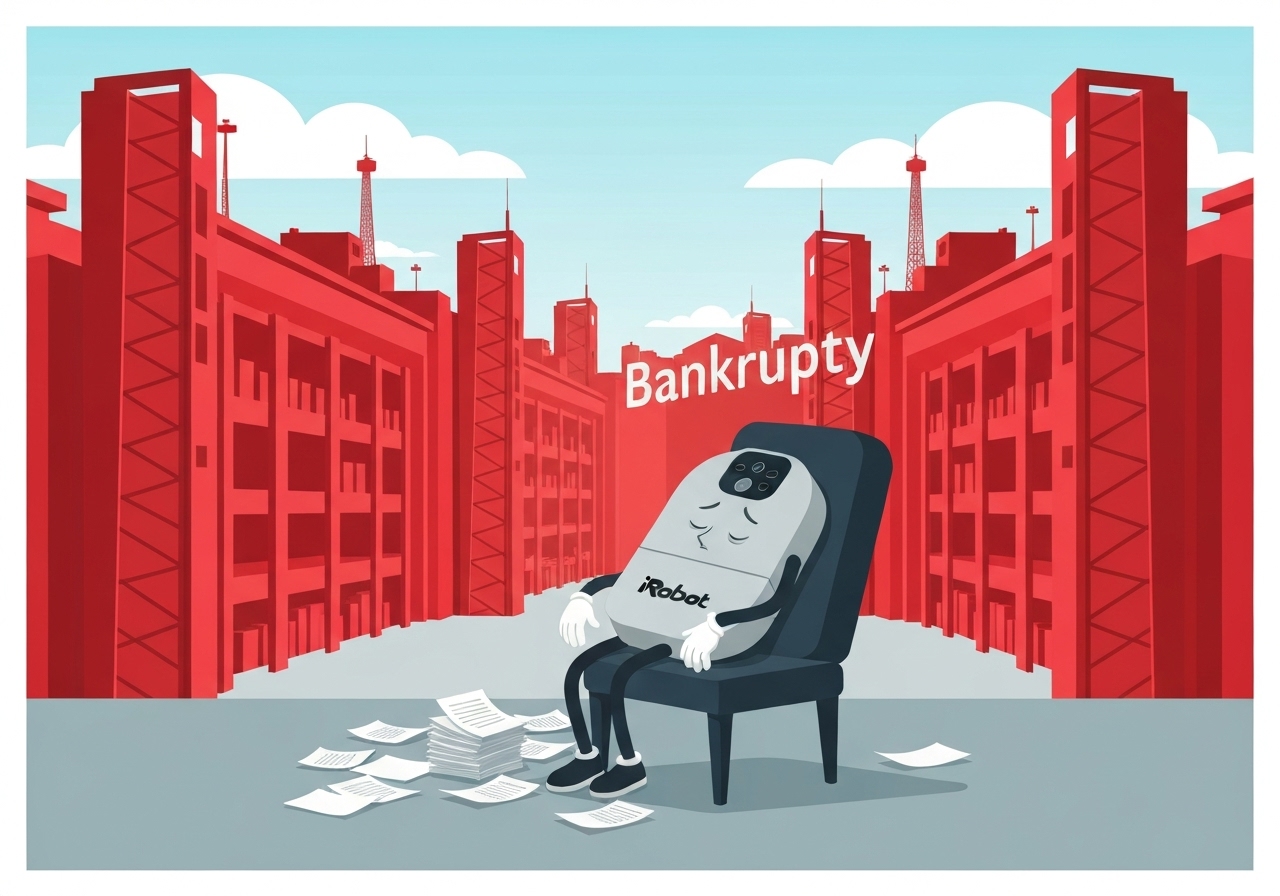
iRobot, the U.S. company behind the Roomba vacuum, filed for bankruptcy on Dec. 15, 2025, and will be transferred to its largest creditor — its Chinese supplier. The move follows years of declining sales, data-privacy scrutiny and intensifying competition. The supplier, Shenzhen-based Picea Robotics, is set to assume control as part of a court-approved restructuring plan. Executives say the change aims to stabilize operations and preserve the brand’s long-term future.
Key Takeaways
- iRobot filed for bankruptcy protection on Dec. 15, 2025, and will be handed to its largest creditor, its Chinese supplier, under a restructuring plan.
- The company was founded in 1990 by three M.I.T. researchers and launched the Roomba in 2002, a product that became emblematic of consumer robotics.
- iRobot devices have been used in notable non-consumer roles, including military deployments, the 2001 World Trade Center search and an oil-spill response in the Gulf of Mexico.
- Picea Robotics, founded in 2016 in Shenzhen, makes components for Xiaomi, Haier and Electrolux and sells its own home robot brand, 3i.
- iRobot’s revenue contraction is attributed to heightened regulatory scrutiny, data-privacy concerns and competition from lower-cost rivals, including Picea.
- The takeover transfers operational control to a supplier with deep ties to Chinese appliance makers, raising questions about manufacturing, IP and market strategy.
Background
iRobot began in 1990 when three researchers at the Massachusetts Institute of Technology started developing robots for practical tasks. The company’s early work extended beyond households: its robots were deployed with U.S. ground forces and participated in the search at the World Trade Center after the Sept. 11, 2001 attacks, illustrating a broader utility for robotics in hazardous environments. The firm’s consumer breakthrough came in 2002 with the Roomba, which popularized the concept of an autonomous cleaning device in average homes.
Over the ensuing decades, iRobot grew into a visible name for domestic robotics but faced mounting pressures. The consumer-robotics market matured with numerous competitors offering cheaper alternatives and integrated smart-home features. At the same time, concerns about how robot vacuums collect, store and share data drew attention from regulators and privacy advocates, complicating sales in certain markets and channels.
Main Event
On Dec. 15, 2025, iRobot filed for bankruptcy and disclosed that its largest creditor, a Chinese supplier, will assume control through a restructuring agreement. The supplier, Shenzhen Picea Robotics, had already been a significant partner: it manufactures components for large appliance makers and sells its own cleaning robot line. Under the restructuring, creditor claims will be converted into equity, effectively handing operational ownership to the supplier as part of the court-supervised process.
Company leadership framed the transition as a necessary measure to secure the firm’s future presence in the global market. iRobot executives emphasized continuity for product support and existing warranties while indicating the new ownership would invest in manufacturing and supply-chain stability. At the same time, the change in control has prompted scrutiny from stakeholders concerned about intellectual property, data governance, and the brand’s independence.
Market competitors reacted quickly: lower-cost rivals have tightened distribution and promotional activity in the weeks leading up to the filing, intensifying price and feature competition. Retail partners and distributors are evaluating inventory and service arrangements amid uncertainty about long-term product road maps and component sourcing under Picea’s stewardship.
Analysis & Implications
The transfer of iRobot to Picea is notable for several reasons. First, it reflects how capital structures — significant supplier credit lines and component financing — can translate into control when a manufacturer faces sustained revenue pressure. Second, the move underscores the competitive dynamics in consumer robotics, where scale, low-cost manufacturing and rapid feature iteration advantage firms with deep supplier networks.
For U.S. and European markets, the change raises regulatory and supply-chain questions. Controllers of household devices increasingly face scrutiny over data flows and foreign investment; a Chinese supplier assuming control of a U.S.-founded brand will prompt renewed attention from regulators and privacy advocates, particularly around firmware updates and telemetry data handling. Companies that handle sensitive consumer data now need clearer governance and transparent safeguards to maintain market access.
Strategically, Picea gains a recognized consumer-facing brand and iRobot gains a closer manufacturing partner, which may reduce unit costs and improve production resilience. However, brand stewardship and long-term innovation depend on whether the new owner preserves R&D investments and the firm’s ecosystem relationships with retailers and software partners. If the buyer focuses primarily on manufacturing efficiencies, product differentiation through software and service could suffer.
Comparison & Data
| Year/Event | Significance |
|---|---|
| 1990 | iRobot founded by three M.I.T. researchers — start of the company |
| 2001 | iRobot devices used in World Trade Center search — early non-consumer deployment |
| 2002 | Roomba introduced — consumer breakout product |
| 2016 | Picea Robotics founded in Shenzhen — future supplier and acquirer |
| Dec. 15, 2025 | iRobot files for bankruptcy; Picea poised to take control via restructuring |
This timeline highlights how iRobot evolved from an R&D-focused start-up to an internationally recognized consumer brand and, ultimately, to a company whose capital structure and competitive pressures led to a creditor-led transfer. While this table lists key dates, detailed financial figures cited in filings would clarify the scale of revenue decline and creditor exposure.
Reactions & Quotes
“The acquisition by our supplier will help secure iRobot’s long-term future and keep support for customers intact,”
iRobot chief executive (company statement)
The company framed the deal as protective of customer support and warranty obligations; executives emphasized continuity of service while seeking to reassure users and retailers. The statement focused on supply-chain advantages and operational stability under the new ownership.
“This is a reminder that hardware brands dependent on external suppliers are vulnerable when market shifts occur,”
Industry analyst (independent robotics market analyst)
Analysts noted that the outcome is not only about one firm but about structural risks in consumer robotics — tight margins, rapid commodification and reliance on component suppliers who can become pivotal creditors.
Unconfirmed
- No public court filing details on the precise amount of creditor claims converted to equity have been independently verified at the time of reporting.
- It is not yet confirmed whether Picea will maintain iRobot’s existing R&D centers or shift development to its own facilities.
- Specific regulatory reviews or national security assessments related to the transfer have not been publicly disclosed.
Bottom Line
iRobot’s bankruptcy and transfer to a supplier-owner is a consequential development for the consumer-robotics industry. It demonstrates how market competition, data concerns and financing structures can reshape ownership of iconic technology brands. For consumers and partners, the immediate priorities are clarity on warranties, data governance and product support under new management.
Looking ahead, observers should watch for regulatory responses, changes to iRobot’s product road map and how Picea balances manufacturing efficiencies with investments in software and services. Those factors will determine whether the Roomba brand retains its market position or evolves into a different competitive role under supplier stewardship.