
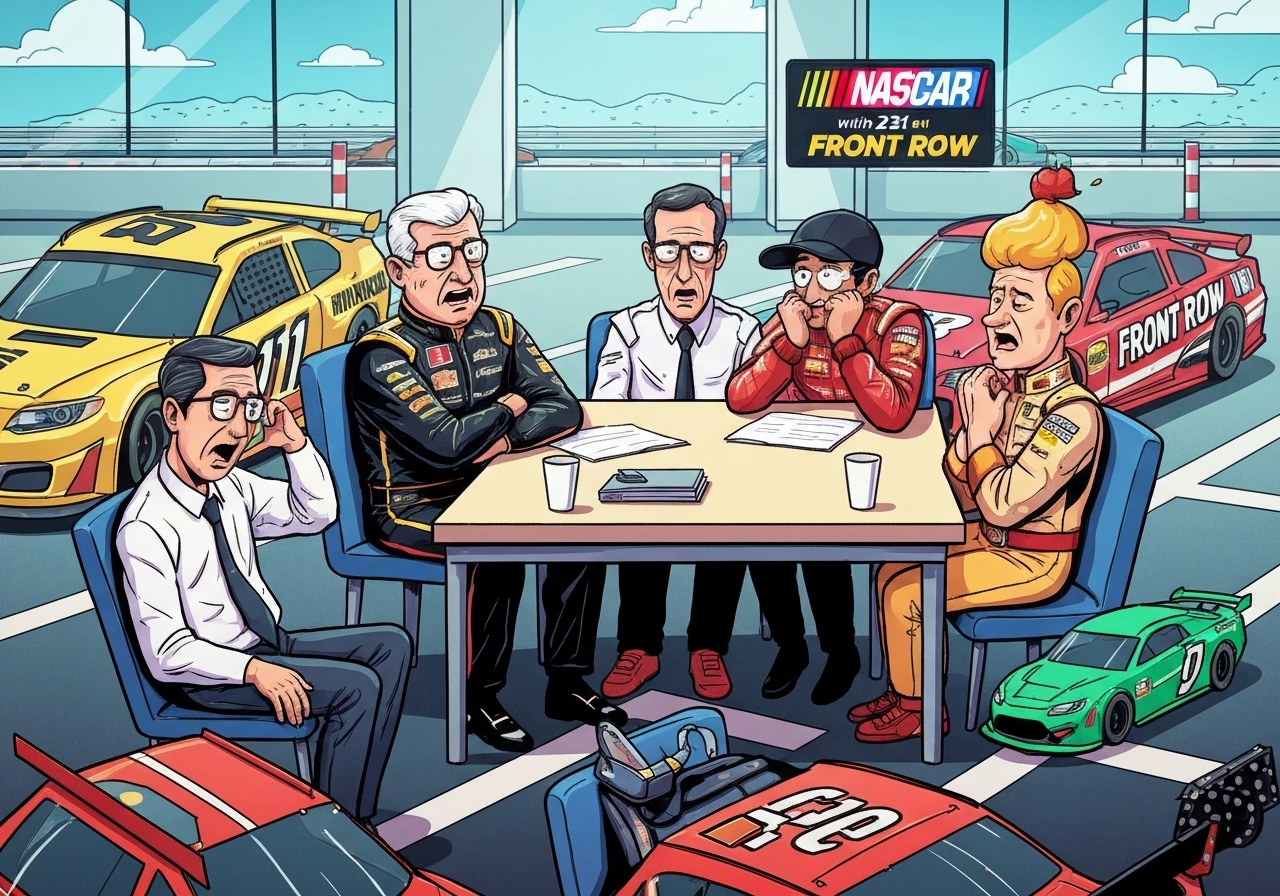
Lead: NASCAR and two plaintiff teams—Michael Jordan’s 23XI Racing and Front Row Motorsports—announced a settlement in federal court on Thursday, Dec. 11, 2025, concluding a 14-month antitrust dispute that had culminated in an eight-day trial. Attorneys for the teams said the agreement restores each organization’s three charters and aims to resolve the charter-negotiation impasse that triggered the lawsuit. Judge Kenneth D. Bell praised the deal in court and described it as the correct outcome for the sport. Team owners and NASCAR leadership exchanged public expressions of relief and a recommitment to focusing on racing going forward.
Key Takeaways
- NASCAR and plaintiffs 23XI Racing and Front Row Motorsports reached a settlement in court on Dec. 11, 2025, ending a 14-month legal battle and eight days of trial testimony.
- As confirmed by reporting, both 23XI and Front Row each regained their three charters that had been at the center of the dispute.
- The lawsuit alleged anticompetitive conduct surrounding a 2024 charter-extension negotiation that 13 charter holders accepted and 23XI/Front Row rejected.
- Judge Kenneth D. Bell endorsed the settlement, noting benefits to NASCAR, teams, drivers and fans, and presiding over the final court proceedings.
- High-profile figures who testified included Michael Jordan, Denny Hamlin, Jim France, Steve O’Donnell and Steve Phelps; the litigation produced contentious discovery including inflammatory internal messages.
- Charter valuations have surged in recent years—from lows near $2 million to a reported $45 million sale this summer—raising the financial stakes in the case.
- Both sides spent eight-figure sums on legal fees and engaged antitrust specialists: Jeffrey Kessler for the teams and Chris Yates for NASCAR.
- The settlement terms beyond the return of charters were still being finalized in court Thursday and had not been publicly disclosed in full.
Background
The dispute began after NASCAR proposed a charter-extension arrangement in 2024 that 13 charter-holding teams signed; Front Row Motorsports and 23XI Racing declined. In essence the charter system functions like a franchise: one of 36 charters guarantees entry into every Cup Series points race and certain revenue protections. The teams that refused to sign alleged the extension was effectively a take-it-or-leave-it deal and later accused NASCAR and chairman and CEO Jim France of anticompetitive, exclusionary conduct.
Litigation followed in October 2024, and the complaint sought relief that could have had sweeping consequences for the sport if the plaintiffs prevailed, including remedies that might have forced structural changes in ownership or asset distribution. NASCAR defended the 2024 negotiations and argued that permanent charters were impractical in a changing sport; testimony from executives stressed flexibility and ongoing commercial considerations. Over the next 14 months both sides engaged in intensive discovery, exchanged high-profile filings, and lined up leading antitrust counsel ahead of the jury trial in December 2025.
Main Event
The trial opened with testimony from several central figures. Michael Jordan and co-owner Denny Hamlin appeared for 23XI; top NASCAR executives including Jim France, Steve O’Donnell and Steve Phelps also took the stand. Testimony and documents revealed heated internal exchanges among industry leaders and hard-fought disagreements over the appropriate structure and duration of charters.
After eight days of courtroom proceedings this week, attorneys notified Judge Kenneth D. Bell that the parties had reached a settlement. Jeffrey Kessler, representing 23XI and Front Row, told the court the matter was resolved in a manner that would benefit the sport. Full financial or contractual terms were not disclosed at the time; reporters confirmed the two teams regained their three charters apiece as part of the agreement.
Outside the courtroom, stakeholders framed the settlement as a forward-looking resolution. Jordan said the parties had found “synergy” after 16 months of dispute and expressed pride in reaching an accord. Jim France echoed the sentiment, saying the industry could return attention to racing and growth rather than litigation. Judge Bell described the settlement as the right choice and observed visible, conciliatory interactions among participants after the announcement, including handshakes and hugs.
Analysis & Implications
The settlement removes an existential threat that had loomed over NASCAR: a plaintiff victory could have triggered forced divestitures or structural measures that would reshape control of tracks or governance. Conversely, a full victory for NASCAR risked putting the two plaintiff teams out of business by stripping them of charters. By settling, both sides have avoided a legally decisive outcome with potentially catastrophic repercussions for teams and stakeholders.
Restoring the charters reduces near-term uncertainty for drivers, sponsors and commercial partners who had faced a season of doubt about the sport’s governance. The return of charters also preserves the revenue guarantees associated with those franchise-like assets—important given skyrocketing market values and ongoing sponsor commitments. However, the settlement leaves open questions about long-term charter governance, duration and potential reforms to how NASCAR balances team protections with league flexibility.
Economically, the case underscored the dramatic appreciation of charter values and the role those assets play in team viability and broader investment calculus. The litigation revealed how concentrated governance decisions can ripple across a competitive field where a single governance change could affect dozens of teams and millions in revenue. Moving forward, NASCAR will likely pursue explicit safeguards or governance provisions to reduce litigation risk and restore confidence among current and prospective charter holders.
Comparison & Data
| Year/Period | Approx. Charter Value |
|---|---|
| Early market lows (years prior) | $2 million (approx.) |
| Summer 2025 (most recent reported sale) | $45 million (reported) |
The table highlights the scale of charter appreciation that helped intensify the dispute: a jump from multi-million-dollar lows to reported nine-figure market interest in recent years. That escalation magnified the financial stakes for owners and increased the incentives for both legal remedies and conservative governance by NASCAR.
Reactions & Quotes
Team leadership framed the settlement as a practical resolution that returns attention to sport operations. Before the quote below, attorneys and owners stressed the goal of repairing relationships and stabilizing competition.
“I’m pleased to say the parties have positively settled this matter in a way that will benefit the industry going forward.”
Jeffrey Kessler, attorney for 23XI and Front Row
NASCAR leadership also described the accord as a chance to refocus on racing and growth rather than courtroom conflict; senior executives emphasized the need to move past the dispute.
“We can get back to focusing on what we really love, and that’s racing.”
Jim France, NASCAR chairman and CEO
Judge Bell framed the settlement as broadly positive for stakeholders. Courtroom observers noted an unusually conciliatory close to a contentious, high-profile trial with visible gestures of reconciliation among previously adversarial figures.
“This is going to be great for the entity NASCAR, the industry NASCAR, the teams, the drivers, and ultimately the fans.”
Judge Kenneth D. Bell
Unconfirmed
- Full monetary details and any side payments or non-disclosure terms of the settlement were not publicly released and remain unconfirmed pending finalized filings.
- Reports that the agreement includes long-term structural reforms to the charter system were not confirmed in open court or by public filings as of Thursday.
- Any private commitments regarding future governance votes or board changes involving the France family or track ownership were not detailed in court and remain unverified.
Bottom Line
The settlement ends a high-stakes legal confrontation that for more than a year threatened major structural consequences for NASCAR and several teams. By restoring charters to 23XI and Front Row, the deal removes immediate existential risk for those organizations and reduces short-term commercial uncertainty for sponsors, drivers and the series as a whole.
Yet the resolution also leaves unresolved governance questions about how charters will be governed long-term and what safeguards will prevent similar disputes in the future. Stakeholders should expect further negotiation over transparent rules, oversight mechanisms and charter-duration policies to limit litigation risk and protect the sport’s commercial trajectory.
For fans and the industry alike, the pivotal practical effect is immediate: attention can return to on-track competition and the winter planning cycle rather than courtroom strategy. The durability of this settlement will depend on follow-through in formal agreements and any public disclosures that clarify remaining structural issues.