
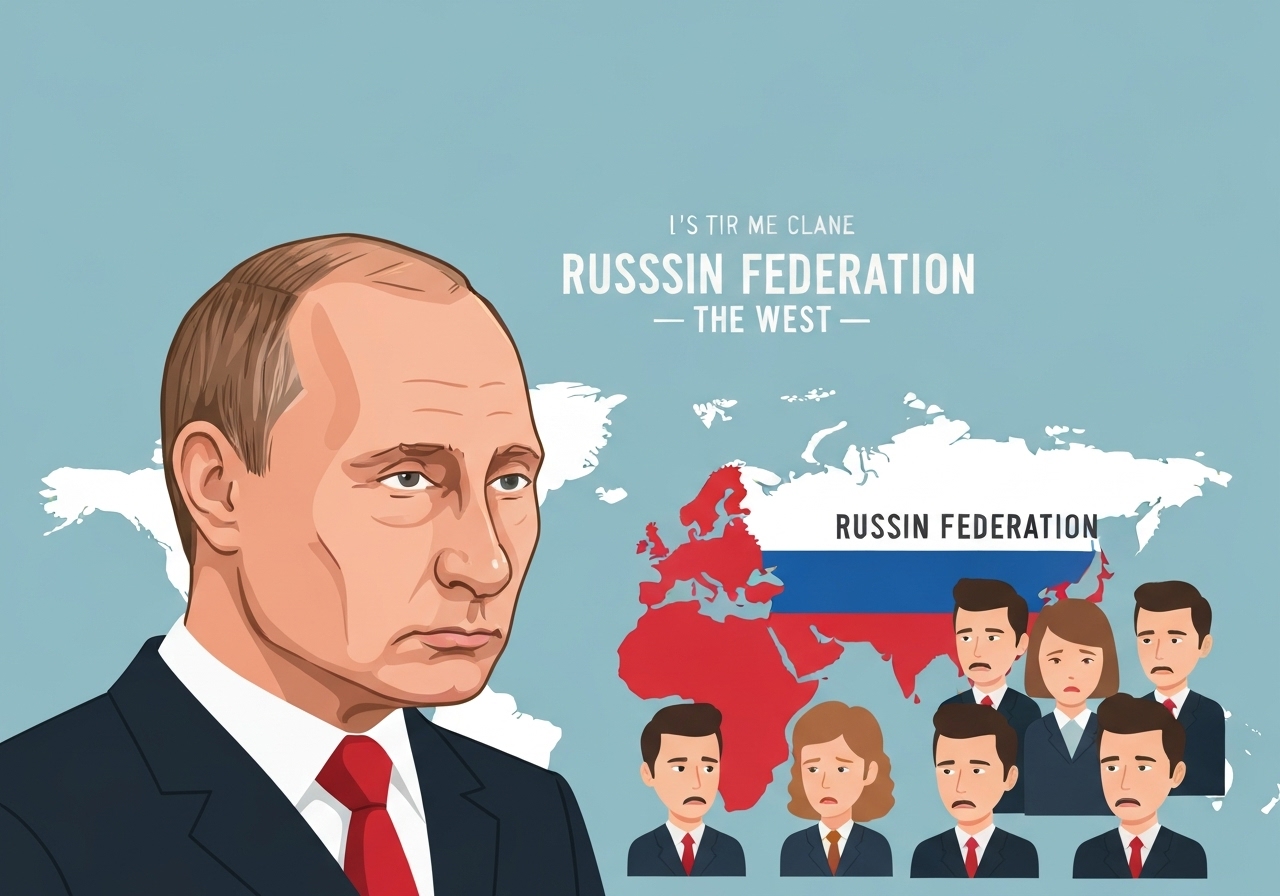
Lead
On Friday in Moscow, President Vladimir Putin used his annual televised “Direct Line” event to say Russia would not start further large-scale military operations if Western countries treated Moscow with respect and its security interests were guaranteed. Speaking during a nearly four-and-a-half-hour broadcast, he rejected claims that Russia plans new attacks on Europe as “nonsense” while reiterating conditions for any negotiated settlement over Ukraine. Hours after the broadcast, Ukrainian officials reported a Russian missile strike in Odesa region that killed seven people and injured 15, underscoring the persistent violence on the ground. Putin also addressed domestic economic pressures, including a planned VAT rise to 22% from 1 January and a central bank decision to cut its key rate to 16%.
Key Takeaways
- Putin said there would be no further “special military operations” if the West respects Russian interests and ceases what he calls hostile policies toward Moscow.
- The Kremlin-run “Direct Line” lasted about 4.5 hours and organisers claimed more than three million submitted questions to the president.
- Ukrainian authorities reported a Russian missile strike on Odesa region the same day, with seven killed and 15 injured.
- Putin repeated demands from a June 2024 framework: Ukrainian forces must withdraw from territories Russia occupies and Kyiv must abandon NATO aspirations for a peace deal.
- Russia announced a VAT increase from 20% to 22% effective 1 January, while the central bank lowered its key interest rate to 16% amid slowing growth and rising prices.
- Western intelligence warnings that Russia could threaten NATO in coming years contrast with Putin’s public denials that Moscow plans attacks on Europe.
- Some public questions shown during the broadcast were critical — on water quality, internet outages and living costs — but most media exchanges were tightly managed.
Background
Russia launched a full-scale invasion of Ukraine in February 2022, expanding a conflict that began with the 2014 annexation of Crimea. Moscow frames its operations as measures to protect Russian interests and to oppose NATO expansion; Western governments view the invasion as an unlawful act of aggression and continue to provide Ukraine with military and economic support. For years Putin has accused NATO of breaking an alleged 1990 promise not to expand eastward — a claim Mikhail Gorbachev later said he did not make — and this narrative remains central to Kremlin diplomacy.
The Kremlin’s annual “Direct Line” has become a stage for projecting control and resilience: it mixes public grievances and staged support with foreign policy messaging aimed at both domestic and international audiences. State television promotes large participation figures and highlights questions that reinforce official priorities. At the same time, Russia’s economy faces visible strains — inflation and price rises for basic goods have pushed living standards lower, and government measures such as the VAT rise are politically sensitive.
Main Event
The “Direct Line” session combined prerecorded questions from citizens and live queries from selected journalists, including two Western correspondents. When asked whether Russia would mount new “special military operations,” Putin said such actions would not occur if the West respected Russia’s interests, adding that perceived Western betrayals over NATO expansion had harmed trust. He dismissed public claims that Moscow planned to attack European countries as “nonsense” while insisting Russia would defend itself if provoked.
Putin reiterated earlier conditions for any peace settlement in Ukraine: withdrawal of Ukrainian forces from four regions Russia partially occupies and a guarantee that Kyiv will not join NATO. He also floated including new elections in Ukraine as part of a settlement put forward by US President Donald Trump and said Moscow could stop bombardment during voting — a condition that Kyiv and its partners have not accepted publicly. In parallel, the president praised elements of Russian society, urged support for veterans, and addressed local grievances such as water quality and energy costs.
Domestic economic issues featured during the show. The Kremlin announced that VAT will rise to 22% from 1 January, and Russia’s central bank said it had cut its key rate to 16%, a move framed as support for growth even as inflation remains a concern. Organisers said more than three million questions were submitted, and parts of the broadcast displayed some critical comments from citizens, though much of the session was managed to avoid sustained challenge to Kremlin policy.
Analysis & Implications
Putin’s public pledge that Russia will not wage further wars if treated with respect is diplomatic signalling as much as a security pledge. The formulation places responsibility on Western behaviour and resurrects longstanding Kremlin grievances about NATO — a framing intended to shift the burden of reconciliation onto Western governments. In practical terms, however, Moscow’s preconditions — territorial concessions by Kyiv and guarantees against NATO accession — are unlikely to be accepted by Ukraine or its principal Western backers, limiting the immediate prospects for a negotiated end to hostilities.
The contrast between Putin’s denials of planned aggression toward Europe and repeated warnings from Western intelligence agencies underscores a credibility gap. European officials have cited evidence of renewed Russian covert activity and escalation risks; Putin’s televised rhetoric aims to reassure domestic audiences and sow doubt abroad, but intelligence assessments and battlefield activity will guide NATO planning more than Kremlin broadcasts. The result is a persistent security dilemma: Western states must weigh diplomatic openings against credible warnings of Russian coercion.
Domestically, the Kremlin faces mounting economic pressure that could influence foreign policy calculations. A VAT increase and a central bank rate cut amid slowing growth signal competing priorities: the government needs revenue and economic stability but also seeks to avoid triggering social unrest. Public grievances aired during the broadcast — on utilities, connectivity and prices — show that even controlled communication events cannot fully mask everyday hardship, which could shape Kremlin messaging and policy over the coming year.
Comparison & Data
| Indicator | Reported value |
|---|---|
| Direct Line duration | ~4.5 hours |
| Organiser’s claimed questions | More than 3 million |
| VAT | 20% → 22% (from 1 January) |
| Central bank key rate | 16% (new) |
| Odesa strike casualties | 7 killed, 15 injured |
The table captures key figures mentioned during or around the broadcast. The VAT hike and monetary policy move are immediate indicators of economic policy; the casualty figures for the Odesa strike are confirmed by Ukrainian officials. Participation claims and some causation attributions (such as internet outages blamed on drone attacks) are presented by state sources and warrant separate verification.
Reactions & Quotes
“There won’t be any operations if you treat us with respect, if you respect our interests…”
Vladimir Putin, Russian president (at Direct Line)
Putin framed the prospect of peace in conditional terms — tying the absence of further operations to reciprocal respect and concrete security guarantees.
“We are ready to work with you — with the UK and with Europe in general and with the United States, but as equals, with mutual respect to each other.”
Vladimir Putin, Russian president (at Direct Line)
This line underscores the Kremlin’s insistence on parity and the restoration of Russia’s perceived status as a prerequisite for substantive talks.
“If you reject the proposals, will you be responsible for the deaths of Ukrainians and Russians?”
Keir Simmons, NBC (question to Putin)
Western correspondents pressed Putin on responsibility for the human cost of the war; his public response shifted blame toward Western leaders and Kyiv’s government.
Unconfirmed
- The claimed figure of more than three million submitted questions comes from Kremlin-affiliated organisers and is not independently verified.
- Putin’s assertion that claims Russia plans attacks on Europe are “nonsense” contrasts with Western intelligence warnings; future assessments of capabilities and intent remain a matter for intelligence services.
- Mobile internet outages cited by some viewers were attributed by authorities to Ukrainian drone activity; independent confirmation of the cause of outages is limited in public reporting.
Bottom Line
Putin’s pledge that Russia will not start further wars if the West treats Moscow with respect is a clear piece of diplomatic messaging: it recasts the cause of future conflict as dependent on how other states behave rather than on Russian initiative. That framing seeks to shift responsibility for escalation onto NATO and Western governments, but it does not alter the substantive preconditions Moscow sets for ending the war in Ukraine — territorial concessions and a renunciation of NATO accession — which Kyiv and its partners find unacceptable.
For policymakers and observers the near-term outlook remains fraught: battlefield actions, Western military support for Ukraine, and intelligence assessments will drive security planning more than televised assurances. Key things to watch are the outcome of diplomatic contacts taking place in Miami, any changes in NATO posture or intelligence assessments, and domestic economic indicators in Russia that could constrain or accelerate Kremlin choices.
Sources
- BBC News (media report on the Direct Line broadcast and Q&A with President Putin)
- Kremlin (official Russian government site providing statements and event materials)
- Security Service of Ukraine (SBU) (official statements regarding reported attacks on vessels and incidents)