
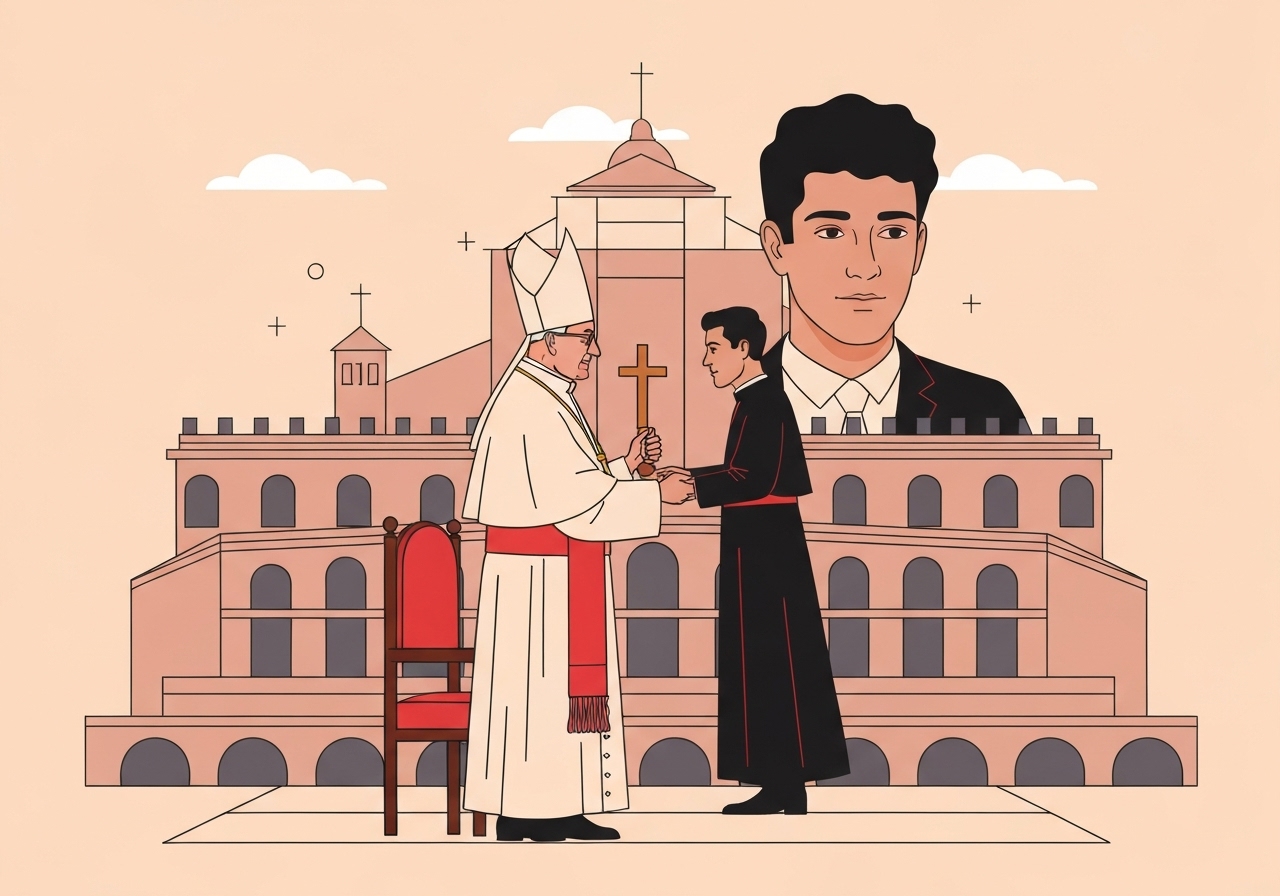
Pope Leo has appointed Bishop Aldon Ronald Hicks, 58, as the next archbishop of New York, replacing Cardinal Timothy Dolan, 75, who is retiring after about 16 years in the post. The appointment was announced on Thursday and is scheduled to take effect with an installation at St Patrick’s Cathedral on 6 February 2026. Hicks, who grew up near the pope’s Chicago-area roots and served in Latin America, has been publicly engaged on immigration and social‑justice issues. The move places him at the head of an archdiocese that serves roughly 2.5 million Catholics in New York City.
Key Takeaways
- Bishop Aldon Ronald Hicks, 58, was named archbishop of New York on a Thursday; his installation is set for 6 February 2026.
- He succeeds Cardinal Timothy Dolan, 75, who announced his resignation as required at age 75 after about 16 years leading the archdiocese.
- Hicks will oversee roughly 2.5 million Catholics in New York City and take pastoral responsibility for one of the U.S. church’s largest sees.
- Hicks served at an orphanage in El Salvador from 2005 to 2010 and was appointed bishop of Joliet by Pope Francis in 2020.
- He has been outspoken on immigration; he joined other U.S. bishops in criticizing large-scale immigration arrests by the Trump administration.
- Cardinal Dolan announced a $300 million fund to resolve clergy abuse claims shortly before Hicks’s appointment.
- The bishops’ conference reports that 61% of people at risk of deportation are Catholic, highlighting immigration as a major pastoral issue for the new archbishop.
Background
Bishop Hicks’s personal and pastoral biography echoes elements of Pope Leo’s life: both have Chicago-area origins and extended mission service in Latin America. Hicks grew up in South Holland, a short distance from the pope’s Dolton neighborhood, and spent five years working at an orphanage in El Salvador. He was named bishop of Joliet in 2020 by Pope Francis and has been visible on national issues since then.
Cardinal Timothy Dolan has led the New York archdiocese since 2009, when Pope Benedict XVI named him to the post; the cardinal was later elevated to the College of Cardinals. Under church practice, bishops submit resignations at 75; Dolan announced his in February. During his tenure, Dolan became a public figure with conservative associations and national visibility, including roles at presidential inaugurations and advisory bodies.
Main Event
The Vatican announced Bishop Hicks’s selection on Thursday, describing the choice as part of regular episcopal appointments. Hicks accepted the assignment with “an open heart,” and Cardinal Dolan called the news “an early Christmas gift” for New Yorkers. The selection follows established Vatican protocols for filling major archdiocesan sees and will be formalized with the February 6, 2026 installation at St Patrick’s Cathedral.
At a news conference following the announcement, Hicks addressed immediate pastoral priorities, underscoring accountability and care for survivors amid the archdiocese’s ongoing response to clergy abuse claims. He commented on the archdiocese’s recently announced $300 million fund to resolve abuse-related claims, saying the effort must continue work on transparency and healing. Hicks signaled a pastoral focus on immigrant communities and social-welfare ministries in the city.
Hicks’s recent public actions include joining other U.S. bishops in condemning large-scale immigration arrests in the Chicago area; that intervention aligned him with a majority of U.S. bishops concerned about the treatment of migrants. The appointment transfers Hicks from the Joliet diocese to one of the nation’s most prominent Catholic leadership roles, with significant administrative, civic and interfaith responsibilities in New York City.
Analysis & Implications
Hicks’s elevation to New York places a bishop with strong immigrant advocacy and Latin American pastoral experience at the helm of a major U.S. see. Given demographic realities—2.5 million Catholics in the archdiocese and a high share of at-risk migrants who are Catholic—his background suggests the archdiocese may prioritize immigrant outreach, legal aid partnerships and parish-based support. Those priorities could reshape local Catholic engagement with municipal and state officials on immigration policy and services.
Politically and culturally, the appointment may be received differently across the archdiocese’s broad spectrum of parishes. Cardinal Dolan was widely seen as more conservative and had visible ties to national political figures; Hicks’s record of public statements on migration and his mission work in El Salvador may signal a pastoral tone focused more on service and social teaching. That does not preclude collaboration with conservative elements of the archdiocese, but it does suggest a shift in emphasis toward immigrant pastoral care.
Institutionally, Hicks inherits the archdiocese at a sensitive moment: Dolan’s administration announced a $300 million fund to settle abuse claims, and survivors and parishioners remain attentive to transparency and accountability measures. Hicks has publicly affirmed the need for continued work in prevention, protection and survivor care. How he implements governance changes, financial oversight, and diocesan culture reforms will be closely watched by survivors, lawyers, and the faithful.
Comparison & Data
| Metric | Cardinal Dolan | Archbishop-elect Hicks |
|---|---|---|
| Age at appointment | Named in 2009 (Dolan now 75) | 58 |
| Years in New York | ~16 years | Incoming (installation 6 Feb 2026) |
| Archdiocese population | Approximately 2.5 million Catholics in New York City | |
| Recent major actions | $300 million abuse settlement fund | Joined bishops condemning large-scale immigration arrests |
The table above summarizes key contrasts: age, tenure, immediate responsibilities and recent public actions. Contextually, Hicks’s mission work in El Salvador (2005–2010) and his 2020 appointment to Joliet frame his pastoral priorities, while Dolan’s long tenure and national visibility shaped the archdiocese’s public profile through the 2010s and early 2020s.
Reactions & Quotes
Local and national Catholic leaders offered measured responses that combined welcome, expectation and a call for continued institutional reform. Parishioners and advocates for immigrant communities noted Hicks’s prior statements on migrants as a promising sign for expanded pastoral services and advocacy. Church officials also emphasized the ongoing need to address clergy abuse and support survivors as a central responsibility for any incoming archbishop.
“I accept this appointment with an open heart,”
Bishop Aldon Ronald Hicks
Hicks’s brief statement framed the appointment in pastoral terms and was delivered immediately after the announcement. Church analysts interpret that language as signaling a conciliatory and service-oriented approach; it echoes common episcopal language used when taking major pastoral assignments. The phrase also underscores his stated commitment to transparency and survivor care as he assumes leadership.
“An early Christmas gift for New Yorkers,”
Cardinal Timothy Dolan
Cardinal Dolan’s comment was offered publicly to convey personal goodwill and to endorse a smooth transition. Dolan also reiterated his support for survivor-centered reforms and said he hoped the archdiocese would continue to prioritize accountability. Observers noted that Dolan’s backing may help stabilize the archdiocese during the leadership handover.
Unconfirmed
- No official Vatican statement in the public record attributed specific policy directives to Hicks beyond pastoral priorities; detailed plans for policy shifts remain unconfirmed.
- Any long-term personnel or structural changes within the archdiocese under Hicks are speculation until he announces concrete measures and timelines.
Bottom Line
Bishop Ronald Hicks’s appointment places a pastor with deep ties to immigrant ministry and Latin American mission work at the head of one of U.S. Catholicism’s most consequential seats. His immediate challenges include leading pastoral care for 2.5 million Catholics, responding to survivors of clergy abuse, and navigating the archdiocese’s civic relationships in a diverse city.
How Hicks balances immigrant advocacy, institutional reform, and engagement with conservative and progressive constituencies will shape the archdiocese’s public role in the coming years. With an installation set for 6 February 2026, observers will be watching early personnel choices, budgetary decisions, and concrete steps on transparency and survivor care as the clearest indicators of his priorities.
Sources
- BBC News (media coverage)
- Archdiocese of New York (official biography and archdiocesan statements)
- United States Conference of Catholic Bishops (official statistics and reports)