
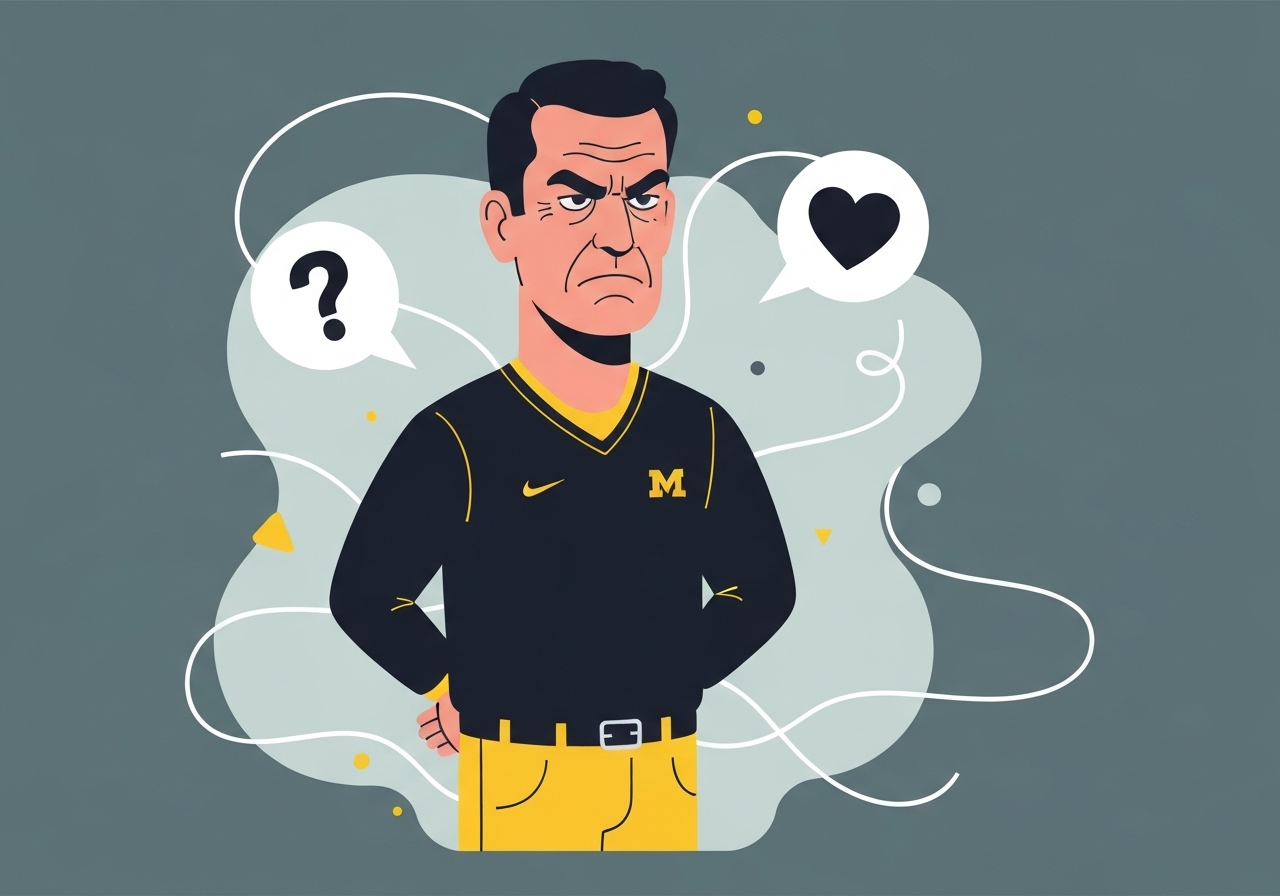
Lead: The University of Michigan’s head football coach, Sherrone Moore, was fired on Wednesday, Dec. 11, 2025, after a university probe found credible evidence of an inappropriate relationship with a staff member. Hours later, jail records showed a person believed to be Moore was being held at Washtenaw County Jail in Ann Arbor, Mich. Pittsfield Township police said they were investigating a reported assault on Wednesday afternoon and that a suspect was in custody pending prosecutor review. Officials have not released full details, citing the integrity of the ongoing investigation.
Key Takeaways
- Sherrone Moore, 39, was dismissed by the University of Michigan on Dec. 11, 2025, following an internal investigation that the athletic director described as finding credible evidence of a policy-violating relationship with a staff member.
- Moore had been appointed Michigan’s head coach in 2024, making his tenure at the program roughly one year.
- Jail records showed a detention at Washtenaw County Jail in Ann Arbor early Thursday; the county jail listing indicated custody but did not specify charges publicly.
- Pittsfield Township police confirmed they responded to a reported assault on Wednesday and said a suspect was in custody pending review by the prosecutor’s office.
- The athletic director, Warde Manuel, cited violation of university policy as the reason for termination; the university has not disclosed personnel or investigative documents.
- Police and university officials declined to release additional details, saying disclosure could undermine the active investigation.
Background
The University of Michigan football program is among the most prominent in college sports, and the head coaching post carries intense public scrutiny and recruiting consequences. Moore, who became head coach in 2024, took over a high-profile role that links athletic performance, donor relations, student-athlete welfare and institutional reputation. University policies at major U.S. colleges typically prohibit intimate or otherwise inappropriate relationships between supervisors and staff or student-athletes; such rules aim to prevent conflicts of interest and protect campus safety.
In recent years, college athletics have seen multiple personnel upheavals tied to conduct investigations, prompting universities and conferences to sharpen reporting and disciplinary protocols. Athletic directors, compliance offices and campus HR units usually coordinate inquiries; outcomes can range from reprimand to termination and, when alleged crimes are involved, referral to law enforcement. Stakeholders affected include players, assistant coaches, staff members, donors and prospective recruits who monitor program stability closely.
Main Event
On Wednesday, Dec. 11, 2025, the University of Michigan terminated Sherrone Moore’s employment after an internal review concluded there was credible evidence he had engaged in an inappropriate relationship with a staff member, Warde Manuel said in the university statement. The school framed the dismissal as enforcement of its personnel policies and said the investigation reached conclusions that warranted immediate action. The firing came less than two years after Moore’s arrival in the program, abruptly ending his tenure in a position that draws national attention.
Later the same day and into early Thursday, county jail records listed a detainee at Washtenaw County Jail in Ann Arbor; local law-enforcement sources indicated a person connected to a reported assault was in custody. Pittsfield Township police, whose jurisdiction lies just south of Ann Arbor, confirmed they were investigating a report of an assault received Wednesday afternoon and said a suspect was being held pending prosecutor review. Police declined to identify the detainee or provide charge information, citing the ongoing nature of the inquiry.
University and law-enforcement officials have limited public disclosures. The athletic director described the internal findings in broad terms but did not provide investigative files or the name of the staff member involved. Police issued a statement emphasizing the need to preserve the integrity of their investigation and said they could not release additional details while it was active.
Analysis & Implications
The simultaneous personnel action and law-enforcement detention create operational and reputational challenges for Michigan’s football program. Practically, the program faces immediate needs around interim leadership, recruiting communications and managing game-preparation continuity; those tasks fall to athletic department administrators and assistant coaches. Publicly visible firings of head coaches can affect recruiting classes and donor confidence, especially when they occur late in a calendar year and close to signing periods.
Legally, the university’s firing followed an internal standards assessment; any criminal allegations identified by police would proceed separately through the county prosecutor’s office. If criminal charges are filed, they could lead to court proceedings that run parallel to or after internal administrative actions. For the university, balancing legal confidentiality, personnel privacy rules and public interest will be a central communications challenge.
On a broader level, this episode reinforces institutional trends toward stricter enforcement of workplace conduct standards in collegiate athletics. Universities increasingly face scrutiny from media, alumni and watchdog groups when alleged misconduct involves high-profile figures. Athletic departments may respond with policy reviews, expanded training, clearer reporting channels and possibly new oversight mechanisms to rebuild public trust.
Comparison & Data
| Item | Date / Period |
|---|---|
| Moore appointed Michigan head coach | 2024 |
| University investigation and firing | Dec. 11, 2025 |
| Police report and custody noted | Dec. 11–12, 2025 |
The short timeline—appointment in 2024 and termination in Dec. 2025—contrasts with more typical multi-year coaching tenures at comparable programs. The combination of an internal policy finding and a simultaneous law-enforcement detention is less common but not without precedent in collegiate sports; previous cases have shown variable outcomes depending on available evidence and prosecutorial decisions. Institutional responses often include administrative leaves, public statements and, where necessary, hiring interim leadership to stabilize operations.
Reactions & Quotes
“The investigation found credible evidence that an inappropriate relationship occurred in violation of university policy,”
Warde Manuel, University of Michigan athletic director (statement)
Manuel’s brief public statement framed the dismissal as an enforcement action grounded in the university’s conduct rules; he did not release investigatory records or identify the staff member named in the finding.
“Given the nature of the allegations, the need to maintain the integrity of the investigation, and its current status at this time, we are prohibited from releasing additional details,”
Pittsfield Township Police (official statement)
The police statement emphasized investigative confidentiality and confirmed a suspect was in custody and awaiting prosecutor review, but it did not identify the detainee or specify charging decisions.
Unconfirmed
- Whether the detained person listed in Washtenaw County jail records is formally charged; prosecutors had not made charging decisions public at the time of reporting.
- The identity of the staff member referenced in the university’s internal conclusion has not been released by the university and remains private in available statements.
- The exact nature of the reported assault mentioned by Pittsfield Township police has not been disclosed beyond the department’s brief statement.
Bottom Line
The abrupt firing of Sherrone Moore and the near-simultaneous detention noted in county jail records present both legal and reputational challenges for the University of Michigan football program. Administrators will need to manage short-term operational continuity—coaching leadership and recruiting communication—while cooperating with law enforcement and safeguarding privacy and due process.
Looking ahead, the program’s stability will depend on transparent but legally appropriate disclosures, swift interim management decisions, and the outcomes of any prosecutorial review. This incident also underscores the broader trend in collegiate athletics toward rigorous enforcement of conduct policies and heightened public scrutiny of high-profile staff behavior.